Yes, Florida landlords can charge you after you move out, but only for unpaid rent and documented damage beyond normal wear and tear, and only if they follow strict statutory deadlines. Under Florida Statutes §83.49, your landlord has 15 days to return your deposit in full or 30 days to mail a written claim notice. Provide your forwarding address in writing, photograph everything on your way out, and count the days. Missing deadlines cuts both ways, and it can cost your landlord the entire claim.
TL;DR:
- Landlords can only deduct unpaid rent, documented damage beyond normal wear and tear, unpaid utilities, missing keys, or early termination fees from the deposit.
- They cannot charge for routine maintenance, normal wear and tear, pre-existing damages, or vague service fees without proper invoices or receipts.
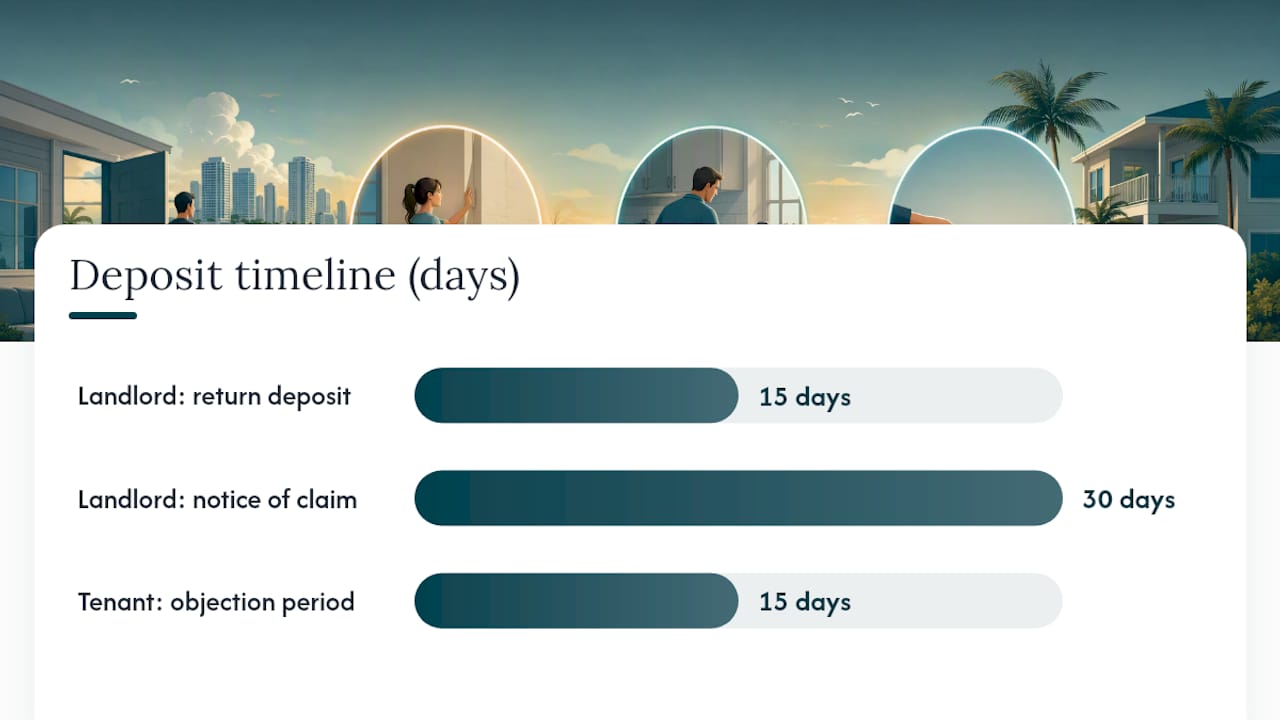
- Landlords have 15 days to return the full deposit if no claim is intended, or 30 days to mail a written claim notice, with tenants having 15 days to object after receipt.
- Missing the 30-day notice deadline forfeits the landlord’s right to keep any deposit claim, making timely communication crucial for tenants.
- Tenants should document move-in conditions, respond promptly to claims, and pursue disputes in small claims court if necessary, supported by clear evidence and written correspondence.
Table of Contents
- What Florida Landlords Can and Cannot Charge After You Move Out
- How Long Does a Florida Landlord Have to Return Your Deposit?
- Normal Wear and Tear vs. Real Damage: Where’s the Line?
- Common Move-Out Charges and What Documentation They Require
- How to Dispute Move-Out Charges in Florida Step by Step
- Your Move-Out Timeline: A Week-by-Week Checklist
- Why Transparent Move-Out Policies Cut Disputes to Almost Nothing
- Looking for a Lease With Clear Move-Out Terms?
- Where to Read the Actual Florida Statutes and Guidance
- Sources
- FAQ
What Florida Landlords Can and Cannot Charge After You Move Out
Not every line item on a move-out bill holds up legally. Florida’s landlord-tenant statute draws a fairly clear line between costs tied to your behavior and costs tied to ordinary aging of the property, and knowing which side a charge falls on determines whether you should pay it or fight it.
Landlords generally have the right to deduct for:
- Unpaid rent owed through the end of the lease term or notice period
- Tenant-caused damage that goes beyond normal wear and tear (holes in walls, broken fixtures, stained carpet from spills or pets)
- Unpaid utility bills that were the tenant’s contractual responsibility
- Missing keys, fobs, or garage remotes, billed at actual replacement cost
- Contractually agreed early termination fees, which Chapter 83 caps and structures around good-faith re-letting efforts
What they cannot legally charge you for:
- Normal wear and tear, like faded paint, worn carpet nap, or small nail holes from hanging pictures
- Routine maintenance the property would have needed regardless of who lived there
- Upgrades or renovations the landlord wanted to make between tenants
- Vague “service fees” or “processing charges” with no invoice or receipt attached
Carpet replacement is where a lot of these disputes get messy. If a carpet is eight years old and simply looks tired, that is the landlord’s cost to absorb since carpet has a useful life and depreciates regardless of tenant behavior. If a carpet has burn marks, pet urine stains that soaked through the pad, or torn sections from furniture drag, that is tenant damage, and a landlord can reasonably bill for it, usually prorated against the flooring’s remaining useful life rather than a full replacement cost.
How Long Does a Florida Landlord Have to Return Your Deposit?
The 15/30/15 rule governs almost every Florida security deposit dispute, and it is worth memorizing the exact numbers because they decide who wins.
Here is how the sequence runs once you hand over the keys:
- Within 15 days of move-out, if the landlord does not intend to make any claim against your deposit, they must return it in full.
- Within 30 days, if the landlord does intend to keep some or all of your deposit, they must mail you a written notice of intention to impose a claim, sent to your last known address, by certified mail with return receipt in most cases.
- You then have 15 days from receiving that notice to send a written objection if you disagree with the deduction.
Pro Tip: Send your forwarding address to the landlord in writing, and keep a copy or a screenshot of the email. If the notice never reaches you because you never gave an address, the clock and the outcome can get complicated fast, and you lose leverage you didn’t need to lose.
The consequences for missing these windows are asymmetrical, and they favor whichever party actually follows the statute. If a landlord fails to mail that 30-day notice on time, they forfeit the right to impose any claim against the deposit, full stop. They may still, in theory, sue you separately for actual damages, but they cannot simply keep the money. On the other side, if you receive a valid notice and do not object in writing within 15 days, the landlord can proceed to collect from the deposit. You are not entirely out of options at that point. You can still pursue a refund through small claims court later, but your position is weaker once you have let the objection window close without a response.
The Florida Bar’s consumer guidance echoes this same sequence and stresses that tenants who track dates and respond in writing tend to fare far better in disputes than tenants who call and complain verbally, since phone conversations leave no evidence trail.
Normal Wear and Tear vs. Real Damage: Where’s the Line?
The distinction between wear and tear and damage sounds simple until you are staring at an actual move-out invoice. The Florida Department of Agriculture and Consumer Services frames it around a basic question: would this condition exist even if a careful, responsible tenant had lived here for the length of the lease? If yes, it’s wear and tear. If the condition resulted from neglect, misuse, or an accident the tenant caused, it’s damage.
Normal wear and tear typically includes:
- Faded or slightly worn paint from sunlight and time
- Minor carpet flattening in high-traffic areas
- Small nail or picture-hanging holes
- Loose door handles or cabinet hinges from years of regular use
- Worn grout lines in bathrooms and kitchens
Tenant-caused damage typically includes:
- Large holes, punctures, or cracks in drywall
- Pet stains, odors, or chewed baseboards and doors
- Burn marks, deep gouges, or unremovable stains in carpet or flooring
- Broken windows, screens, or blinds from misuse
- Mold caused by tenant neglect (not a pre-existing plumbing or ventilation issue)
Landlords can only deduct for the second category, and they are expected to back those deductions with real documentation: invoices, itemized repair receipts, or vendor estimates, not a flat number pulled from nowhere. Practical guidance from Florida property professionals consistently notes that vague or unsupported deductions rarely hold up once a tenant pushes back or a small claims judge asks for proof.
Your best defense starts before you ever move in. Take date-stamped photos and video of every room, corner, and appliance the day you get your keys, and if your lease includes a written move-in checklist, fill it out completely and keep a signed copy. This single habit flips the burden of proof: instead of you trying to prove a stain was already there, the landlord has to prove it wasn’t. A move-in inspection done properly on day one is the cheapest insurance policy you’ll ever take out on your deposit.

Common Move-Out Charges and What Documentation They Require
Move-out bills tend to repeat the same handful of line items, and each one has a reasonable evidence standard attached to it.
Cleaning fees. Florida landlords can charge for cleaning if the unit was left dirtier than a normal move-out condition would allow, but “professional cleaning fee” with no receipt is a red flag. Ask for the cleaning company’s invoice. If the charge is a flat number with no third-party paperwork behind it, you’re within your rights to ask why.
Carpet and flooring. As covered above, age and depreciation matter here. A landlord charging you the full replacement cost for ten-year-old carpet, when carpet’s useful life typically runs five to seven years, is overreaching. Ask for the original installation date if you can, and push back on full-replacement pricing for anything beyond damage-only repair.
Repainting. Interior paint has a typical useful life too, generally a few years per coat depending on wear. A landlord repainting between every tenant as routine turnover cannot bill you for that unless your walls show damage beyond scuffs, like large marks, gouges, or unauthorized paint colors you applied yourself.
Pet damage. This is one of the most common billing categories in pet-friendly communities, and it’s also one of the most disputed. A pet cleaning fee for deep-cleaning carpet or addressing odor is reasonable when there’s evidence of actual soiling or damage. A blanket “pet fee” charged regardless of documented condition, on top of a pet deposit already collected, deserves scrutiny.
Unpaid rent and utilities. These are the most straightforward charges and the hardest to dispute if accurate. Ask for an itemized ledger showing exact dates and amounts.
Across every category, the same rule applies: request the itemized invoices and receipts before you pay anything. A landlord who cannot produce paperwork for a deduction is, in most cases, not entitled to keep that money.
How to Dispute Move-Out Charges in Florida Step by Step
Disputing a charge is not complicated, but it does require moving fast and in writing. Here’s the sequence that gives you the strongest position.
- Gather your evidence first. Pull your move-in photos, your move-out photos, your lease, and any written communication with your landlord about the unit’s condition.
- Read the 30-day notice carefully the moment it arrives. Check the postmark date against your move-out date. If more than 30 days have passed, the landlord may have already forfeited their claim.
- Draft a written objection within 15 days of receiving the notice. State clearly that you dispute the deduction, cite the specific charges you’re contesting, and reference Florida Statutes §83.49 directly.
- Send it by certified mail with return receipt, and keep the receipt. This is your proof the objection was timely.
- Request itemized invoices for every disputed charge if they weren’t already provided.
- If the landlord doesn’t respond or refuses to return the deposit, consider small claims court. Florida small claims handles disputes up to $8,000, and deposit cases are common there.
Pro Tip: Keep your objection letter short and factual. A one-page letter that cites the statute, lists the disputed charges, and attaches your photos carries more weight with a landlord (and a judge) than a long emotional appeal ever will.
A short template covers the essentials: your name and the property address, the date you vacated, a statement that you received the claim notice on a specific date, a line-by-line list of which charges you dispute and why (referencing your photos), a citation to §83.49, and a clear demand: return of the disputed amount within a specific number of days. If the landlord missed the 30-day window entirely, say so explicitly and cite the forfeiture provision. That single sentence sometimes ends the dispute on its own, because it puts the landlord on notice that you know the law and you’re prepared to use it.
Your Move-Out Timeline: A Week-by-Week Checklist
Most avoidable charges happen because tenants run out of time in the final days. Working backward from your move-out date fixes that.
- Two weeks before: Review your lease for any move-out notice requirements and confirm your exact deadline for returning keys. Schedule a walkthrough with your property manager if your community offers one.
- One week before: Deep clean the unit yourself, room by room, and start photographing as you go, especially anything that might look like damage but isn’t (existing scuffs, old stains you didn’t cause).
- The day before or day of move-out: Do a final walkthrough. Take a full video sweep of every room, closet, and appliance interior. If a staff member is present, ask them to sign off on the condition in writing.
- Immediately after handing over keys: Get a written receipt confirming the date and time you returned them. This date often becomes the official start of the 15/30 day clocks.
- Within days of leaving: Send your forwarding address in writing if you haven’t already, by email or certified mail, so there’s no dispute later about whether the landlord had it.
A community that provides a move-in inspection guide or a renter’s checklist makes this whole process faster, since you’re filling in a template rather than guessing what to document. If you’re relocating to Florida for the first time, a broader moving checklist can help you keep the paperwork organized from lease signing through move-out.
Why Transparent Move-Out Policies Cut Disputes to Almost Nothing
Most deposit fights aren’t really about the money. They’re about surprise. A tenant who never saw a move-in checklist, never got a clear cleaning standard, and then receives a bill with no invoices attached has every reason to assume they’re being taken advantage of, and sometimes they are right.
The landlords who avoid these fights entirely tend to do a few things consistently: they document move-in condition with the tenant present, they state cleaning and damage standards in plain language before move-out day, and they respond to deposit questions with actual paperwork instead of a flat number. None of that requires generous rules. It just requires following the process the statute already lays out, promptly and in writing.
Some apartment communities build their lease terms and move-out resources around that same principle, giving tenants a documented condition record and a clear deposit policy from day one, precisely because it prevents the disputes this article spends so much time helping you resolve.
— Ayman
Looking for a Lease With Clear Move-Out Terms?
If you’re tired of guessing what a landlord might charge you six months from now, that frustration is why some apartment communities build transparent pricing into every lease from the start. There’s no hidden fee schedule waiting to surprise you at move-out, and no vague “cleaning fee” line item without an explanation behind it.
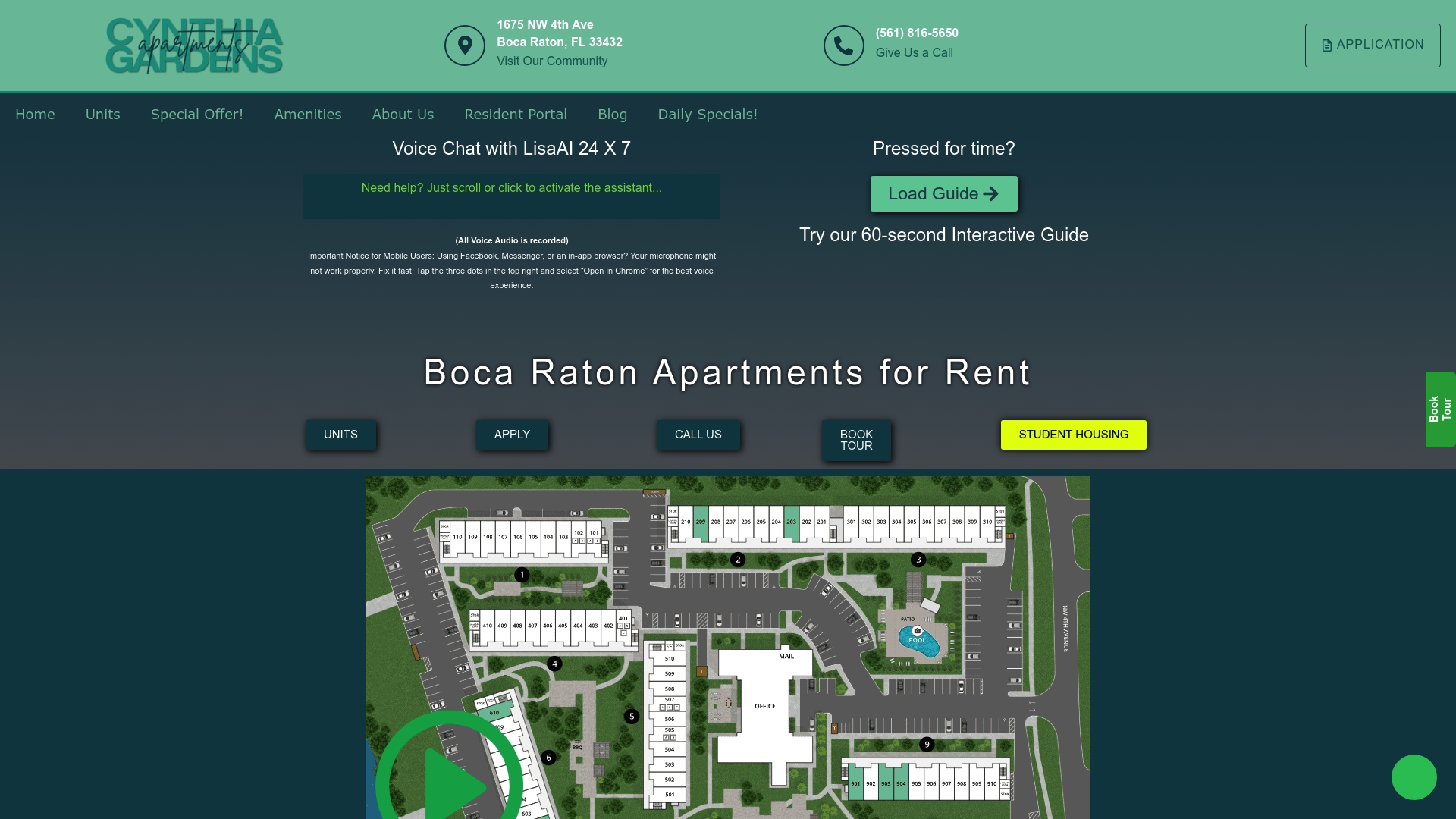
Cynthia Gardens is a pet-friendly, one-bedroom community in Boca Raton built for young professionals, students, and pet owners who want a straightforward lease and a documented move-in process from the first walkthrough. Every unit comes with a clear deposit policy, a virtual tour before you commit, and an interactive property map so you know exactly what you’re signing up for before you ever sign. Explore the Boca Raton apartment community and check current availability, or browse apartment styles and features to see what a transparent lease actually looks like in practice.
Where to Read the Actual Florida Statutes and Guidance
Everything in this article traces back to a handful of primary sources worth bookmarking before your own move-out date arrives.
- Florida Statutes §83.49 covers the 15/30/15 deposit timeline and notice requirements in full statutory language.
- Chapter 83, Part II governs broader landlord-tenant remedies, including re-letting duties and early termination terms.
- FDACS landlord-tenant guidance offers a consumer-friendly summary of tenant and landlord duties.
- The Florida Bar’s consumer pamphlet walks through dispute steps and legal remedies in plain language.
This article is general information, not a substitute for advice from a qualified lawyer. Consult a qualified legal professional about your own circumstances before acting on anything here.
Sources
- Chapter 83 Section 49 – 2026 Florida Statutes – The Florida Senate
- Chapter 83 Section 595 – 2026 Florida Statutes – The Florida Senate
- Landlord/Tenant Law in Florida – Florida Department of Agriculture & Consumer Services
- Rights and Duties of Tenants and Landlords – The Florida Bar
FAQ
What Is the New Law in Florida for Renters?
Florida hasn’t overhauled its core security deposit statute recently. The 15/30/15 timeline under §83.49 remains the controlling rule for how landlords handle deposits and claim notices.
How Much Are Move-Out Charges in Florida?
There’s no fixed statewide amount. Charges depend on actual documented costs (unpaid rent, invoiced repairs, cleaning receipts), and landlords cannot bill flat fees without supporting documentation for tenant-caused damage.
Can a Landlord Charge a Cleaning Fee After You Move Out in Florida?
Yes, but only if the unit was left dirtier than normal move-out condition and the landlord can produce a cleaning invoice. A flat cleaning charge with no receipt is difficult for a landlord to defend.
How Long Do You Have to Give a Tenant to Move Out in Florida?
That depends on your lease term and notice type, but once you have vacated, the landlord has 15 days to return your deposit or 30 days to mail a written claim notice under §83.49.
What Happens if My Landlord Misses the 30-Day Deadline?
They forfeit the right to impose any claim against your security deposit, though they may still pursue a separate lawsuit for actual damages in limited cases.