If a hurricane threatens Florida, evacuate with your pets and consider essential preparations like pressure washing for storm prep to help protect your property and keep your pets safe from debris. Never leave them behind on the assumption you’ll come back for them. Right now, confirm one pet-friendly option, whether that’s a shelter, a hotel, or a host outside the storm zone, and pack your pet kit so it’s ready to grab the moment a warning goes up.
TL;DR:
- Pet owners should confirm and pre-register at least one pet-friendly shelter, hotel, or safe alternative well before hurricane warnings to ensure availability.
- Prepare a detailed pet hurricane kit with a week’s food, medication, water, and necessary records, storing everything in waterproof containers for protection.
- Vaccination paperwork and recent photos are essential for shelter entry; store digital copies and get early vet refills to avoid last-minute issues.
- Secure carriers properly, plan multiple lodging options along evacuation routes, and start crate training pets months before cyclone season to reduce stress.
- Keep a communication plan with clear instructions, emergency contacts, and legal awareness of local laws to ensure swift rescue and care during and after storms.
Table of Contents
- Where Can You Safely Shelter Your Pet During a Hurricane?
- Pack This Pet Hurricane Kit Now (Exact Quantities and Container Tips)
- Organize the Records and Medication Plan Shelters Will Ask For
- How to Physically Evacuate With Pets and Lock in Lodging
- Prep Your Pet’s Behavior So Sheltering Goes Smoother
- Post-Storm Hazards and Getting a Lost Pet Home Fast
- Where to Find Real-Time Shelter Info and the Legal Backdrop
- Apartment-Specific Prep for Boca Raton Renters
- Special Considerations for Exotic Pets, Small Mammals, Birds, and Reptiles
- Build a Communication Plan for Your Pet’s Care
- Local Ordinances and Legal Requirements for Pet Evacuation
- A Local Perspective on Pet Safety and Community Prep
- Cynthia Gardens: Pet-Friendly Living Built for Storm Season Peace of Mind
- Sources
- FAQ
Where Can You Safely Shelter Your Pet During a Hurricane?
Florida gives you four realistic options, and each comes with strings attached. Public shelters that accept animals almost always keep pets in a separate area from the main shelter floor, which means you’ll be doing the feeding, walking, and cleanup yourself for the duration of your stay, according to state pet-planning guidance. Pet-friendly hotels fill up fast once a storm is named, so calling early matters more than almost anything else on this list.
- Pet-friendly public shelters: Usually co-located with human shelters, require proof of vaccination, and often cap species or size.
- Hotels: Best for short-notice evacuations if you can book before rooms disappear.
- Boarding facilities: Good backup when hotels are full, but they need current vaccination paperwork and sometimes a pre-existing account.
- Trusted family or friends outside the danger zone: The most comfortable option for longer evacuations, but it requires planning well before hurricane season.
Confirm capacity limits and pre-registration rules for any shelter before you count on it. A location that took pets last year might not this year.
Pack This Pet Hurricane Kit Now (Exact Quantities and Container Tips)
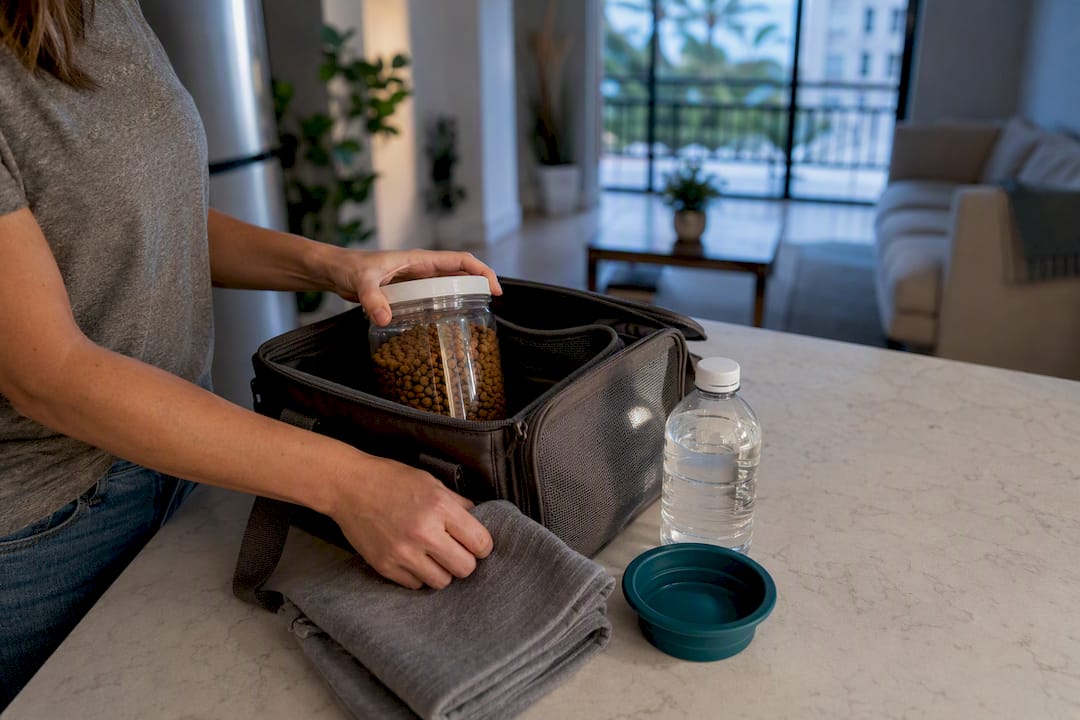
University of Florida veterinary guidance is specific about quantities, and specific is what you want when a storm is 48 hours out. Pack a week’s supply of your pet’s regular food, or a longer supply for specialty diets, plus ample water for each pet daily for several days, following the UF Small Animal Hospital’s hurricane checklist.
Pro Tip: Store dry food in a sealed, waterproof container inside your kit bin, not just the original bag. Florida humidity and flooding both ruin kibble fast.
Build your kit around this list:
- About a week’s worth of food in a waterproof container, plus adequate water per pet per day.
- A two-week supply of medication in original, labeled containers, with a note on refrigeration needs.
- A crate or carrier sized so your pet can stand and turn around comfortably.
- Leash or harness, ID tags, and a recent photo of you together with your pet.
- Printed and digital copies of vaccination and medical records, plus your pet’s microchip number.
- Bowls, litter box or pan, waste bags, a basic pet first-aid kit, and a manual can opener.
That water requirement alone means a two-pet household needs 14 gallons just for animals on top of your own supply. Plan bin space accordingly.
Organize the Records and Medication Plan Shelters Will Ask For
Missing or outdated vaccination paperwork is one of the most common reasons pets get turned away from shelters or boarding facilities, according to UF/IFAS disaster preparation guidance. Get this sorted in June, not the week a storm forms in the Gulf.
- Carry a rabies certificate, full vaccination history, and any ongoing medical records shelters or boarding staff might request.
- Keep a recent photo of you with your pet as backup proof of ownership if paperwork gets lost.
- Store waterproof paper copies in your kit and digitize everything to your phone or a cloud folder you can access without signal.
- Ask your vet for an early refill at the start of hurricane season so you’re never caught with a three-day supply during a five-day evacuation.
- Label refrigerated medications clearly and plan for a cooler with ice packs if the power goes out.
How to Physically Evacuate With Pets and Lock in Lodging
Getting your pet out safely is a logistics problem, and logistics problems go smoother when you’ve solved them once already in your head before the real thing.
- Secure carriers with a seatbelt or cargo strap so they don’t slide during hard braking or high winds. Never leave a pet unattended in a parked car, especially in Florida heat.
- Call ahead to any pet-friendly hotel and ask directly about species and size limits, pet fees, and whether they require proof of vaccination at check-in.
- If your first hotel choice is full, have a second and third option mapped along your evacuation route, not just at your destination.
- Check whether your county runs a pet shelter pre-registration program and sign up before hurricane season, not during it.
Pro Tip: Save two or three pet-friendly hotel phone numbers in your contacts under a label like “Evac Lodging” so you’re not searching for websites with one bar of signal on I-75.
Prep Your Pet’s Behavior So Sheltering Goes Smoother
A pet who panics in a carrier makes evacuation harder for everyone, including shelter staff managing dozens of animals at once. Start short crate practice sessions months before hurricane season, not the night before landfall. Five or ten minutes a day, building up gradually, does more than any last-minute coaxing.
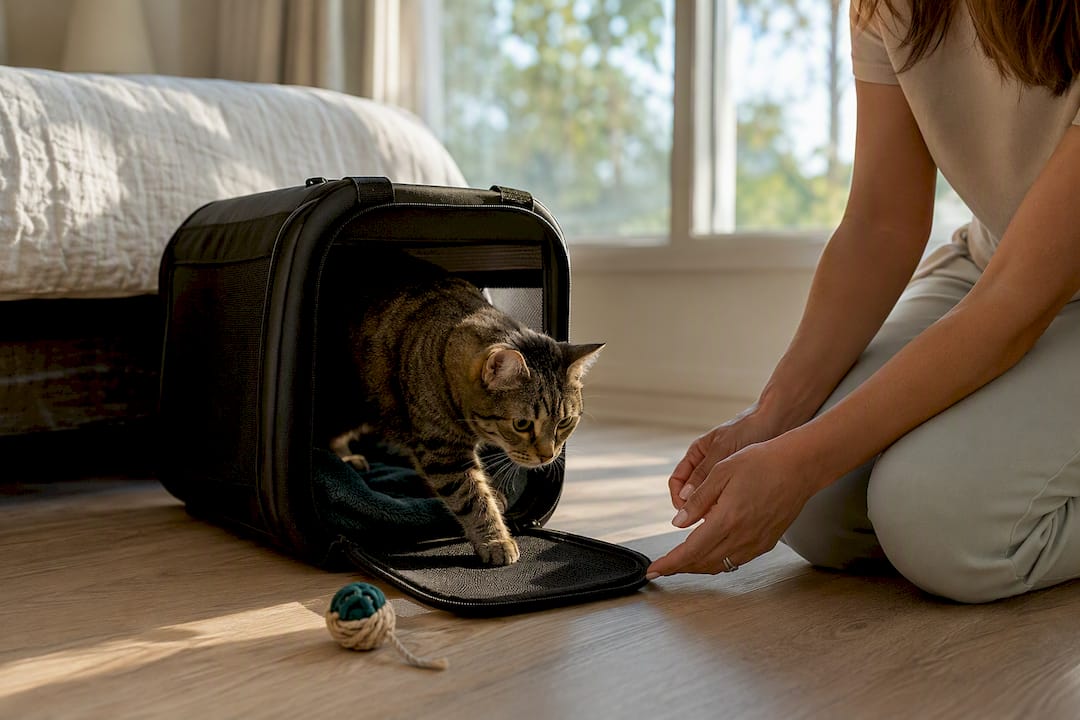
If your pet has serious anxiety, talk to your vet well ahead of storm season about calming strategies or behavioral medication. Never start a new medication on the fly during an active evacuation. Pack a familiar blanket, toy, or piece of clothing with your scent on it. Keeping feeding and walk times close to normal, even in a shelter or hotel room, reduces stress for both of you.
Post-Storm Hazards and Getting a Lost Pet Home Fast
The storm passing doesn’t mean the danger has. Keep dogs leashed for at least a week after landfall, since flooding washes away familiar scent markers pets normally use to find their way home, according to a Tampa Bay veterinary clinic’s hurricane guidance.
- Watch for standing water, downed power lines, scattered debris, and displaced wildlife like snakes on your first walks back.
- Check paws and coats for cuts or embedded debris after any exposure to floodwater or storm wreckage.
- If your pet goes missing, check the microchip registry immediately, post a recent photo to local lost-pet networks, and call nearby shelters directly rather than waiting for them to call you.
- Seek urgent veterinary care for limping, wounds, vomiting, or any sign your pet ingested floodwater or a foreign object.
Where to Find Real-Time Shelter Info and the Legal Backdrop
Don’t assume the shelter nearest you takes pets. County emergency management pages, not general web searches, carry the current list for each specific storm, and that list changes from event to event, per FDEM’s pet planning guidance.
Florida law backs this up. Under Florida Statute 252.3568, counties that operate emergency shelters must designate at least one that can accommodate people with pets, aligning with the federal PETS Act. The 2025 Statewide Emergency Shelter Plan confirms most counties meet that minimum, but some still lack adequate pet-friendly capacity, and availability shifts storm by storm.
| Action | Where to do it | Why it matters |
|---|---|---|
| Check current pet-friendly shelters | County emergency management website | Lists change per storm event |
| Sign up for alerts | County alert system | Get real-time shelter openings |
| Pre-register if required | County pet shelter program | Some counties require advance sign-up |
| Keep a backup list | Your own phone notes | Hotels and boarding fill up fast |
Call your county emergency management office, verify their pet-shelter rules directly, and keep a short backup list of hotels and boarding facilities regardless of what the official list says today.
Apartment-Specific Prep for Boca Raton Renters
Store your pet kit near your front door, not a closet you’d need a flashlight to search at 2 a.m. Tell your property manager about your pet plan and review your lease’s pet addendum for building-specific evacuation rules. Cynthia Gardens keeps a pet owner apartment checklist tailored to exactly this kind of coordination.
Special Considerations for Exotic Pets, Small Mammals, Birds, and Reptiles
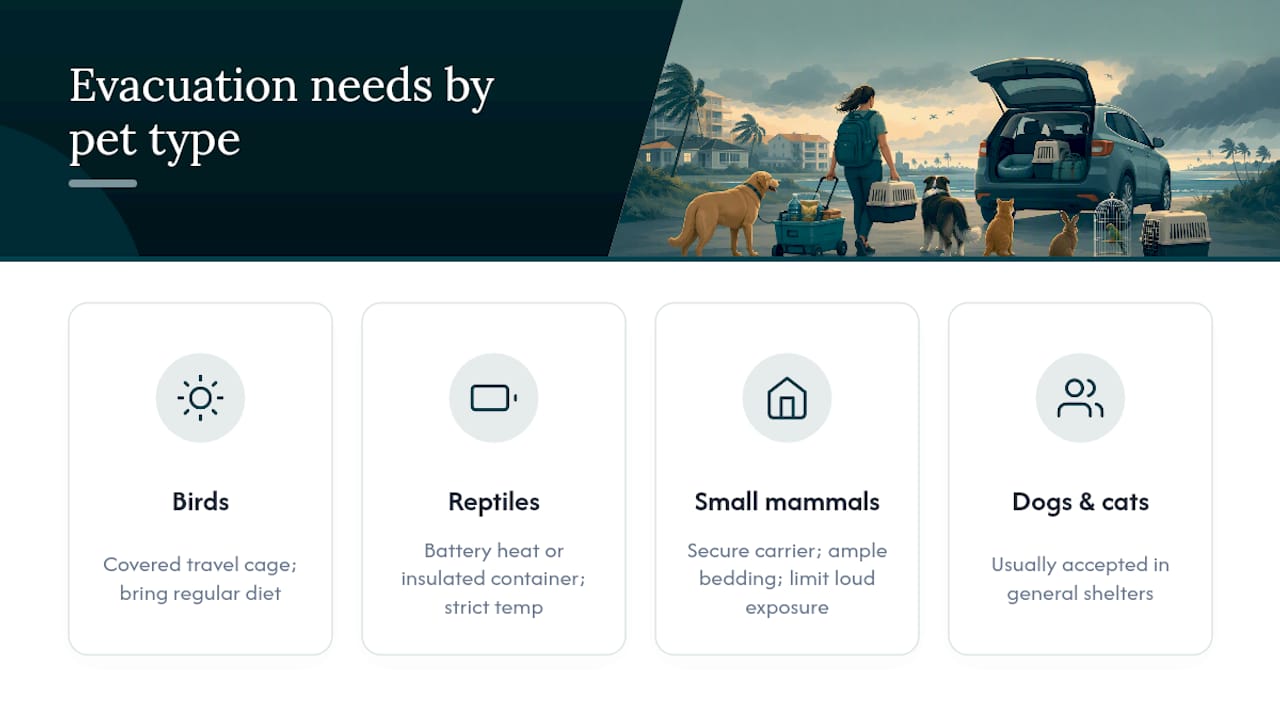
Standard hurricane advice assumes a dog or cat. Owners of birds, reptiles, and small mammals need a different playbook, because most public shelters and many hotels simply aren’t set up for them.
Birds need a covered travel cage, a stable temperature range, and their regular diet since sudden food changes can cause digestive stress during an already stressful trip. Bring a spare set of perches and dishes, since airflow inside a car during transport can knock lightweight cage items loose.
Reptiles are the trickiest evacuees in Florida because temperature control isn’t optional for them, it’s survival. Pack a battery-powered heat source or insulated container, since a car losing air conditioning on I-95 in August can turn deadly fast for a bearded dragon or ball python. Never assume a hotel or shelter will make an exception for a reptile enclosure.
Small mammals like rabbits, guinea pigs, and hamsters need enough bedding and a secure travel carrier that limits noise exposure. Loud shelter environments and unfamiliar smells stress them more than dogs and cats, sometimes to the point of refusing food for days.
For any of these pets, your realistic sheltering options are usually a pre-arranged host, a specialty boarding facility, or riding out the evacuation in your own vehicle with proper climate control, since general shelters rarely accommodate them. Call ahead. Don’t discover this gap when the storm is already 12 hours out.
Build a Communication Plan for Your Pet’s Care
Your pet plan is incomplete if you’re the only person who knows it exists. Write down your pet’s feeding schedule, medications, vet contact, and behavioral quirks on a single card, and give a copy to at least one trusted person outside your household.
If you evacuate separately from a family member, or if you’re unreachable during the storm, someone else needs to know who’s authorized to make decisions for your pet, including emergency veterinary care. Add your vet’s phone number, the nearest 24 hour emergency animal hospital, and your county’s animal control line to your phone contacts under names you’ll recognize in a panic, not just a generic “vet” entry.
If a neighbor, friend, or family member might need to retrieve or care for your pet in your absence, tell them exactly where the kit is stored and how the carrier latch works. It sounds minor until someone’s fumbling with an unfamiliar crate door at midnight. Share this plan with your building’s property management too, especially if you’d want them to know a pet is inside during a mandatory evacuation notice.
Local Ordinances and Legal Requirements for Pet Evacuation
Florida’s PETS Act compliance requirement means counties operating public shelters must plan for pets, but that’s a floor, not a guarantee of space at your specific shelter during your specific storm. Some counties add their own rules on top: proof of current rabies vaccination at the door, breed or species restrictions, or mandatory crates rather than leashes inside shelter walls.
Leaving a pet behind during a mandatory evacuation isn’t just risky, it can also run afoul of local animal welfare ordinances in several Florida counties, which treat abandonment during a declared emergency seriously. Check your specific county’s ordinance language on animal welfare during declared emergencies, since enforcement and definitions vary by jurisdiction. The safest legal and practical position is the same one: evacuate with your pet, confirmed shelter in hand.
A Local Perspective on Pet Safety and Community Prep
Share your pet plan with a neighbor before hurricane season starts. Register for county alerts now, and call your property manager while the sky is still clear.
— Ayman
Cynthia Gardens: Pet-Friendly Living Built for Storm Season Peace of Mind
Renting in a building with clear pet policies and responsive management makes hurricane prep dramatically easier than guessing at rules mid-evacuation. The community is pet-friendly with transparent pricing and direct communication with property management to help residents understand expectations during a storm warning.

Our pet-friendly one-bedroom apartments come with straightforward pet policies spelled out from day one, no hidden fees, no last-minute surprises when you’re already stressed about an incoming storm. Pair that with our pet owner apartment checklist and you’ve got a head start most renters don’t. If you’re searching for a place that treats your pet’s safety as part of the lease, not an afterthought, explore our Boca Raton apartment community and schedule a virtual tour today.
Sources
Bookmark your county emergency management page now. Verify shelter details with the Statewide Emergency Shelter Plan, the UF veterinary checklist, and Ready before storm season peaks.
- Make a Pet Plan — Florida Division of Emergency Management
- Hurricane checklist for companion animals — University of Florida Small Animal Hospital (2026)
- Prep Your Pets — UF/IFAS Disaster Preparation & Recovery
FAQ
Where Is the Safest Place to Live in Florida for Hurricanes?
No part of Florida is hurricane-proof, but inland counties farther from the coast, like parts of central Florida, generally see less storm surge and wind damage than coastal areas. Your safest bet is always the location your county emergency management office designates for the current storm, not a general assumption about geography.
Do Hotels Have to Accept Pets During a Hurricane?
No federal or Florida law requires hotels to accept pets, even during a declared emergency, so you must call ahead and confirm pet policies, size limits, and fees before you rely on a specific hotel. Some hotels do relax normal pet restrictions during mandatory evacuations, but this varies property by property.
What Should Be on My 2026 Hurricane Prep List for Pets?
Pack seven days of food, one gallon of water per pet per day, a two-week medication supply, a properly sized crate, leash, ID tags, a recent photo, and both printed and digital medical records, per UF veterinary guidance. Confirm a pet-friendly shelter, hotel, or host before storm season starts, not during it.
What’s the Worst Month in Florida for Hurricanes?
September is historically the peak month for Atlantic hurricane activity affecting Florida, with the overall season running from June through November. That makes early summer the ideal window to finish your pet hurricane plan Florida checklist, well before storm risk climbs.