
There is no universal credit-score cutoff to rent an apartment. Landlords set their own thresholds, and most conventional properties look for something in the 620 to 650 range, while luxury buildings often push closer to 680 or 720. A mid-600s score usually clears without extra steps. Below 600, expect to offset the number with a larger deposit, a cosigner, or solid income proof. Either way, pull your credit report before you apply.
TL;DR:
- Most landlords accept scores around 620 to 650 for standard apartments, but luxury buildings often require at least 680 to 720.
- A credit score below 600 may still be approved if you provide a larger deposit, a cosigner, or proof of solid income.
- Credit is only part of the screening; income verification and landlord references heavily influence approval outcomes.
- Complete application packages with pay stubs, bank statements, and landlord contacts accelerate approval times, especially with manual reviews.
- Falsified information and prior evictions are common reasons for denial, but disputing inaccuracies and offering extra security can improve chances.
Table of Contents
- What Counts as a Good Credit Score for Apartment Rent
- Beyond the Number: What Else Landlords Check
- How to Get Approved With Low or No Credit
- What to Have Ready and How Long Screening Takes
- Why Applications Get Denied and What You Can Do About It
- Operator Perspective: What Leasing Teams Actually Value
- A More Transparent Way to Apply in Boca Raton
- Sources
What Counts as a Good Credit Score for Apartment Rent
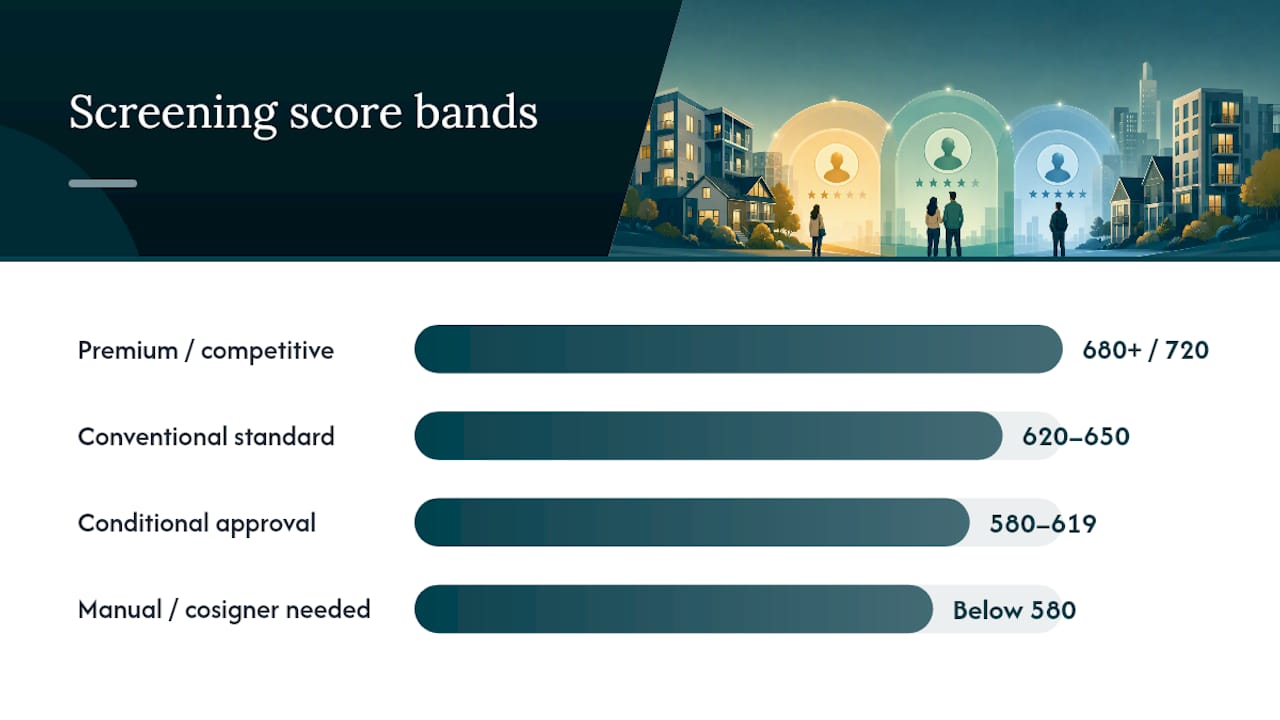
Landlords typically sort applicants into rough bands rather than a single pass or fail line. A score around 620 to 650 tends to clear standard screening at most conventional properties with no extra paperwork. Push into premium buildings, luxury high rises, or units in competitive markets like South Florida, and the expected floor often climbs to 680 or 720. Workforce and income-restricted housing frequently sets a lower bar, sometimes with built-in offsets for applicants who show steady income instead of a long credit history.
The same number can mean different things depending on what built it. A 630 from a thin file with no late payments reads very differently to a leasing agent than a 630 dragged down by a recent collection. Score bands come from FICO or VantageScore models, and landlords don’t always know or care which one they’re looking at.
Here’s roughly how the bands play out in practice:
- 680 and above: Usually sails through automated screening with no added conditions.
- 620 to 679: Standard approval range for most conventional apartments.
- 580 to 619: Often needs one compensating factor, like a larger deposit.
- Below 580: Typically requires a cosigner, prepaid rent, or a manual review from a smaller landlord.
Beyond the Number: What Else Landlords Check
Credit is one input, not the whole decision. Income verification carries just as much weight, and most property managers apply a 2.5 to 3 times the monthly rent guideline when checking whether you can actually afford the lease. If your income comes from freelance work, tips, or multiple part-time jobs, bank statements covering two to three months usually do more to reassure a landlord than a single pay stub.
Screening also pulls in eviction records, collections, criminal background checks, and how past landlords describe you. A clean credit file paired with a prior eviction will still get flagged, and a lukewarm reference from a previous landlord can outweigh a decent score entirely.
Many larger management companies run all of this through a single composite screening report that spits out a pass or fail recommendation. Smaller, independent owners are far more likely to read the actual file and weigh context, which is one reason two landlords can look at the same applicant and reach opposite conclusions.
A few numbers worth knowing before you apply:
- Most landlords want income at 2.5 to 3 times the monthly rent.
- Falsified information on an application is one of the most common outright denial triggers, according to Nolo’s legal guidance for landlords.
- Composite screening reports often combine credit, eviction, and criminal history into one score landlords never see broken apart.
How to Get Approved With Low or No Credit
Getting approved with a thin or damaged credit file comes down to sequencing. Do these roughly in order, and you’ll waste far less time chasing buildings that were never going to say yes.
- Target the right type of landlord first. Independent owners and small management companies are more likely to manually review a full application, while large corporate properties often run hard automated cutoffs that reject anything under their line, regardless of context.
- Build a compensating offer before you’re asked. A cosigner or guarantor with strong credit, an extra month or two of security deposit where local law allows it, or several months of prepaid rent all signal reduced risk. Pair any of these with verified income and your file looks meaningfully stronger.
- Assemble a full application packet, not a partial one. Pay stubs, two to three months of bank statements, a letter from a prior landlord, and a short written explanation of what happened to your credit (a medical bill, a job loss, a divorce) all help a human reviewer say yes.
- Use rent-reporting services with realistic expectations. Reporting on-time payments to the credit bureaus can help over months, not overnight, and no service can promise a specific score jump.
- Watch for scams disguised as help. The FTC warns renters that any service promising guaranteed approval or demanding a large upfront fee before you’ve even seen a unit is a red flag worth walking away from.
If you’re starting from zero credit rather than damaged credit, the strategies differ slightly: you’re proving stability rather than repairing a record, so income documentation and references carry even more weight.
Pro Tip: Call the leasing office before you submit anything and ask directly what their credit floor is and whether they do manual reviews. Five minutes on the phone can save you an application fee on a building that was never going to approve you.

What to Have Ready and How Long Screening Takes
A clean, complete packet moves faster through review than a scattered one. At minimum, expect to provide a government ID, two to three recent pay stubs or an income letter, one to two months of bank statements, and contact information for a prior landlord. Optional extras like a written explanation letter or proof of prepaid rent can tip a borderline file in your favor.
Automated screening at larger properties often returns a decision within 24 to 48 hours. Manual reviews at smaller properties can take three to five business days, sometimes longer if they’re following up on references. Submitting complete documents upfront, rather than trickling them in after a request, consistently shortens that window.
- Government-issued photo ID
- Two to three recent pay stubs or an income verification letter
- One to two months of bank statements
- Prior landlord reference contact
- Optional: written explanation letter, proof of prepaid rent
Why Applications Get Denied and What You Can Do About It
Most hard denials trace back to a small set of issues: a prior eviction, an unpaid judgment, or falsified information on the application. These carry more weight than a low score alone because they signal risk a compensating deposit can’t easily offset.
If you’re denied because of your credit report, federal law entitles you to an adverse-action notice naming the reporting agency and your right to a free copy of that report. From there:
- Pull your report and dispute any inaccurate items directly with the bureau.
- Ask the landlord what specifically drove the denial.
- Offer a cosigner or larger deposit and reapply or apply elsewhere.
- Target independent owners over corporate properties with rigid automated cutoffs.
Applicants using housing vouchers should check with their local housing authority separately, since voucher programs run their own eligibility rules that don’t always mirror standard credit screening.
Operator Perspective: What Leasing Teams Actually Value
Consistency matters more than most applicants assume. When Cynthiagardens applies the same written screening standard to every applicant, it isn’t just about fairness. It’s what lets a manual reviewer say yes to a strong file with a mediocre score, without second-guessing the decision later. Documents that shorten that review the most: verified income and a direct landlord reference. Virtual tours and clear published criteria also mean applicants know what they’re walking into before they submit anything. If you’re unsure where you stand, ask the leasing team how they actually review applications. Most will tell you.
— Ayman
A More Transparent Way to Apply in Boca Raton
An option for renters tired of guessing whether their credit will pass an automated cutoff before they ever get a human to look at their file. Pricing is published with no hidden fees, application criteria are stated upfront, and the leasing team reviews compensating documentation like verified income, a cosigner, or landlord references rather than relying solely on automated pass or fail processes.
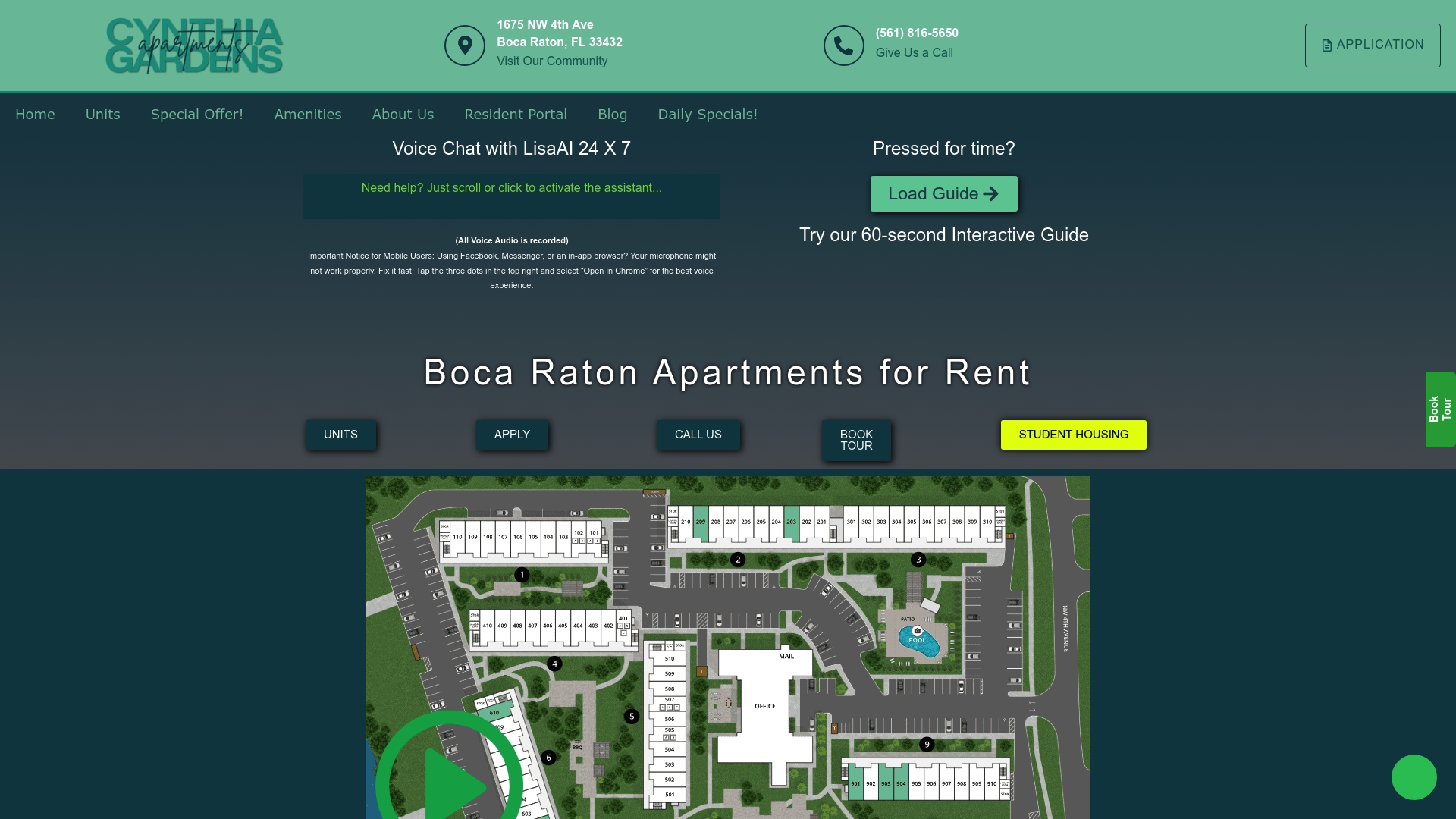
Virtual tours and an interactive property map let you narrow down a one-bedroom apartment before spending an application fee on a building that may not approve you. If your credit history is thin, recovering, or simply not what a corporate property wants to see, explore available units in Boca Raton and reach out to the leasing team about what documentation strengthens your specific application.
Sources
- Credit Score Requirements to Rent an Apartment (AmeriSave)
- Legal reasons landlords reject rental applications (Nolo)
- Rental listing scams (FTC)
- What is a FICO score? (CFPB)
- Housing Choice Voucher Program (HUD)