
An apartment admin fee is a one-time, usually nonrefundable charge for leasing paperwork and onboarding, typically due at lease signing or move-in. Before you hand over a card, ask the leasing office for a written, itemized breakdown of what the fee actually pays for. If they can’t explain it in plain terms, that’s your first sign to push back or negotiate.
TL;DR:
- Most admin fees between $100 and $300 are industry standard and cover lease processing, account setup, and move-in coordination at professionally managed buildings.
- State regulations vary widely; some require fees to be disclosed before signing, and others restrict or ban certain charges, making proper documentation essential.
- Verify what the fee covers by requesting a written breakdown and avoid duplicate charges by understanding the differences from application, move-in, and security fees.
- Admin fees are typically nonrefundable once paid at lease signing, but asking about refunds upfront and securing promises in writing can prevent disputes.
- Negotiation is possible, especially by offering longer leases or demonstrating strong credit and income; always request any fee waivers or credits in writing before signing.
Table of Contents
- What Does an Apartment Admin Fee Actually Cover?
- Is an Apartment Admin Fee Legal in Your State?
- How Much Should an Apartment Admin Fee Cost?
- When Do You Pay, and Can You Get It Back?
- Can You Negotiate an Apartment Admin Fee?
- What Does Fee Transparency Look Like Done Right?
- The One-Paragraph Takeaway on Admin Fees
- Ready to Tour a Property That Shows Its Fees Upfront?
- Where to Check Fee Rules and File a Complaint
- Sources
What Does an Apartment Admin Fee Actually Cover?
A legitimate admin fee should pay for real administrative labor: processing your lease, setting up your resident account in the property’s software, preparing move-in documents, and coordinating key or fob issuance. Some properties fold in utility account setup or parking registration, which is reasonable if it’s spelled out.
The problem is that “admin fee” has become a catchall term. Property managers sometimes stack it on top of an application fee, a move-in fee, and a security deposit, without making clear what each one buys you.
Here’s how the four commonly confused charges actually differ:
- Application fee: Covers the cost of running your credit and background check before you’re approved. Read more about the real role of application fees and how they differ from admin charges.
- Admin fee: Covers lease drafting, account setup, and paperwork processing after you’re approved.
- Move-in fee: Often covers wear-and-tear on common areas (elevators, hallways) during your move.
- Security deposit: Refundable (in most cases) money held against damage or unpaid rent, governed by state deposit law.
Watch for vague language like “administrative processing fee” or “convenience fee” with no line-item explanation. If a property charges both an application fee and an admin fee that appear to cover the same background check or paperwork, ask directly which fee pays for which task. A property that can’t answer that question in one sentence probably hasn’t thought it through either. For a deeper look at where these charges overlap, this Boca Raton renter’s guide to hidden fees breaks down common duplication patterns.
Is an Apartment Admin Fee Legal in Your State?
Whether an admin fee is legal depends entirely on your state’s landlord-tenant law and whether the fee is disclosed in the lease. There’s no federal ban on admin fees, but states are increasingly regulating how they’re charged and disclosed. Some states cap the amount, some require the fee to be itemized in the lease before signing, and a handful restrict or ban certain fee types outright.
DepositHawk’s breakdown of state rules shows this variation clearly. A fee that’s routine in one state might be unenforceable in another if it isn’t disclosed as a separate line item before the tenant signs. This is exactly why reading your lease’s fee section matters more than reading a listing’s advertised rent.
Regulatory scrutiny of vague fees is also rising at the federal level. The FTC’s enforcement action resulted in a $48 million settlement with Invitation Homes over undisclosed tenant fees, a case that put the entire rental industry on notice about junk fees hidden behind generic labels.
A single case doesn’t set nationwide policy, but a $48 million settlement over undisclosed fees signals that regulators are actively watching how rental companies label and disclose charges.
If you believe a fee was charged illegally or without proper disclosure, document everything:
- Save the lease, the fee schedule, and any email or portal message mentioning the fee.
- Screenshot the listing or application page that advertised rent without the fee.
- File a complaint with your state attorney general’s consumer protection division.
- Contact HUD’s Fair Housing office if you suspect the fee is tied to discriminatory treatment.
- Consider small-claims court for disputes under your state’s dollar threshold if the property won’t refund an improperly charged fee.
How Much Should an Apartment Admin Fee Cost?
Admin fees typically range from $50 to $500, with $100 to $300 being standard for professionally managed properties. Anything well above that range deserves a direct question about what’s included.
Several factors push fees higher or lower. Competitive rental markets with low vacancy tend to support higher fees because demand absorbs the cost. Luxury or amenity-heavy buildings sometimes bundle onboarding tasks (smart-lock programming, resident app setup) into a larger fee, especially those offering amenities like pools, gyms, and dog parks. Smaller independent landlords often charge less, or skip the fee entirely, because they don’t run the same back-office software.
Use this quick checklist before you accept a quoted fee:
- Compare the fee against two or three similar properties in the same neighborhood.
- Ask what specific tasks the fee funds, and get the answer in writing.
- Check your lease for duplicate charges (the same task billed under both an application fee and an admin fee).
- Confirm whether the fee scales with unit size or is flat across the property.
Budgeting for these charges alongside your first month’s costs matters. A move-in cost breakdown for Boca Raton apartments can help you see how admin fees fit into your total move-in number.
When Do You Pay, and Can You Get It Back?
Admin fees usually come due at one of three points: when you submit your application, once you’re approved and sign the lease, or at move-in alongside your first month’s rent and deposit. Most properties charge it at signing, bundled with the deposit.
Because the fee is billed as compensation for work already performed (processing your file, drafting the lease), it’s typically nonrefundable even if you back out afterward. That said, refund rights depend heavily on timing and what you’re told beforehand.
- Ask before paying whether the fee is refundable if you’re denied or if you cancel before signing.
- Get any refund promise in writing, ideally in the lease or a signed addendum, not a verbal assurance.
- Keep every receipt and confirmation email tied to the payment.
- If you’re denied housing after paying, request a refund in writing within a few days and note the date you asked.
- Escalate to your state attorney general’s office if the property refuses a refund it agreed to in writing.
Can You Negotiate an Apartment Admin Fee?
Yes, and it works more often than renters expect. Landlords have more flexibility on admin fees than on rent itself, because the fee isn’t tied to a rent-comparable formula.
Before you ask for a waiver, get your paperwork in order: a recent credit report, two or three references, and proof of income (usually pay stubs or an offer letter showing you clear the property’s income threshold). Showing up prepared changes the conversation, because it signals you’re a low-risk tenant worth accommodating.
Some scripts that tend to work:
- “I’m ready to sign a 13 or 14-month lease instead of 12. Can the admin fee be waived in exchange?”
- “Can this fee be credited toward my first month’s rent instead of charged separately?”
- “I’ve seen comparable units nearby without this fee. Is there flexibility here?”
- “My credit score is above 720 and I can provide proof of income above the requirement. Does that change the fee?”
Negotiation data from RentCafe shows that trading a concession, like a longer lease term or an earlier move-in date, tends to succeed where a blunt refusal doesn’t. Property managers have room to waive fees; they rarely have room to waive rent.
Pro Tip: Ask for the fee waiver or credit in writing before you sign anything. A verbal “sure, we can work with you” from a leasing agent means nothing once the lease is signed and the fee is baked into your total due.
Know when to walk away. If a property won’t itemize the fee, won’t put a waiver in writing, and the fee sits well above the $100 to $300 range typical for professionally managed buildings, that’s a pattern worth taking seriously before you sign anything.
What Does Fee Transparency Look Like Done Right?
Some modern apartment communities structure their leasing process around upfront, itemized pricing so renters know the full cost before they commit to a unit. That includes online lease previews, so you can read every fee line before you’re standing in a leasing office signing under time pressure.
Some properties use AI chat support and virtual tours, letting you ask fee-specific questions and see the actual unit before a formal application, rather than relying on a generic listing photo and a rushed phone call.
When you’re evaluating any landlord, ask for the same level of disclosure:
- A written, itemized fee schedule before you apply.
- Access to the lease document itself, not just a summary, before signing day.
- A clear answer on which fees are refundable and under what conditions.
- Confirmation of the fee in writing, whether that’s email, a portal message, or a lease addendum.
If a leasing office resists giving you any of that, take it as information about how the rest of the tenancy will go.
The One-Paragraph Takeaway on Admin Fees
An apartment admin fee is a one-time charge for onboarding paperwork, typically $100 to $300 at professionally managed properties, and it’s rarely refundable once you sign. Your leverage is timing: ask before you apply, confirm the number before you sign, and get any waiver or credit in writing.
Run this checklist on every unit you tour or apply to: Ask what the fee covers. Confirm it matches your state’s disclosure rules. Get it in writing, every time. Negotiate using a longer lease or strong application as leverage. Walk away if the number can’t be justified or documented.
For anything that touches state-specific legal thresholds or a fee dispute that’s escalated past the leasing office, a state attorney general’s consumer protection division or HUD’s fair housing contacts are the right next stop, not another forum thread.
— Ayman
Ready to Tour a Property That Shows Its Fees Upfront?
Most of the frustration around admin fees comes from not knowing the number until you’re already committed to a unit. Some apartment communities skip that problem by listing pricing upfront, with no hidden line items added after you’ve fallen for the apartment.
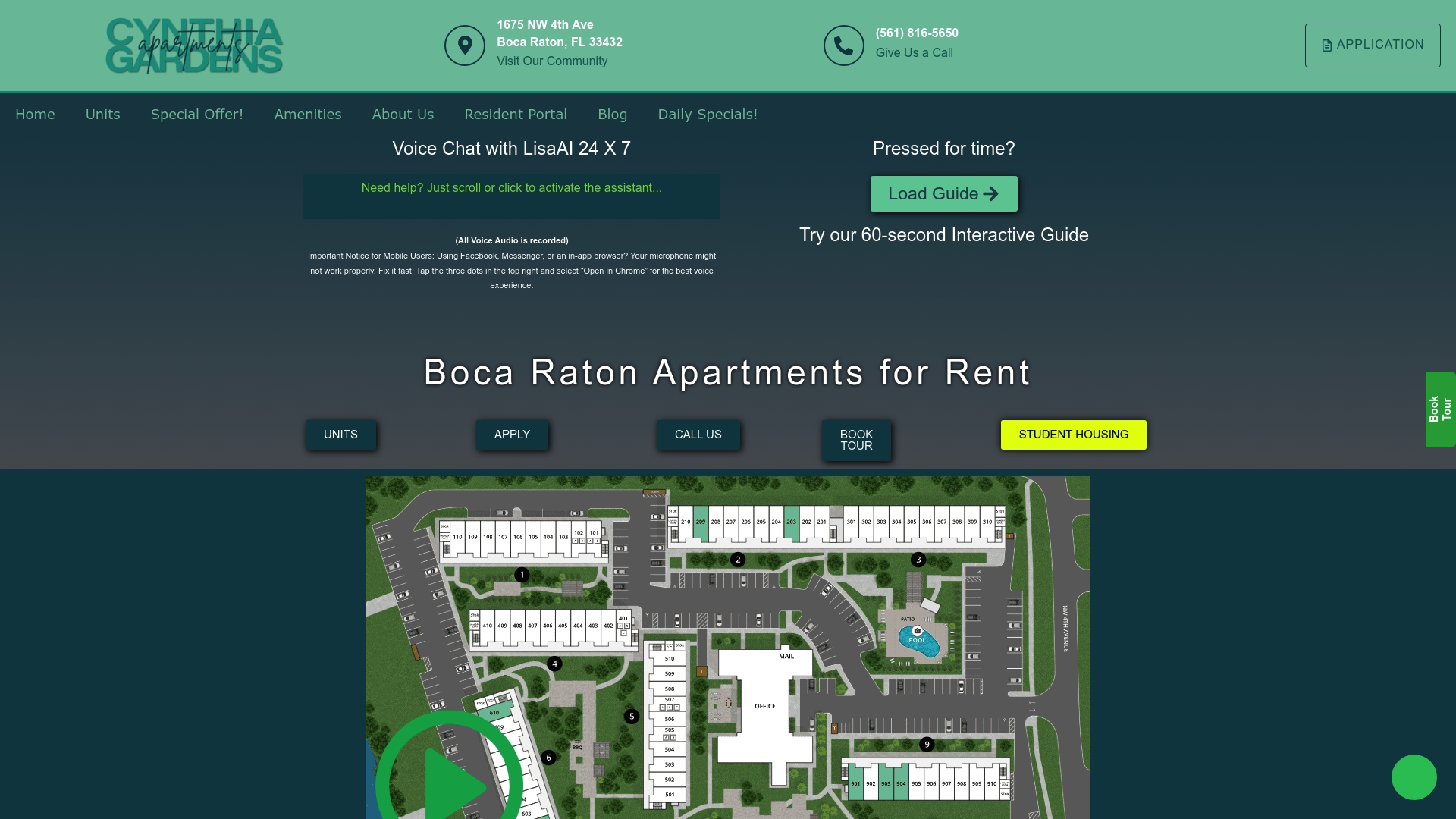
Many one-bedroom listings include a virtual tour, an interactive property map, and AI chat support so you can ask about fees, lease terms, or move-in timing before you ever schedule an in-person visit. If you want to compare the full cost of a unit against what you’re being quoted elsewhere, start with the Boca Raton apartment complex overview and ask the leasing team for a written fee breakdown alongside the online lease preview. That single request tells you more about a property than any listing photo ever will.
Where to Check Fee Rules and File a Complaint
For legal questions specific to your state or an unresolved fee dispute, go straight to the source instead of a forum or blog post:
- HUD’s Fair Housing contact page for discrimination or disclosure complaints tied to housing.
- Your state attorney general’s consumer protection division for fee disputes and enforcement complaints.
- Consumer reporting like the AOL coverage of FTC enforcement actions for background on how regulators treat undisclosed fees.
Rules vary by state, so confirm your state’s specific disclosure and cap requirements before assuming a fee is or isn’t enforceable.
Sources
- HUD contact us: Fair Housing
- 5 Apartment Fees To Question Before Signing – AOL
- What Is an Administrative Fee When Renting an Apartment? – LegalClarity
- Can my landlord charge an admin fee? | DepositHawk