Table of Contents
- Why Maximizing Space in a One-Bedroom Rental Matters
- Small Apartment Storage Ideas That Actually Work
- Best Furniture for Small Apartments
- How to Organize a Small Bedroom Without Wasting Space
- Create Zones Instead of Pushing Furniture to Walls
- Declutter and Use Light to Expand Your Perception
- Design Your Rental for Comfort and Function
- Frequently Asked Questions
Last Updated: August 31, 2026
Why Maximizing Space in a One-Bedroom Rental Matters
One-bedroom apartments in Boca Raton are getting smaller even as rent climbs higher. The average one-bedroom runs 767 square feet, and prices have jumped 3.3% year-over-year, making every square inch count (rentcafe.com). Most renters arrange furniture against walls in the traditional way and accept that their space feels cramped, but research reveals this approach actually makes rooms feel smaller. The real solution is understanding how to design your rental strategically through smart storage, thoughtful furniture arrangement, and zone-based design.
Maximizing space in a one-bedroom rental isn’t about buying smaller furniture, it’s about strategic storage, vertical thinking, and zone-based design that creates psychological separation without walls.
Small Apartment Storage Ideas That Actually Work
Storage is the hidden lever most renters ignore. Decluttering alone can increase perceived living space by up to 30 percent, but decluttering only works if you have somewhere to put things (storagecafe.com). The key is thinking vertically. Efficient vertical storage can increase usable space by up to 40 percent in small living areas (storagecafe.com).
Vertical Storage Solutions
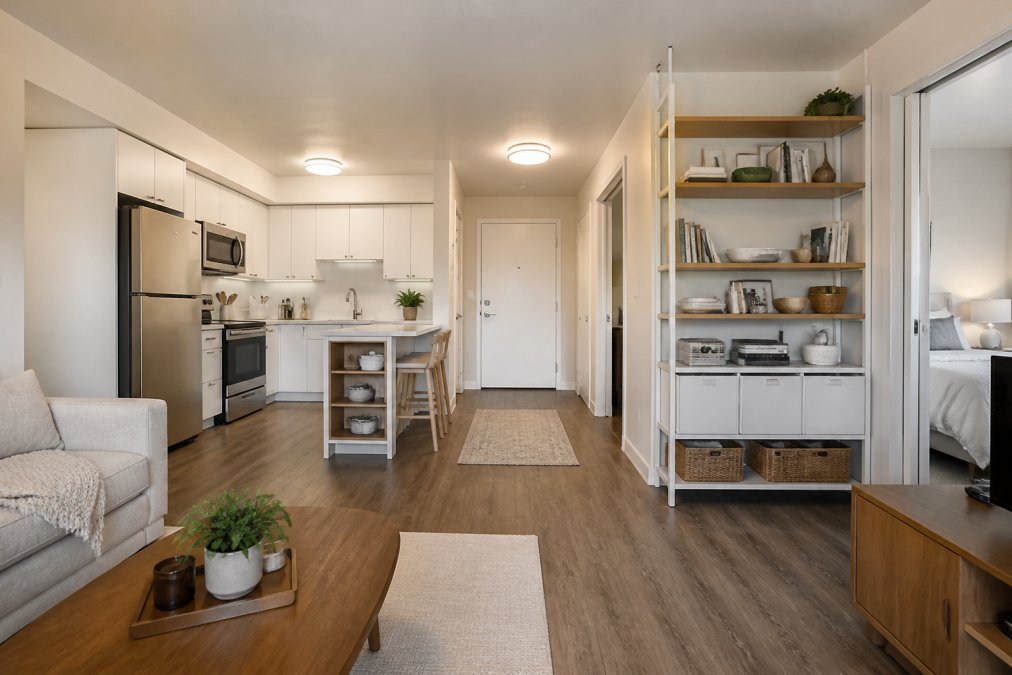
Wall-mounted shelving is the fastest way to reclaim floor space. Install shelves above your desk, bed, or sofa to hold books, plants, and decorative items without consuming any footprint. Floating shelves work especially well because they don’t have visible brackets underneath, keeping sightlines clean.
Corner shelving units are underrated. A tall, narrow corner shelf tower holds far more than it appears to and draws the eye upward, making the room feel taller. Pegboards mounted above your desk or entryway hang bags, keys, and small items while remaining customizable without drilling new holes.
Tension rods inside cabinets and closets create hidden storage tiers. Hang one horizontally inside a cabinet to create a second shelf for folded items, or use vertical tension rods to hang scarves and lightweight clothing, effectively doubling your storage.
Under-Bed and Behind-Door Storage
Under-bed storage containers hold a surprising volume and keep seasonal items completely out of sight. Measure your bed’s clearance height first; low-profile containers work best. Behind-door storage racks hold shoes and accessories in a spot most renters overlook. Over-the-door hooks can support hanging organizers with multiple pockets for smaller items.
Closet organization systems transform dead space into functional storage. A simple rod divider creates two hanging sections where one existed. Shelf dividers stack folded items vertically so you can see everything at a glance without toppling stacks.
:::pro-tip
Install floating shelves at eye level in your main living area. Eye-level storage creates a sense of intentional design and makes the room feel more finished, not more cluttered.
:::
Best Furniture for Small Apartments
Furniture selection makes or breaks a small space. The right pieces serve multiple functions and reinforce zone-based design.
Multi-Functional Pieces That Earn Their Space
A fold-out sofa bed is the workhorse of small apartments. During the day, it’s your seating; at night, it’s your bed. Ottomans with hidden storage serve as seating, a footrest, a side table, and a storage container. A wall-mounted desk folds up when you’re not working, reclaiming floor space instantly. Nesting tables stack when you need floor space and separate when you need surface area.
Choosing the Right Scale and Style
Furniture scale matters more in small spaces than anywhere else. Choose pieces proportional to your space; lower-profile furniture makes rooms feel taller, and narrower pieces leave more floor visible. Furniture with legs rather than skirted bases creates visual lightness because you can see the floor underneath.
Light, neutral tones recede and make spaces feel larger. Warm minimalism, the 2026 trend of clean lines paired with creamy ivories, sandstone beiges, and soft mushroom tones, works beautifully in small apartments because it balances visual calm with warmth. Avoid heavy, dark furniture that absorbs light and makes rooms feel smaller.
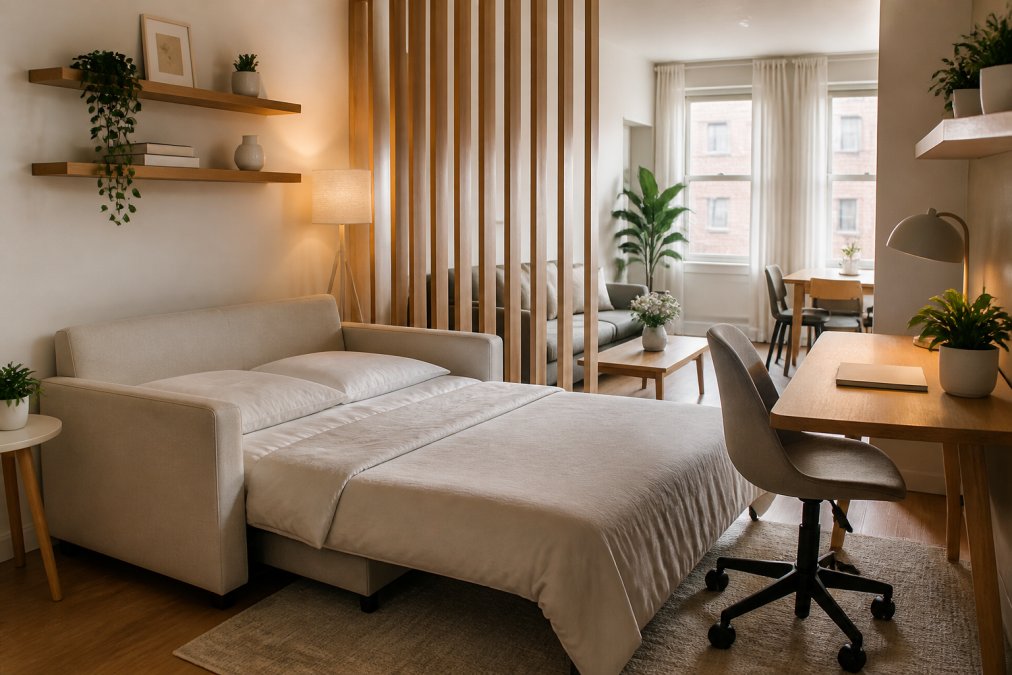
Pushing all furniture against walls actually makes rooms feel smaller by creating a “dead center.” Zone-based design is the modern alternative that actually works.
How to Organize a Small Bedroom Without Wasting Space
Your bedroom is where spatial efficiency matters most because it’s where you sleep. Start with your closet using shelf dividers to stack folded items vertically so you can see your entire inventory. Hang frequently worn items at eye level; seasonal clothing goes in under-bed storage or on higher shelves.
Nightstands should hold only essentials: a lamp, phone charger, and perhaps a book. Everything else goes into drawers or the closet. Wall space above your bed can hold floating shelves for plants or books, drawing the eye upward and making the ceiling feel higher. Avoid heavy artwork directly above the bed, which creates a sense of weight.
Create Zones Instead of Pushing Furniture to Walls
Zone-based design is the 2026 framework that separates modern small-space design from outdated advice. Instead of pushing everything to walls, create distinct functional areas: a sleeping zone, a working zone, a lounging zone. These zones are psychological, using furniture placement, area rugs, lighting, and sometimes a subtle room divider to signal different purposes without actual walls. downsizing your furniture.
Start by identifying your functional needs and mapping where each activity happens. A low bookshelf can serve as a visual boundary between your bed and living area without blocking sightlines. An area rug under your seating area anchors that zone and creates visual separation.
Lighting reinforces zones. A desk lamp illuminates your work area; a floor lamp beside a reading chair defines that corner. Overhead lighting can stay softer and more ambient. Room dividers work when chosen carefully. Lightweight fabric dividers don’t block light or make spaces feel enclosed. Folding screens add style while remaining flexible.
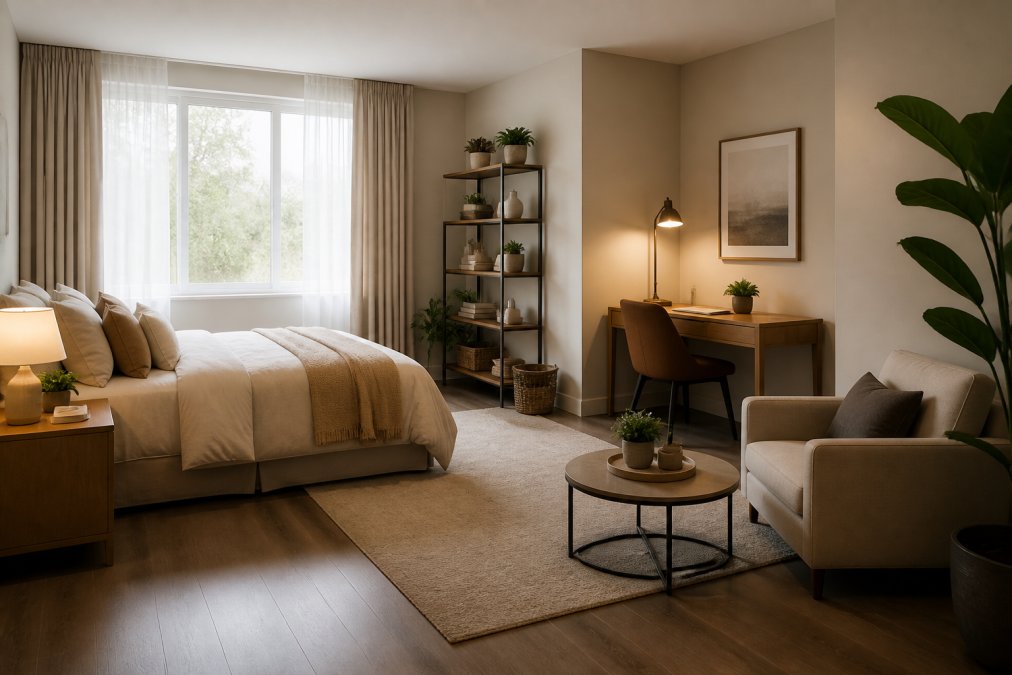
Research shows that floor plan shape significantly impacts how people experience small living spaces, with participants reporting greater attachment to spaces with shorter floor plans. Creating distinct zones essentially creates multiple “shorter” functional areas, making spaces feel better than one long, stretched-out layout.
Declutter and Use Light to Expand Your Perception
Clutter is the enemy of perceived space. Strategic decluttering creates the feeling of openness without owning nothing. Start by removing items from surfaces. Your kitchen counter should hold only active appliances. Your bedroom nightstand should have a lamp and perhaps a book. Your living room shelves should display items you love, not everything you own.
Vertical storage means fewer items on horizontal surfaces, which immediately makes your space feel larger. Clear surfaces read as open space, even when the room’s actual square footage hasn’t changed.
Light amplifies the effect. Natural light makes spaces feel open and airy. Keep window treatments minimal and light-colored; sheer curtains diffuse sunlight without blocking it. Mirrors opposite windows bounce light around the room and create the illusion of depth. Use multiple light sources, a desk lamp, floor lamp, and wall sconces, to distribute light evenly. Warm white bulbs around 2700K color temperature create the cozy feel trending in 2026 while brightening the space.
Design Your Rental for Comfort and Function
A well-designed one-bedroom doesn’t sacrifice comfort for efficiency. Color sets the tone; creamy ivories, sandstone beiges, and soft mushroom tones create a calm, cohesive backdrop that makes spaces feel larger. Accent colors can come through in textiles, plants, or artwork.
Texture adds warmth without clutter. A soft throw blanket, wool area rug, plants, and natural materials like wood or woven storage baskets create visual interest while keeping the space intentional. If you’re renting and can’t change flooring, large area rugs achieve a similar effect.
Personal touches matter. A few plants, artwork you love, and items reflecting your personality make a small space feel like yours. The key is restraint, choose a few meaningful pieces rather than filling every surface.
Renters who work from home, have pets, or frequently entertain benefit most from zone-based design. These situations demand multiple functional areas within a single space, making intentional zoning essential rather than optional.
Maximizing space in a one-bedroom rental comes down to three principles: smart storage that uses vertical space, zone-based furniture arrangement that creates function without walls, and intentional decluttering that makes every square foot count. These strategies work in any one-bedroom. The difference between a cramped rental and one that feels open and functional isn’t square footage, it’s design. At Cynthia Gardens, our spacious one-bedroom apartments with high ceilings and open layouts provide an ideal foundation for these strategies. With stainless steel appliances, quartz countertops, and thoughtful floor plans engineered for livability, our residents start with an advantage. Schedule a tour today to see how the right apartment foundation transforms your ability to live comfortably in a one-bedroom.
Frequently Asked Questions
Q: How can I make my one-bedroom apartment feel bigger?
A: Decluttering increases perceived living space by up to 30 percent, while efficient vertical storage can add up to 40 percent more usable space. Combine these strategies with zone-based design, which uses functional areas instead of pushing all furniture to walls, and choose lighter, neutral color palettes. Open floor plans with high ceilings also create a stronger sense of grandeur and spaciousness.
Q: What are the best storage solutions for small apartments?
A: Vertical storage is the most effective approach, utilizing wall space with shelving, wall-mounted cabinets, and hanging organizers. Under-bed storage containers, over-the-door racks, and corner shelving maximize often-wasted areas. Multi-functional furniture like ottomans with storage and murphy desks combines seating or work surfaces with hidden storage, making every piece earn its place in your one-bedroom rental.
Q: How do I organize a small bedroom without wasting any space?
A: Start by categorizing items and removing anything you don’t use regularly. Use drawer dividers and shelf organizers to maximize closet and dresser space. Install floating shelves above your bed or desk for books and décor. Consider a bed frame with built-in drawers or storage compartments. Zone your bedroom by function, sleeping area, work corner, dressing space, rather than cramming everything against walls, which can make the room feel smaller and less functional.
Q: Can I use vertical space in a rental apartment without damaging walls?
A: Yes. Use damage-free solutions like adhesive hooks, tension rods, and removable shelving systems. Wall-mounted organizers, pegboards, and over-the-door racks require no drilling. For heavier items, command strips and adhesive picture hangers work on most surfaces. Freestanding shelving units and ladder shelves also maximize vertical space without permanent installation, making them ideal for rentals where you cannot modify walls.