
Pack for one semester, not four years. That single mindset shift solves more move-in headaches than any product on your list. The most common mistake first-year students make is overpacking. They haul a bedroom’s worth of furniture, out-of-season clothes, and duplicate kitchenware into a room built for two people and roughly 130 square feet.
Here’s your immediate action list. Do these four things today, before you buy a single storage bin:
- Confirm your exact move-in date and assigned time slot with your housing portal.
- Check your mattress size (almost always Twin XL, not standard Twin).
- Message your roommate about who’s bringing the mini-fridge, microwave, and rug.
- Skim your housing handbook’s prohibited items list before you shop for anything.
A printable, category-based checklist covering bedding, bath, storage, tech, and clothing keeps you from scrolling through five browser tabs on move-in morning. Screenshot the condensed version later in this guide, or print it and tape it inside a moving box. Everything below expands on that core list: a full timeline, category-by-category packing details, move-in day logistics, roommate coordination, transport options, and space-saving tactics that actually work in a room the size of a parking space.
Key Takeaways
A successful student move comes down to four decisions made weeks in advance: pack for one semester, confirm mattress size and housing rules, coordinate with your roommate, and arrive during your assigned time window.
| Point | Details |
|---|---|
| Pack light, pack smart | Bring six to eight weeks of clothing and swap seasonal items later instead of hauling a full year’s wardrobe. |
| Confirm housing specifics early | Check mattress size, room inclusions, and the prohibited items list before buying anything. |
| Coordinate with your roommate | A five-minute conversation about the mini-fridge, microwave, and rug prevents duplicate purchases. |
| Arrive on time, not early | Showing up at the start of your assigned slot beats arriving early and waiting in a parking queue. |
| Build a day-one essentials bag | Keep chargers, ID, meds, and a change of clothes separate from everything else you’re unpacking. |
| Use vertical storage | Bed risers, stackable bins, and hanging organizers make the most of limited dorm square footage. |
Table of Contents
- Moving Checklist for Students: The Full Timeline
- What to Pack: A Category-by-Category List
- How Do You Handle Move-In Day Logistics?
- What Should You Coordinate with Your Roommate Before Move-In?
- Transport and Storage Options for Getting Your Stuff There
- Space-Saving Packing Strategy That Actually Works
- Your Printable, Condensed Moving Checklist
- What Campus Housing Staff and Parents Actually See Work
- Sources
Moving Checklist for Students: The Full Timeline
A move-in that feels calm instead of chaotic usually comes down to timing, not luck. Spreading tasks across two months instead of cramming them into the final weekend cuts down on both the stress and the last-minute Target runs.
Two months out
Read your housing packet cover to cover, not just skim it. It tells you exactly what’s already in the room (usually a bed frame, desk, and dresser), what’s banned, and what the move-in schedule looks like. Measure your room dimensions if the floor plan is available, since that single number determines whether a rug, a second chair, or a floor lamp will actually fit.

This is also when you start the purge. Go through your closet and pull anything you haven’t worn in a year. Buy the big-ticket essentials now while stock is high and prices haven’t spiked with back-to-school demand.
One month to two weeks out
Finalize any large item purchases: mattress topper, storage bins, desk lamp. If you’re shipping boxes ahead of arrival instead of driving them, this is the window to do it, since most campus mailrooms won’t hold packages indefinitely. Make any reservations you need now, whether that’s a rental truck, a portable storage container, or professional movers, because August is one of the busiest moving months of the year for the moving industry.
One week out
Do a final inventory against your printable checklist. Charge every device. Pack a separate day-one essentials bag (more on that below) so it doesn’t get buried under twelve boxes in a truck bed.
Moving day
- Arrive at the start of your assigned window, not the middle of it. Roughly 1.9 million students head to college in a typical fall, and most schools stagger arrivals into narrow time blocks specifically to avoid gridlock. Showing up late means fighting for parking and elevator time with three other families.
- Scope out the parking and unloading zone before you start hauling boxes. Many dorms have a designated 15-minute loading zone right at the entrance.
- Use a cart or dolly for anything heavier than a single box. Most residence halls stock a small fleet near the entrance, but they go fast, so send one person ahead to grab one the moment you park.
- Lift with your knees, not your back, and never carry a mini-fridge or heavy bin solo up a stairwell. Two people and a dolly beat one person and a bad decision.
After arrival
Unpack your day-one bag first: sheets, a pillow, phone charger, toiletries, and a change of clothes. That’s genuinely all you need for hour one. Everything else can wait until tomorrow.
Once the essentials are handled, sit down with your roommate for ten minutes and talk through space, schedules, and any pet peeves before either of you unpacks fully. Then walk the room with your phone camera and photograph every wall, the closet, and any existing damage or scuffs. That documentation protects your deposit later.
Pro Tip: Take your move-in photos before you’ve unpacked a single box. An empty room with visible pre-existing scratches is your proof; a cluttered room with your belongings everywhere is not.
What to Pack: A Category-by-Category List
Print this or copy it into your notes app. Every college packing list breaks down roughly the same way, but the details matter more than the categories.
Bedding. Confirm your mattress size before buying anything, because most dorm beds use Twin XL (39 by 80 inches), five inches longer than a standard Twin, and a regular Twin sheet set will leave your mattress corner exposed all year. Bring two Twin XL fitted sheets, a comforter or duvet, a mattress topper, and at least one pillow. BigFuture’s dorm checklist flags bedding and storage as the two categories students most often get wrong on size or quantity.
Bathroom. A shower caddy is non-negotiable if you’re in a communal-bathroom hall, since you’ll be carrying your supplies down the hallway daily. Pack flip-flops for shower use, two to three towels, and a small toiletry bag. If your housing is suite-style or apartment-style with a private bath, you can skip the caddy and set up a normal bathroom shelf instead.
Kitchen. Most dorms restrict kitchen appliances to microwaves and mini-fridges under a certain wattage, and some ban hot plates and toaster ovens outright. Bring a mug, a set of basic utensils, and maybe a reusable water bottle. Check your specific housing rules before buying a mini-fridge, since your roommate might already own one.
Tech and study supplies. Laptop, charger, a surge protector if your building allows one (some ban power strips entirely, only permitting surge-protected models), a backpack, and basic desk supplies like pens and a notebook round this out.
Clothing. Pack for the next six to eight weeks of weather, not the full academic year. You can swap in warmer layers when you go home for a break or have your family ship a box. Figure out your laundry plan (in-building machines, a laundry service, or a laundry bag for weekly trips) before move-in day, not after.
Documents and finances. Bring your ID, health insurance card, any housing paperwork or lease agreement, and basic banking information. Keep these in one folder in your day-one bag, not buried in a box.
| Category | Bring | Skip |
|---|---|---|
| Bedding | Twin XL sheets, mattress topper, one pillow | Full/queen bedding, extra decorative pillows |
| Bathroom | Shower caddy, flip-flops, two to three towels | A full bathroom cabinet’s worth of products |
| Kitchen | Mug, basic utensils, reusable water bottle | Hot plates, toaster ovens, full cookware sets |
| Tech | Laptop, charger, surge protector (if permitted), backpack | Desktop computer, second monitor |
| Clothing | Six to eight weeks of rotating outfits | Full-year wardrobe, out-of-season coats |
| Documents | ID, insurance card, housing paperwork | Original birth certificate or passport (unless required) |
Skip the bulky furniture, the out-of-season coat, and the six-piece cookware set. If your dorm’s move-in instructions specify what furniture is already in the room, don’t duplicate it. Read your school’s specific rules, since the University of Arkansas housing handbook and similar documents at other schools spell out exactly what gets confiscated at check-in, and it’s a longer list than most students expect.
How Do You Handle Move-In Day Logistics?
Move-in day success comes down to three factors: your arrival timing, your unloading plan, and how you handle the physical labor of hauling boxes up multiple flights of stairs. Get those three right and the rest falls into place.
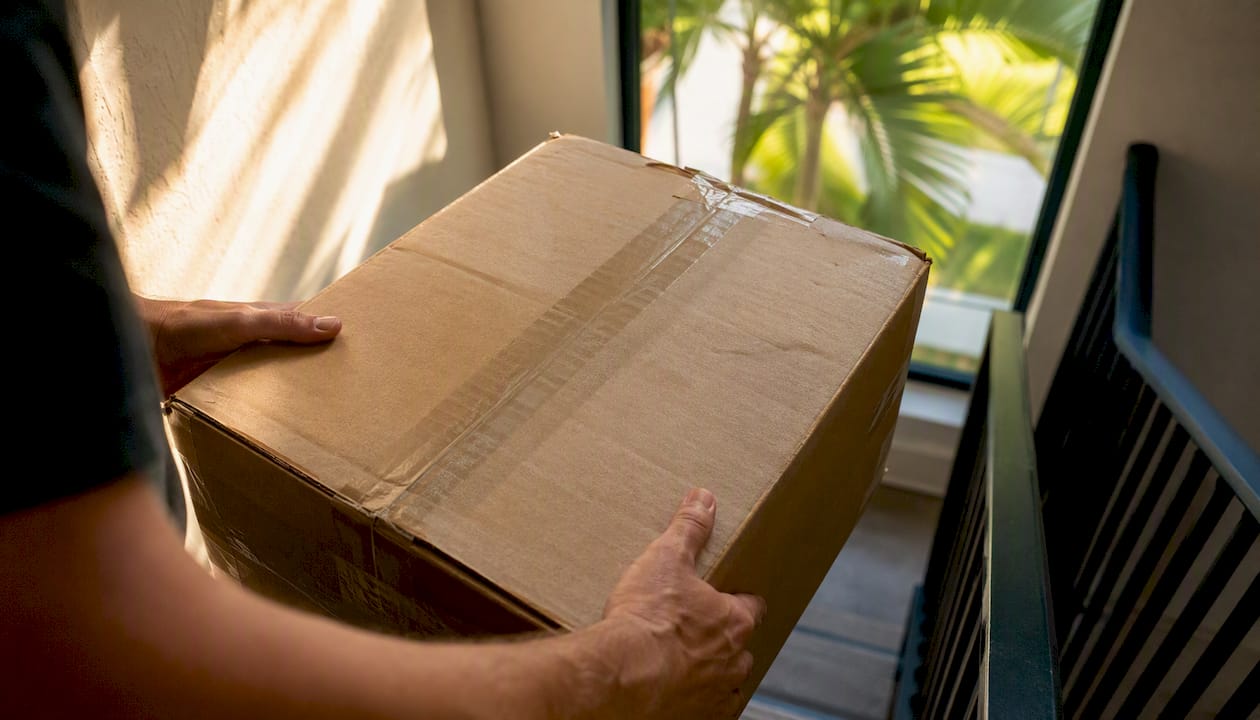
Stick to your assigned time slot. Showing up an hour early usually means sitting in a parking queue since the loading zones are still occupied by the group ahead of you. Arriving at the exact start of your window gives you first access to parking, elevators, and carts before the crowd thickens.
Walk the building layout mentally before you arrive: where’s the nearest parking, where’s the loading dock or drop-off zone, and is there an elevator or only stairs? If it’s stairs, plan to bring the heaviest items (mini-fridge, storage bins with books) with two people carrying together, or rent a hand truck ahead of time if your building allows equipment rentals.
- Stay hydrated and take sunscreen if you’re moving during a hot August weekend; heat exhaustion during move-in is more common than people expect.
- Pack a small first-aid kit in your car, not buried in a box, for blisters, scrapes, or a headache from the stress of the day.
- Take breaks. Nobody needs to unload an entire truck in 20 minutes.
- If parents are helping, their best role is logistics support, driving, carrying, and parking management, not unpacking every box and arranging the closet. Students who set up their own space tend to adjust faster once orientation begins.
Pro Tip: Pack your day-one essentials bag (charger, ID, meds, a change of clothes) as a separate, clearly labeled bag that rides in the front seat of the car, never in the trunk with everything else. You’ll want it the second you walk in the door, before a single box gets unloaded.
What Should You Coordinate with Your Roommate Before Move-In?
A single five-minute text conversation before move-in day saves you from owning two mini-fridges and zero microwaves. Coordinating shared items with roommates before buying anything is one of the most overlooked steps in the entire moving process.
Send this checklist to your new roommate as soon as you have contact information:
- Who’s bringing the mini-fridge, and what size fits your room?
- Who’s bringing the microwave, if your housing allows one?
- Is anyone bringing a rug, and does the room even have carpet already?
- Who’s responsible for basic cleaning supplies (paper towels, disinfectant wipes, a small trash can)?
- What’s each person’s typical sleep schedule and study habits, so you can set basic expectations early?
Before buying any of those shared items, open your housing handbook and check the prohibited items list. Commonly banned items across most colleges include candles, halogen lamps, space heaters, and hot plates, along with certain non-surge-protected power strips. Every school’s exact list differs, so don’t assume your friend’s college rules match yours.
Frequently asked questions about roommate coordination
Do I need to bring my own furniture? Almost never for a traditional dorm. Most rooms come with a bed frame, mattress, desk, chair, and dresser already installed. Confirm with your housing office before buying anything large.
What if my roommate and I both bring the same appliance? Talk to your resident advisor about storage options, or plan to return one item. It happens more often than you’d think when communication starts late.
Can I bring a rug even if my room has carpet? Check first. Some schools ban rugs over carpet for fire safety reasons, since it can interfere with sprinkler clearance or block smoke detection in older buildings.
Transport and Storage Options for Getting Your Stuff There
Four main ways exist to get your belongings from home to campus: driving it yourself, renting a truck, hiring a portable storage container, or hiring full-service movers. Each fits a different budget and distance.
Driving your own car works fine for most in-state students with a standard packing list. It’s free beyond gas money, but limited by trunk space, meaning you may need two trips or a rooftop cargo box for a longer haul. A rental truck makes sense for long-distance moves or when you’re bringing furniture beyond the standard dorm packing list, though you’ll want to book weeks ahead since August is peak season for rental availability and prices climb accordingly.
Portable storage containers work well if you’re relocating a full apartment’s worth of items rather than a dorm room, or if you need a staging option between semesters. Full-service movers cost the most but remove all physical labor, worth considering for out-of-state moves involving heavier furniture.
| Option | Best for | Watch out for |
|---|---|---|
| Drive yourself | In-state, dorm-sized loads | Limited cargo space, may need multiple trips |
| Rental truck | Long-distance or apartment-sized loads | Book early; August rates run high |
| Portable container | Semester storage or apartment moves | Delivery lead time; needs a parking spot |
| Hire movers | Heavy furniture, out-of-state distance | Highest cost; ask about insurance coverage |
Short-term storage becomes worth it in two specific scenarios: summer overflow when you’re not fully moving out of your dorm, or a spring semester move-out where you need somewhere to stash belongings before a new lease starts. Renting a small unit or splitting a portable container with a roommate cuts the monthly cost roughly in half.
Whichever option you choose, ask about insurance coverage before you sign anything, and take photos of your items before they get loaded onto a truck or into a container. It’s a five-minute step that gives you real documentation if anything gets damaged in transit.
Space-Saving Packing Strategy That Actually Works
The biggest space-saving win isn’t a product. It’s the decision to pack for one semester instead of a full year. Students who bring a year’s worth of clothing and belongings typically leave a large share of it untouched by midterms, according to UIS Residence Life’s guidance on smart move-day packing. Plan to swap seasonal items when you go home for a break instead of bringing everything at once.
Once you’ve trimmed the list down, vertical storage does the heavy lifting in a room with almost no floor space to spare. Bed risers, stackable bins, and hanging closet organizers are the three items IKEA’s dorm storage guide points to most often for maximizing a small footprint, and they’re worth prioritizing over floor-based furniture that eats up walking room.
- Roll clothes instead of folding them; you’ll fit noticeably more into the same drawer space.
- Choose collapsible fabric bins over cardboard boxes so they double as storage under your bed once you’ve unpacked.
- Wait to buy larger organizational furniture until you’ve actually seen your room, since a bookshelf that looked perfect online might not fit the wall space you have; this is a key idea in accent furniture for renters.
- Keep your day-one essentials bag separate from everything else so you’re not digging through six boxes for your phone charger.
Pro Tip: Buy small organizational pieces first, then decide on bigger furniture only after you’ve measured your actual room. A collapsible closet organizer costs $15 and adapts to almost any space; a fixed bookshelf you bought without measuring might block your door.
For the apartment-style side of student housing, whether that’s an off-campus rental or a suite with a kitchenette, the same small-space logic applies, and a small apartment organization guide covers vertical storage tactics that scale beyond a single dorm room.
Your Printable, Condensed Moving Checklist
Screenshot this section or copy it into your notes app. It’s designed to be read top to bottom without extra explanation, the version you actually pull up on move-in morning.
Before you shop for anything:
- [ ] Confirm move-in date and time slot: ______________
- [ ] Confirm mattress size (usually Twin XL)
- [ ] Read housing handbook’s prohibited items list
- [ ] Text roommate about mini-fridge, microwave, and rug
Bedding and bath:
- [ ] Twin XL sheets (two sets)
- [ ] Comforter, mattress topper, pillow
- [ ] Shower caddy, flip-flops, towels
Kitchen and tech:
- [ ] Mug, basic utensils
- [ ] Laptop, charger, surge protector (if allowed)
- [ ] Backpack, desk supplies
Clothing and documents:
- [ ] Six to eight weeks of clothing
- [ ] ID, insurance card, housing paperwork
- [ ] Banking information
Day-one essentials bag (keep separate, in the front seat):
- [ ] Phone charger
- [ ] ID and paperwork
- [ ] Basic medications
- [ ] Change of clothes
Move-in logistics:
- [ ] Arrive at start of assigned window
- [ ] Bring or rent a dolly/cart
- [ ] Move heavy items with two people
- [ ] Photograph room condition on arrival
What Campus Housing Staff and Parents Actually See Work
Every fall, the same pattern repeats at drop-off: the families who move smoothly are rarely the ones with the most stuff. They’re the ones who read the housing handbook, texted the roommate ahead of time, and showed up at their assigned slot instead of an hour early hoping to beat the line.
Parents helping with a move genuinely do best when they treat the day as a logistics job, driving, carrying, parking, and let the student handle the actual room setup. It’s a small shift in role, but it matters. A student who arranges their own desk and picks their own side of the closet adjusts to the new space faster than one who arrives to a room a parent has already fully organized. That’s not a knock on helpful parents. It’s just what tends to work.
If you’re renting an apartment instead of a dorm, the same principles apply with a few more moving parts, and Cynthia Gardens’ renter resources for first-time movers walk through the leasing side of that transition.
One more thing worth planning now, even though it feels distant: think about your spring move-out before you’ve even finished moving in. Students who mentally note “this stays for the semester” versus “this needs to go home eventually” while unpacking save themselves a chaotic scramble in May.
Sources
- How to plan a stress-free college dorm move-in (2026 checklist) — ABC17NEWS
- Move
- College dorm packing checklist for first-year students — BigFuture (CollegeBoard)
- College packing tips: how to pack smart for move day — UIS Residence Life
- What not to bring — University of Arkansas Housing handbook
Recommended
- Moving to Your New Apartment: The Ultimate Checklist – Luxury Apartments for Rent in Boca Raton | Premium Boca Raton Apartments | Aapartments Boca Raton
- The Ultimate First Apartment Checklist: What Boca Raton Students Need Before Move-In – Luxury Apartments for Rent in Boca Raton | Premium Boca Raton Apartments | Aapartments Boca Raton
- The Solo Mover’s Complete Moving Checklist for Singles
- First Apartment Moving Checklist: 8 Essential Steps for 2025 – Luxury Apartments for Rent in Boca Raton | Premium Boca Raton Apartments | Aapartments Boca Raton