
Cynthia Gardens is a residential apartment community in Boca Raton, Florida, offering quiet, garden-style living near Florida Atlantic University, Mizner Park, and Boca Raton’s beaches at 1675 NW 4th Ave, Boca Raton, FL 33432.
TL;DR:
- A room-by-room safety checklist helps prevent common household emergencies that harm cats.
- Promptly calling poison helplines and securing toxins reduces risks and ensures quick responses.
Use this room-by-room cat owner safety checklist right now: lock away medications and cleaners, remove toxic plants, and tape down loose cords. Those three steps alone address the majority of household emergencies vets see. If your cat has already gotten into something, call the ASPCA Animal Poison Control Center at 1-888-426-4435 or the Pet Poison Helpline at 1-855-764-7661 before you do anything else.
Do these three things in the next 10 minutes:
- Move all human medications, including acetaminophen and ibuprofen, into a latched cabinet. Both are acutely toxic to cats and a single pill can be fatal.
- Walk through every room and pull any lily flowers, pothos, or philodendron out of reach. Lilies cause irreversible kidney failure from even a small exposure.
- Bundle or hide all loose cords, hair ties, and rubber bands. Ingested strings can require surgery to remove.
Save both helpline numbers in your phone now, alongside your cat’s weight, age, and your regular vet’s after-hours number. You will not want to search for them in a crisis.
Table of Contents
- What does a quick homewide safety sweep look like?
- Room-by-room hazards: what to secure in every space
- Which household toxins, plants, and foods send cats to the ER?
- How does enrichment reduce risky behavior in cats?
- Collars, microchips, and safe outdoor alternatives
- What should you do if your cat is poisoned or injured?
- Printable cat safety checklist: copy or screenshot this
- Key Takeaways
- Living safely with indoor cats as a renter
- Pet-friendly apartments worth looking for if you’re a renter with a cat
- Authoritative sources and emergency resources
What does a quick homewide safety sweep look like?
A full room-by-room cat-proofing session takes time, but a rapid sweep of the highest-risk items takes about 10 minutes and catches most emergencies before they happen. Work through this list in order.
- Check every countertop and table for medications, gum (xylitol is lethal), grapes, raisins, onions, garlic, and chocolate. Move them to a closed cabinet.
- Open every cabinet under the sink in the kitchen and bathroom. If you can smell the cleaner, your cat can too. Move bleach, drain openers, and disinfectants to a latched or high shelf.
- Scan the floor and low shelves for hair ties, rubber bands, dental floss, twist ties, and small toy parts. Drop them in a drawer.
- Check for plants. Lilies, sago palm, oleander, and dieffenbachia are the most dangerous. Move them outside or give them away.
- Look at every window. Screens that push out easily are a fall hazard. Press each one firmly; if it gives, prop a piece of furniture in front of it or add a window guard.
- Gather all loose cords from phone chargers, lamps, and blinds. Use cord clips or cable sleeves to keep them off the floor.
- Check the dryer and washing machine. Cats climb in. Make it a habit to check before every cycle.
- Locate your cat’s carrier. If you needed to leave in five minutes, could you find it? Keep it accessible and familiar.
Renter note: none of these steps require drilling, painting, or altering the unit. Cord clips, cabinet latches, and tension-rod plant shelves are all removable. For deeper renter-safe cat-proofing steps, there are apartment-specific fixes that work without losing your deposit.
Room-by-room hazards: what to secure in every space
Kitchen
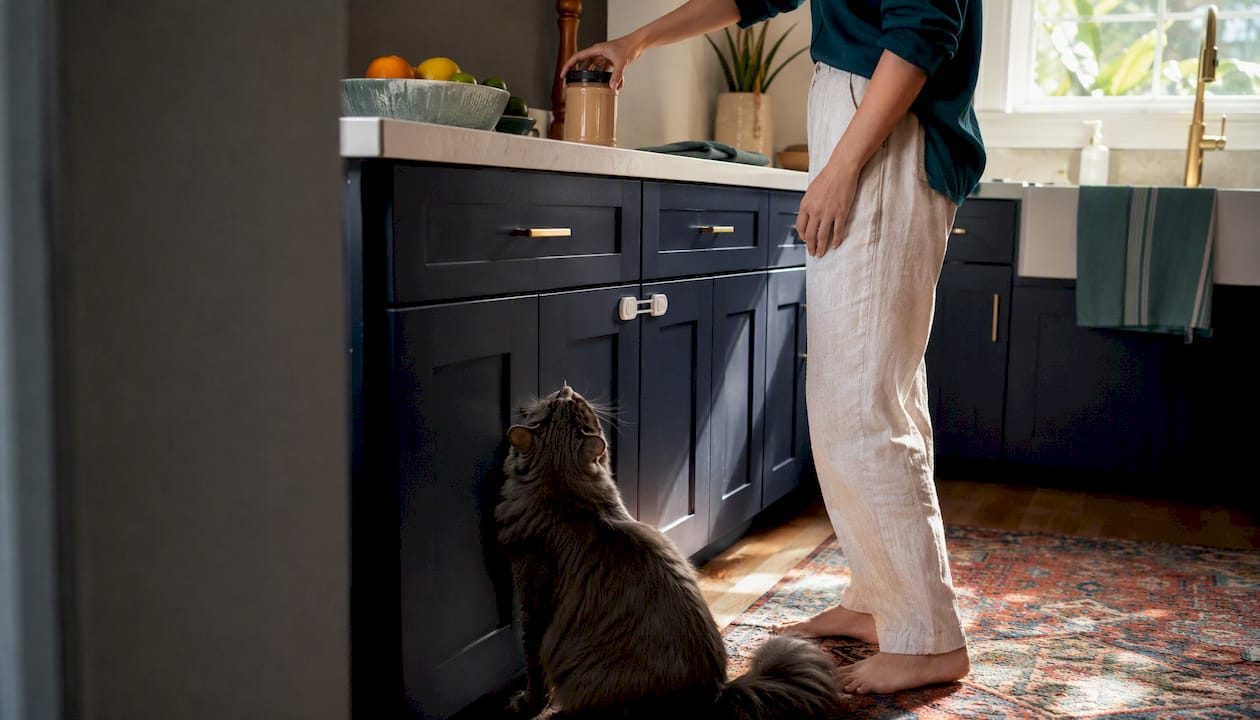
The kitchen is the single highest-risk room. Xylitol hides in peanut butter, sugar-free gum, and some baked goods. Onion and garlic, even in powdered form, damage red blood cells. Grapes and raisins cause kidney failure. Store all of these in closed cabinets, not fruit bowls. Appliances matter too: a hot stovetop burner, an open dishwasher door, and a running garbage disposal are all injury risks. Keep your cat out of the kitchen during cooking.
Bathroom
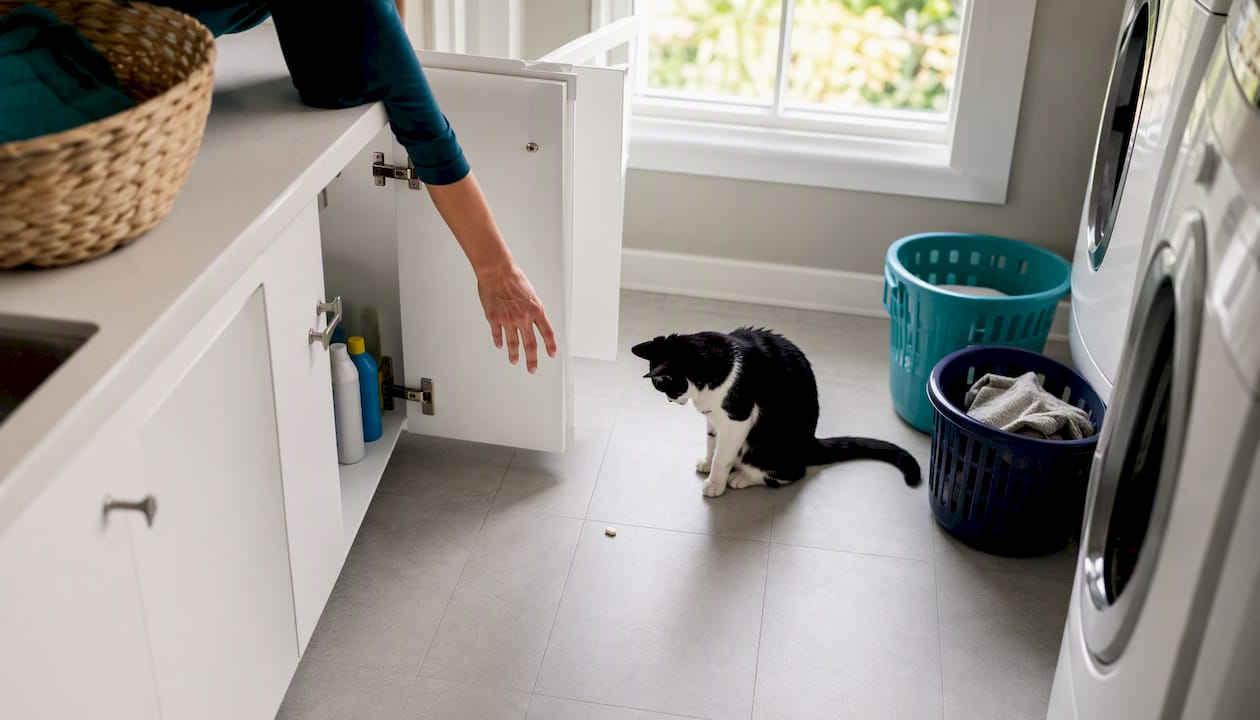
Medications are the biggest threat here. A dropped ibuprofen tablet on a tile floor is easy to miss and easy for a cat to find. Keep all pill bottles in a latched medicine cabinet. Nail polish remover, hair dye, and mouthwash (which often contains xylitol) belong in closed drawers. Toilet lids should stay down for kittens, who can fall in and struggle to get out. Check the lint trap on a nearby dryer vent if your laundry is adjacent.
Living room
Cords from blinds and curtains are strangulation risks. Cut looped blind cords or use a cord wind-up cleat mounted high on the wall. Candles left unattended are a fire hazard and the scented variety often contain compounds that irritate cats’ respiratory systems. Plug-in air fresheners and many essential oils, including tea tree, eucalyptus, and peppermint, are toxic through topical exposure and inhalation. Swap them for unscented options or diffusers used only in well-ventilated rooms your cat cannot access.
Bedroom
Hair ties are the most commonly ingested item in bedrooms. Keep them in a closed drawer, always. Jewelry with small clasps, earring backs, and loose buttons are choking hazards. Lilies in a bedside vase are particularly dangerous: even the pollen that falls into the water can cause kidney failure if a cat drinks from the vase. Check under the bed for hiding spots that could trap a cat near electrical strips or heating vents.
Laundry room
Detergent pods are brightly colored and look like toys. A single pod contains a concentrated dose of surfactants that can cause vomiting, respiratory distress, and neurological symptoms. Store them in a high cabinet. Check the drum of the dryer and washer before every use. Cats seek warm, enclosed spaces and a dryer is exactly that.
Home office
Phone chargers and thin laptop cables are the cords cats chew most often. Cord chewing can cause electrocution or, if a piece is swallowed, an intestinal blockage that requires surgery. Use cable sleeves or run cords behind furniture. Staples, paper clips, rubber bands, and binder clips should go in a drawer, not loose on a desk. Secure window screens if your office is above the ground floor.
Balcony and outdoors
Open windows and balconies are major fall hazards for apartment cats. “High-rise syndrome” is a real veterinary term for the injuries cats sustain from falls, and height does not protect them. Secure balcony railings with mesh or netting if your lease allows it. Keeping cats indoor-only reduces many safety risks significantly. If outdoor access matters to you, a screened “catio” enclosure or a supervised harness outing is far safer than free roaming.
Seasonal note: in winter, antifreeze (ethylene glycol) pooling in parking areas is lethal in tiny amounts. In summer, a balcony in direct sun can reach dangerous temperatures within minutes. Never leave a cat on an unshaded balcony in Florida heat.
Pro Tip: If your cat is a high climber, place non-slip mats on top of the refrigerator and tall shelving units. A confident jump up is not always a confident jump down, and falls from kitchen-height surfaces cause more injuries than falls from lower furniture.
Which household toxins, plants, and foods send cats to the ER?
The ASPCA and Cornell Feline Health Center consistently flag the same short list of household items responsible for the most serious cat poisonings:
- Lilies (Easter lily, tiger lily, daylily): any part of the plant, including pollen and vase water, causes kidney failure. No safe exposure level exists.
- Xylitol: found in sugar-free gum, some peanut butters, mouthwash, and vitamins. Causes liver failure and dangerously low blood sugar.
- Acetaminophen (Tylenol): destroys red blood cells and causes liver failure. A single regular-strength tablet can kill a cat.
- Ibuprofen and naproxen: cause kidney failure and gastrointestinal ulcers.
- Antifreeze (ethylene glycol): sweet-tasting and rapidly fatal. Even a teaspoon is lethal.
- Household cleaners: bleach, pine-based cleaners, and phenol disinfectants cause chemical burns and systemic toxicity. Ensure areas are fully dry and ventilated before allowing cats back in.
- Essential oils: tea tree, eucalyptus, clove, and cinnamon oils are toxic via skin contact and inhalation.
- Onion and garlic: damage red blood cells. Powdered forms are more concentrated than raw.
- Grapes and raisins: cause acute kidney failure. The mechanism is not fully understood, but no safe dose is known.
- Chocolate and caffeine: cause heart arrhythmias and neurological symptoms.
| Toxin | Common source | First action |
|---|---|---|
| Lilies | Floral arrangements, garden plants | Remove plant, call ASPCA (1-888-426-4435) immediately |
| Xylitol | Sugar-free gum, peanut butter, vitamins | Call vet or Pet Poison Helpline (1-855-764-7661) |
| Acetaminophen | Tylenol, cold medicines | Emergency vet visit — do not wait for symptoms |
| Antifreeze | Garage floor, parking areas | Emergency vet — time is critical |
| Essential oils | Diffusers, plug-ins, topical products | Remove cat from area, call vet |
| Household cleaners | Under-sink cabinets | Rinse exposed skin with water, call helpline |
For safer cleaning, products labeled pet-safe and fragrance-free, such as diluted white vinegar or enzyme-based cleaners, work on most surfaces without the toxicity risk of phenol or pine-based formulas.
How does enrichment reduce risky behavior in cats?
Curiosity drives most ingestion incidents. A cat that is bored will investigate everything, including the cord behind the TV and the rubber band on the counter. Indoor enrichment that mimics hunting reduces that exploratory drive and keeps cats mentally occupied.
Practical enrichment that actually works:
- Puzzle feeders: replace one meal per day with a food puzzle. It slows eating and keeps cats occupied for 15–20 minutes.
- Feather wands and interactive toys: two short sessions of 10 minutes each per day satisfies the hunting drive better than leaving toys out all day.
- Vertical space: cat trees, wall-mounted shelves, and window perches give climbers a sanctioned outlet. A cat with a good perch is less likely to scale the bookshelf.
- Rotation: swap toys every few days. Novelty matters more than quantity.
Pro Tip: Supervise all string-based toys, including feather wands, ribbon toys, and anything with elastic. Put them away after every play session. A cat left alone with a string toy can swallow it, and string ingestion is one of the most common surgical emergencies in cats.
Watch for these behavioral signs that your cat may be a chewer or swallower: interest in chewing plastic bags, licking metal surfaces, or carrying small objects in their mouth. Cats with pica (compulsive ingestion of non-food items) need enrichment adjustments and a vet conversation. For daily care routines that support safe apartment living, the cat care workflow guide covers practical scheduling.
Collars, microchips, and safe outdoor alternatives
Getting your cat’s ID right is a one-time task with permanent payoff.
- Microchip your cat — A collar can fall off or be removed. A microchip, implanted by a vet in a quick procedure, is permanent. Register the chip with a national database like the AAHA Universal Pet Microchip Lookup and keep your contact information current.
- Ask your landlord before building anything. Most apartments allow removable mesh or tension-rod enclosures on balconies. Get permission in writing. Routine parasite control and vaccinations are especially important for any cat with outdoor access, even supervised.
What should you do if your cat is poisoned or injured?
Time is the variable that determines outcomes in poisoning cases. The AVMA advises contacting a vet or poison control immediately, with the product label or plant sample in hand.
Emergency contacts:
- Your regular vet (save the after-hours number now)
- ASPCA Animal Poison Control Center: 1-888-426-4435
- Pet Poison Helpline: 1-855-764-7661
- Nearest 24-hour emergency animal hospital (search now and save the address)
What NOT to do:
Do not induce vomiting unless a vet or poison control professional explicitly tells you to. Home methods like salt or hydrogen peroxide can cause additional harm. Veterinarians and the AVMA are consistent on this point: attempting home remedies for poisoning can worsen outcomes.
Step-by-step when you suspect poisoning:
- Remove your cat from the source of exposure.
- Do not let them groom themselves if a substance is on their fur; wrap them in a towel.
- Gather the product packaging, plant sample, or whatever they may have ingested.
- Note your cat’s weight, age, and the approximate time of exposure.
- Call a helpline or your vet en route to the clinic.
Cat bites account for a small proportion of emergency room visits annually, and cat bites carry a higher infection rate than dog bites because of the depth of puncture wounds. If you are bitten while handling an injured or frightened cat, wash the wound thoroughly and seek medical attention promptly.
Printable cat safety checklist: copy or screenshot this
Post this near your cat’s carrier or on the inside of a cabinet door.
Kitchen
- [ ] Medications in latched cabinet
- [ ] Xylitol, grapes, onion, garlic, chocolate stored out of reach
- [ ] Appliances checked before use
Bathroom
- [ ] All medications in closed cabinet
- [ ] Nail polish remover, mouthwash, hair products secured
- [ ] Toilet lid down
Living room
- [ ] Blind cords cut or secured high
- [ ] Candles never left unattended
- [ ] Essential oil diffusers in cat-free zones
Bedroom
- [ ] Hair ties and jewelry in closed drawer
- [ ] No lily flowers in vases
- [ ] Electrical strips behind furniture
Laundry room
- [ ] Detergent pods in high cabinet
- [ ] Dryer and washer checked before every cycle
Home office
- [ ] Cords in cable sleeves
- [ ] Staples, clips, rubber bands in drawer
- [ ] Window screens secured
Balcony/outdoors
- [ ] Balcony mesh or netting in place
- [ ] No antifreeze accessible in winter
- [ ] No unshaded outdoor access in summer heat
Emergency block (fill in and post):
- My cat’s name: ___________
- Weight: _______ Age: _______
- Regular vet: _______ Phone: _______
- After-hours vet: _______ Phone: _______
- ASPCA Animal Poison Control: 1-888-426-4435
- Pet Poison Helpline: 1-855-764-7661
Use this checklist at move-in, before holidays (when decorations and seasonal plants arrive), and at the start of each season. For a broader pet owner apartment checklist covering affordability and lease considerations alongside safety, that resource covers the full picture.
Key Takeaways
A thorough cat owner safety checklist covers toxins, cords, ID, and emergency contacts — and takes under an hour to complete once you know what to look for.
| Point | Details |
|---|---|
| Lock away toxins first | Lilies, acetaminophen, xylitol, and antifreeze are the most lethal; secure them before anything else. |
| Never induce vomiting at home | Call ASPCA (1-888-426-4435) or Pet Poison Helpline (1-855-764-7661) and follow professional guidance only. |
| Microchip and use breakaway collars | A microchip registered with a national database is permanent ID a collar cannot replace. |
| Enrichment reduces ingestion risk | Puzzle feeders and two daily play sessions reduce the exploratory behavior that leads to swallowing hazards. |
| Cynthiagardens supports pet-safe renting | Pet-friendly one-bedroom apartments in Boca Raton include policies and features designed for cat owners. |
Living safely with indoor cats as a renter
The conventional advice on cat-proofing tends to assume you own the place. Most cat owners in apartments are working with landlord restrictions, shared walls, and lease clauses that limit what they can drill, paint, or install. The practical answer is not to do less but to choose differently: removable cable clips instead of wall-mounted cord channels, tension-rod shelving instead of fixed brackets, and mesh balcony netting that attaches with zip ties rather than screws.
What actually matters most is not the hardware. It is the habit. Checking the dryer before every cycle, putting hair ties away every single time, and keeping the medicine cabinet latched costs nothing and prevents the emergencies that cost thousands. Renters who work with responsive property management have a real advantage: when a screen is loose or a balcony railing has a gap, a quick maintenance request fixes it before it becomes a crisis. That is worth factoring into where you choose to live.
Pet-friendly apartments worth looking for if you’re a renter with a cat
Cat owners searching for a new apartment often focus on the pet deposit and stop there. The features that actually affect your cat’s daily safety and your peace of mind go deeper than the fee structure.

Look for: secure window screens on every unit, a responsive maintenance team that handles repair requests quickly, clear pet policies that specify what enclosures and modifications are allowed, proximity to a 24-hour emergency vet, and ground-floor or elevator access so carrying a cat in a carrier is manageable in an emergency.
Cynthiagardens offers pet-friendly one-bedroom apartments in Boca Raton with transparent pet policies, no hidden fees, and on-site maintenance. The community is built for cat owners who want a well-maintained unit and a management team they can actually reach. Virtual tours let you assess the layout, window placement, and balcony setup before you sign anything. If you want to see whether the space works for you and your cat, explore the apartment styles and features and schedule a tour directly through the site.
This article provides general safety information for cat owners and is not a substitute for veterinary advice. Confirm current guidelines with your veterinarian or a licensed animal health professional.
Authoritative sources and emergency resources
The claims in this article draw from veterinary guidelines and poison control authorities. Save the helpline numbers and bookmark the primary sources below.
- Cornell Feline Health Center — Common Cat Hazards: primary reference for household toxins and lily toxicity.
- AVMA — Household Hazards: official guidance on poisoning response and helpline contacts.
- VCA Animal Hospitals — Toxic Hazards for Cats: essential oils, cleaning products, and the no-home-vomiting rule.
- Merck Veterinary Manual — Providing a Home for a Cat: indoor-only recommendations, enrichment, and balcony fall hazards.
- ASPCA — Harmful Feline Hazards: plant and food toxin list from ASPCA Poison Control experts.
- AAFP Feline Zoonoses Guidelines (PMC): parasite control, vaccination, and zoonotic risk prevention.
“Don’t wait. Time is critical for successfully treating poisoning. Pick up the phone and call your veterinarian, or the ASPCA Animal Poison Control Center (1-888-426-4435) or Pet Poison Helpline (1-855-764-7661).” — American Veterinary Medical Association
Write your cat’s weight, age, and vet contact on the printable checklist above and keep it somewhere visible. The two minutes that takes is the most useful thing in this entire guide.