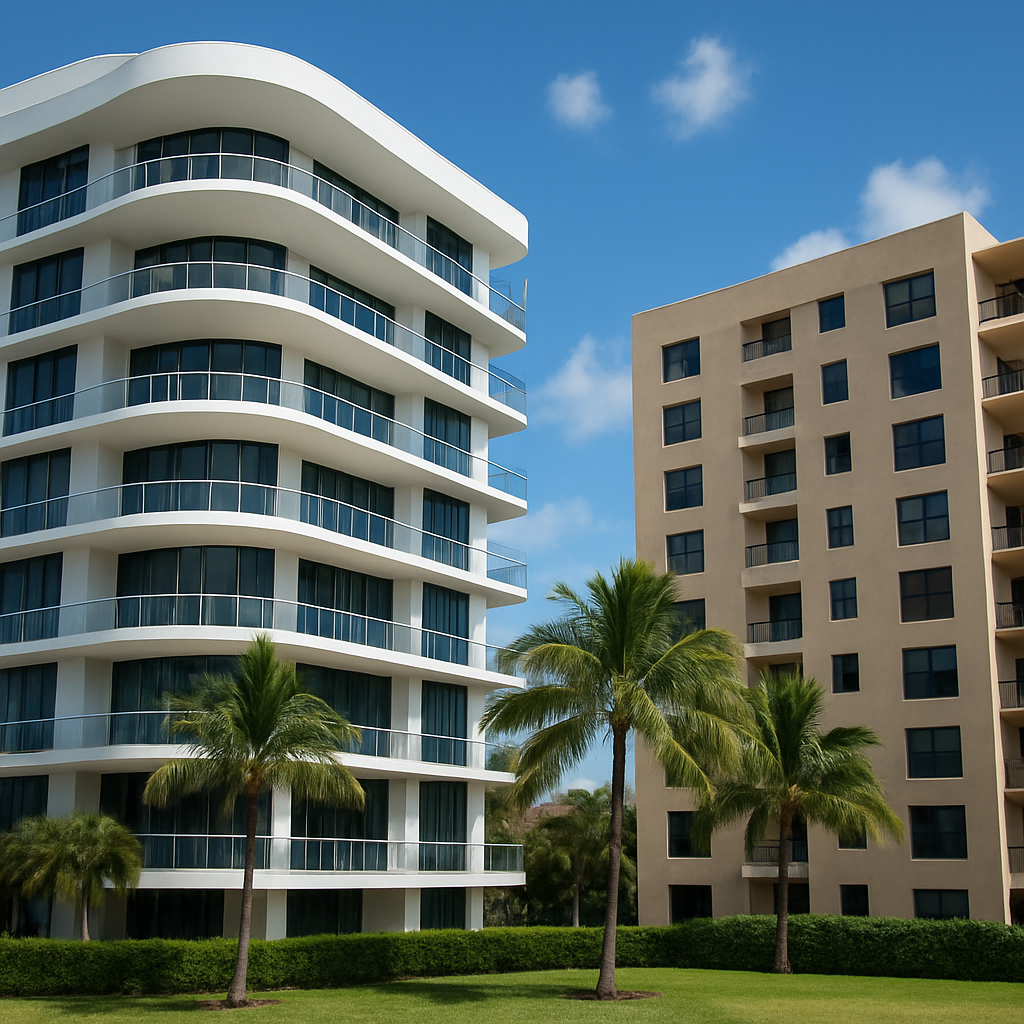
Condo vs Apartment: Making the Right Choice in Boca
Cynthia Gardens is a residential apartment community in Boca Raton, Florida, offering quiet, garden-style living near Florida Atlantic University, Mizner Park, shopping, dining, and the beaches.
Deciding between a condo and an apartment in Boca Raton matters more than rent alone when you are juggling classes, work, and a tight monthly budget. If you are searching condo rental boca raton or an apartment near FAU, this article breaks down total monthly cost, lease flexibility, maintenance responsibility, pet rules, and lifestyle trade offs so you can choose quickly. We use Cynthia Gardens as a practical apartment example to show how included utilities, on site maintenance, and clear pet policies change the real cost and convenience of living in Boca.
Boca Raton rental market snapshot and what it means for renters
Straight fact: Boca Raton rents trend above national averages, and that changes how you should compare options when looking for a condo rental boca raton or an apartment. Use live listings on RentCafe and Zillow to benchmark asking rents rather than relying on memory or old listings.
What is driving prices and choice in Boca
Local demand matters. Students near Florida Atlantic University, seasonal visitors, and professionals commuting the I-95 corridor concentrate demand in specific neighborhoods. The city layout and neighborhood amenities on City of Boca Raton pages show why areas near FAU, Mizner Park, and the beaches are more competitive and more expensive.
Seasonality and inventory are real constraints. Summer and winter high seasons push more owners to list short-term or seasonal units – think Boca Raton vacation rentals and short-term condo rental Boca Raton listings – which tightens the market for long-term leases and raises effective monthly costs during busy months.
Tradeoff that matters: a condo can have a lower advertised rent but carry HOA fees, separate utility meters, or association approval steps that delay move in. Those hidden and timing costs are why advertised rent is an incomplete comparison in Boca Raton.
Practical limitation: many condo associations impose leasing caps or minimum lease lengths under the Florida Condominium Act. Check the association rules before you sign because an owner cannot legally rent in ways the association prohibits. See Florida Statutes Chapter 718 for the legal framework and then ask the owner for the specific bylaws and recent minutes.
Concrete example: A student looking for a one-bedroom near FAU might find a seasonal beachfront condo listed attractive on price during off season, but that unit could require a 90 day minimum or owner approval during peak months. In practice, an apartment like Cynthia Gardens often beats that condo on predictability – included utilities, clear pet policy, and faster move in. For short-term needs, check Cynthia Gardens flexible options at Your Guide to Boca Raton Short-Term Rentals & Homes.
- What to watch in the market: total effective monthly cost not just advertised rent
- Timing risk: seasonal demand can reduce long-term availability in beachside areas
- Flexibility: condo association leasing rules can block short term or sublets
- Pet and amenity access: beachfront condos Boca Raton and oceanfront condos Boca Raton often have stricter rules than managed apartments
Direct cost comparison: rent, HOA or amenity fees, and utilities
Start with effective monthly cost, not advertised rent. A condo listing can look cheaper at first glance because owners break out HOA dues and utility responsibilities separately. Those separate line items are real monthly charges or unpredictable one-time hits, and they change how you should compare a condo rental Boca Raton against a managed apartment.
An apples-to-apples formula you can use right now
Use this simple formula to compare listings: Base rent + HOA/amenity fee + average utilities + renter insurance + parking fees + prorated move-in fees = Effective monthly cost. Apartment communities often simplify this by folding several items into the rent — Cynthia Gardens, for example, lists one-bedroom options with some utilities included, which reduces billing hassle and surprises. See the Cynthia Gardens apartments page for specifics: apartments in Boca Florida.
| Cost item | Typical condo rental | Typical managed apartment (Cynthia Gardens style) |
|---|---|---|
| Base rent | Advertised separately by owner | Advertised as all-in unit monthly price |
| HOA / amenity fee | Commonly billed monthly; may appear on condo listing or billed to owner and passed through | Included in rent or replaced by community amenity fee built into price |
| Water / sewer / trash | Often tenant responsibility or billed to owner then passed on | Frequently included |
| Electricity / A/C | May be on separate meter — can be the largest variable | Sometimes included or limited; predictable caps or included in some units |
| Internet / cable | Tenant arranges and pays | Tenant arranges; some apartments offer bundled options |
| Parking | May have HOA parking fees or permit costs | Usually clear posted fees or included |
| Special assessments | Occasional but significant – unpredictable | Unlikely to affect tenants directly; handled by management |
Practical trade-off: Condos can offer lower listed rent but transfer more billing and variability to the tenant. Apartments trade off higher listed rent for predictable, consolidated billing and on site management. If you value fixed monthly budgeting and quick maintenance, that predictability matters more than a small rent delta.
Concrete example: Sample calculation for comparison purposes only. Imagine a condo advertised at $1,600 with a $250 HOA fee and separate electric and water averaging $120/month; your effective cost is roughly $1,970 before renter insurance and parking. An apartment listing showing $1,900 that includes water and trash and has a fixed $50 parking fee would clear comparison at about $1,950 — and that apartment also avoids the risk of a sudden special assessment that could add hundreds for months.
- What to verify on every condo listing: current HOA dues, history of special assessments, whether utilities are master-metered or sub-metered
- Utility details to ask owners or managers: who pays for A/C cooling during high use months, average monthly bills if available
- One-time costs to capture: association application fees, move-in deposits, key/fob fees, parking permits
Next consideration: After you nail down effective monthly cost, the next practical filter is flexibility — minimum lease length and short-term rules. If you need that, see Cynthia Gardens flexible short-term options: Your Guide to Boca Raton Short-Term Rentals & Homes.
Lease terms and flexibility: short term rentals, sublets, and minimum leases
Start with the association rules, not the owner ad. Many condo rental Boca Raton listings advertise flexible terms, but the condo association bylaws often control minimum lease length, sublets, and short term rentals. If the association forbids leases under 12 months or caps the percentage of units that may be rented, an owner cannot legally sign a shorter deal without risking fines or forced cancellation.
Practical tradeoff. Apartments generally win on scheduling and speed. Purpose built rental communities have standardized lease templates, online applications, and predictable approval timelines. Condos can be cheaper on paper but create friction: association approval windows, background checks required by the board, or waiting periods after a unit sale that delay occupancy.
Key lease items to verify before you sign
- Minimum lease length: Confirm the shortest lease the association allows and whether the owner must live in the unit a minimum period before leasing.
- Leasing cap: Ask whether the association has a percentage cap on units that may be rented and whether that cap is currently reached.
- Sublet and assignment rules: Determine if subletting is permitted, whether the owner or tenant needs board approval, and any fees or guest registration requirements.
- Short term rentals and vacation rules: Verify whether platforms like Airbnb or month to month rentals are allowed. Many associations ban holiday condo rental offers in Boca Raton style short term listings.
- Approval timeline and fees: Get the expected board approval timeline in writing and any application or background check fees the association requires.
- Insurance and registration: Check if the association requires renter insurance or on file tenant registration.
Concrete example: A student needs a six month lease to cover an internship from May through October. An owner offers six months at a competitive rate, but the condo association policy sets a 12 month minimum. The owner cannot sign without violating the bylaws. By contrast, an apartment community near FAU can often provide a 6 month or corporate housing lease and complete screening in days. See Cynthia Gardens flexible living options for short term possibilities.
Sublets are often messier than renters expect. Even if the owner says sublets are fine, the association can require the subtenant to pass a background check or register as a resident. That creates two approval processes and extends move in risk. Expect extra deposits, duplicate applications, and possible denial even after the owner was approved.
Approval delays cost money. If the association takes four to six weeks to approve a lease, you may need temporary housing or pay two rents. Apartments minimize that risk with online leasing and predictable timelines. If timing matters for school terms or a job start date, favor apartments or insist the owner provide a written guarantee of occupancy timing tied to association deadlines.
Judgment that matters. Many renters assume a signed contract with an owner is sufficient. In practice the association is the gatekeeper. If flexibility and low friction are priorities for study, internships, or seasonal work, a managed apartment will usually be the safer choice. If you choose a condo, require the owner to produce written confirmation from the association that the proposed lease term and any sublet are permitted before you hand over a deposit.
Maintenance, repairs, and response expectations
Key point: response speed and who authorizes work are the day-to-day difference between a condo rental and a managed apartment. In practice that affects downtime for critical systems, the quality of repairs, and how often you have to chase someone for a fix.
Who handles what, and why it matters
Condo rentals: the individual owner is normally responsible for interior repairs while the condo association handles common systems like elevators, roofs, and building HVAC if centrally provided. That split creates handoffs — owner calls the HOA or schedules a contractor, then waits for approvals or vendor availability. Apartment communities: on-site management and maintenance teams control both unit and common-area repairs, with established work-order systems and vendor relationships.
Typical timelines (what to expect): for non-urgent unit issues condos often take several business days to a week depending on owner availability and vendor scheduling; apartments with on-site maintenance commonly resolve routine requests in 24–72 hours and emergencies the same day or within 24 hours. These are patterns, not guarantees — always get commitments in writing.
- Ask this before you sign: who is the emergency contact after hours; expected response times for emergencies and routine repairs; whether the owner or association pays for a temporary hotel if unit is uninhabitable
- Documentation to request: recent maintenance receipts for HVAC, pest control schedule, dated inspection reports for appliances and plumbing
- Service process: whether there is an online work-order portal, repair escalation path, and who authorizes third-party contractors
Concrete example: a student rents a condo near FAU and the air conditioner fails in July. The owner is out of town and must coordinate with the condo association to book a licensed HVAC contractor. That process often stretches into 48–72 hours or longer. If the same tenant lived at a managed community like Cynthia Gardens, on-site maintenance would typically triage that call the same day and arrange a vendor faster because the manager can authorize work immediately — see the community details at apartments in Boca Florida.
Trade-off to accept: faster, systematized maintenance costs money. Apartments earn that by building it into rent or fees. Condos may offer lower base rent but you trade predictability and speed for potentially lower monthly price. Also be realistic: many condo owners do try to be responsive, but when repairs touch HOA-controlled systems the association's procurement rules and vendor selection slow everything down.
Practical judgment: for students and early-career professionals who value predictability and minimal hassle, a professionally managed apartment usually wins on maintenance and speed. If you choose a condo rental Boca Raton because of price or location, insist on a clear, written maintenance plan, know who covers HOA systems, and document the unit condition the day you move in.
Amenities, pet policies, and lifestyle trade offs
Amenities often shape daily life more than rent does. In Boca Raton you trade convenience, rules, and social life against cost and control. A condo can bring a private pool, beachfront access, or a gated community feel – but access and rules frequently depend on the association. An apartment community usually packages predictable amenity access, clear pet rules, and on site staff into the monthly rent.
Amenity access versus real cost
Key point: Not all amenities are equal in practice. Condos often advertise resort style features, but associations may restrict renter use, limit guest passes, or require separate fees for certain facilities. Apartment communities typically include pool, gym, and community events for residents and their guests under one management policy.
- Privacy and exclusivity: Condo HOAs can enforce quiet hours, visitor rules, and access cards that prioritize owners over renters – attractive if you want stability, annoying if you like late-night guests.
- Predictability: Apartments like Cynthia Gardens consolidate rules and fees so residents know what arrives on their monthly statement – useful when budgeting and balancing study or early career schedules.
- Location trade off: Beachfront condos Boca Raton offer immediate ocean access and views but often have less parking and higher guest restrictions than waterfront condos with managed parking.
| Amenity or policy | Typical condo experience | Typical apartment experience |
|---|---|---|
| Pool and gym | May be private, owner-priority, or require HOA permission for renters | On site and available to residents with published hours and rules |
| Community events | Occur but often geared to owners and limited for renters | Regular programming aimed at renters – mixers, classes, convenient for networking |
| Parking | Assigned spaces can be limited or require guest permits | Guest parking and permit systems managed by leasing office |
Pet policies – what actually matters
Practical insight: Pet friendliness is not just allowed or banned – it is a set of friction points: breed restrictions, size limits, pet deposits, monthly pet rent, and required vaccinations or registration. Apartments usually publish these terms clearly. Condos often leave final approval to the owner and may have additional HOA restrictions that can block a rental even if the owner welcomes pets.
Concrete example: A young professional finds a renovated condo near Mizner Park that welcomes pets at the owner level. After applying they learn the HOA requires a pet interview and limits dogs to 25 pounds, which forces a last minute search. By contrast, Cynthia Gardens lists a transparent pet policy and pet areas, making planning for a move simpler; tenants can confirm fees and book a tour through Leasa on the apartments in Boca Florida page.
- Ask before you fall in love: Request the HOA pet addendum and owner rental agreement in advance – do not assume owner permission equals association permission.
- Check practical amenities: Look for on site pet areas, nearby dog parks, and easy walking routes to avoid daily car runs.
- Consider social fit: If you want community events, networking, or study groups, an apartment community will usually offer more renter-focused programming.
If pets or predictable amenity access are priorities, prioritize communities with written, renter-friendly policies rather than verbal assurances.
Next consideration: Before committing, verify the HOA or leasing office policy in writing and align it with your daily routines – pet walks, study hours, guest expectations, and weekend beach plans. For flexible short term options in Boca, see the flexible living options page to compare how apartment policies simplify that process.
Rules, HOA restrictions, and legal considerations when renting a condo in Boca Raton
Basic reality: a condo rental in Boca Raton is as much about the homeowners association rules as it is about the lease. HOA bylaws, leasing caps, and association enforcement can add weeks to a move-in, unexpected fees, and limits on how you live in the unit — all things apartment leases rarely impose.
What the law lets associations do: Florida law gives condo associations authority over leasing policies, assessments, member qualifications, and access to association records. See the Florida Condominium Act for statutes that empower associations, but treat this as orientation not legal advice — consult counsel for disputes.
Practical problems renters run into
- Approval delays and fees: Associations often require tenant applications, background checks, and board approval. Expect application fees and processing times that can exceed 30 days.
- Leasing caps and minimum terms: Some associations cap the percentage of units that may be leased or set minimum lease lengths; that can block renewals or prevent rentals during peak semesters.
- Enforcement and fines: Associations can fine tenants for violations (balcony furniture, noise, unauthorized occupants). The owner remains liable, but tenants feel the consequences in the form of eviction threats or damaged landlord relations.
- Special assessments and liens: Frequent special assessments or an underfunded reserve increase the risk that the owner will pass extra costs onto you or that a lien could complicate ownership and, in extreme cases, lead to foreclosure actions against the unit.
Concrete example: A student signs a lease for a beachfront condo near FAU with a perfect listing. Two weeks before move-in the association informs the owner the unit cannot be leased because the building reached its 25% leasing cap for the season. The owner either cancels the rental or asks the student to wait for board approval, which takes six weeks — costing the student housing, deposits, and a semester start delay.
Actionable steps to avoid surprises
- Get the association packet before you sign: Request bylaws, leasing policy, recent meeting minutes, latest financials, and the reserve study. If the owner refuses, treat that as a red flag.
- Ask about timelines and fees in writing: How long for tenant approval? Are there application or background-check fees? Will the owner pay them or pass them to you?
- Verify rental caps and current occupancy: Ask the association or manager whether the building is at a leasing cap and how that affects renewals or sublets.
- Check assessment history: Minutes should show any recent special assessments. Repeated assessments mean unstable costs and a greater chance of unexpected charges.
- Confirm insurance and liabilities: Associations carry master policies that often exclude interior contents — get renter insurance and ask whether the association has adequate building coverage.
- Search public records for liens or litigation: A title or county record check can reveal owner delinquencies or lawsuits affecting the building.
Key judgment: If the association enforces frequent fines, has recurring special assessments, or runs at high occupancy for leases, a condo rental becomes a riskier, higher-friction option than an apartment with on site management.
Next consideration: before you commit, get the association contact and timeline in writing, request the specific clauses that affect tenants, and decide whether you can tolerate possible delays, extra fees, and stricter behavior rules. If not, choose a professionally managed apartment for lower legal friction and more predictable monthly costs.
Why Cynthia Gardens may be a smart apartment choice for students and professionals
Clear advantage: Cynthia Gardens delivers predictable monthly costs and low-friction move ins in a market where surprises add up fast. For students and early-career professionals juggling tuition, internships, and entry-level salaries, the combination of included utilities, an on-site leasing team, and a straightforward pet policy removes more headaches than many condo rentals will.
Practical trade-off: you give up the potential upside of finding a cheaper floor-level condo whose owner is willing to undercut market rent. In practice that bargain often hides separate HOA fees, utility metering, or restrictive association approvals. If you value time, predictable bills, and fast maintenance responses, Cynthia Gardens is the lower-risk choice.
How this matters day to day
Daily predictability: included utilities mean one combined payment and fewer billing surprises during high air conditioning months. That matters more than renters expect in Palm Beach County where summer usage can spike electricity bills.
Move-in simplicity: Cynthia Gardens uses an on-site leasing team rather than coordinating with multiple condo owners. That translates to scheduled tours, clearer move-in dates, and faster keys-in-hand timelines — a real advantage when a semester or job start date is fixed.
When it is not the right pick: if your priority is an oceanfront address, exclusive renovation finishes, or the ability to negotiate a multi-month seasonal sublet, look at beachfront condos Boca Raton or luxury condo rentals Boca Raton instead. Cynthia Gardens is near beaches and shopping but it is not an oceanfront building.
Concrete example: a graduate student taking a summer internship two blocks from FAU needed a furnished one-bedroom, a pet-friendly building for a small dog, and a three-month lease. Cynthia Gardens offered a furnished unit with utilities included and a clear short-term option via the flexible leasing page, making the logistics simple and the total monthly cost easy to forecast. The student avoided weeks of approvals and HOA paperwork they would have faced renting a private condo.
- Quick checklist for tours: Ask about utilities included and average seasonal usage
- Quick checklist for tours: Confirm exact pet fees, any breed or size limits, and pet amenity locations
- Quick checklist for tours: Verify lease minimums and whether furnished options exist
- Quick checklist for tours: Ask for typical maintenance response times and on-site contact hours
- Quick checklist for tours: Check walk times to Florida Atlantic University, grocery stores, and City of Boca Raton
If you want to see whether Cynthia Gardens fits your calendar or need a flexible short-term option, check the community details and leasing options at apartments in Boca Florida and the short-term leasing guide at Your Guide to Boca Raton Short-Term Rentals & Homes.
Decision framework and renter checklist to choose between a condo rental and an apartment
Start with a weighted decision, not a feeling. If you try to compare condos and apartments using a single factor like rent or pool access you will pick the wrong place for how you actually live. Use a simple weighted scorecard to force trade offs and expose hidden costs or constraints.
Quick weighted framework you can use today
Weights I recommend for students and early pros: Budget 35%, Flexibility 25%, Maintenance tolerance 15%, Pets 15%, Commute and location 10%. Score each option 1 to 5, multiply by weight, then add to get a 100 point-style score.
Practical trade off to know: a condo that looks cheaper on rent often loses on Budget when you add HOA dues, separately metered utilities, parking permits, and association application fees. Apartments that include utilities and have on site management frequently beat condos on predictable monthly cost and low friction move in.
Concrete example: You score a beachfront condo as Budget 3, Flexibility 2, Maintenance tolerance 2, Pets 4, Location 5. Total weighted score 335 + 225 + 215 + 415 + 5*10 = 300 out of a 500 scale – normalize as you wish. A Cynthia Gardens one-bedroom might score Budget 4, Flexibility 4, Maintenance tolerance 5, Pets 4, Location 3 and beat the condo when you value predictable billing and fast maintenance. That calculation is why students near FAU often prefer apartment communities even when a condo seems tempting.
Judgment call most renters miss: If your lifestyle includes irregular income, frequent moves, or tight monthly budgets, favor flexibility and predictable costs over a slightly nicer unit. That choice saves time and stress; you can always trade up later when you have stable income.
10-point renter checklist to use on tours and listing calls
- Total monthly cost: Confirm rent + HOA or amenity fees + average utilities + parking and renter insurance. Ask for latest utility bills if condo metering is separate.
- Application and approval timeline: How long for owner or association approval? Condos can add 30-60 days for HOA checks. Apartments usually have faster, digital approvals.
- Lease flexibility: Minimum lease length, sublet rules, and transfer options. Ask about early termination fees and guest limits.
- Maintenance contact and SLA: Who you call, expected response times for urgent issues, and who pays for emergency repairs.
- Pet policy and real costs: Breed or weight limits, refundable vs nonrefundable pet deposits, monthly pet rent, and rules for service animals.
- Parking and guest parking: Assigned spot, permit costs, tow policies, and visitor restrictions during events or holidays.
- Utilities and billing method: Included utilities, submetering, trash or amenity surcharges, and peak-season variability for A/C use.
- Noise, quiet hours, and enforcement: Look at recent reviews or association minutes for complaints about noisy units or building events.
- Security and access: Building entry, guest check-in processes, cameras or gated access, and on site staff presence.
- Move in logistics and condition report: Walk through for a written inventory on furnished units, clarify move in day policies and elevator reservation rules.
Real-world use case: A recent grad needed furnished housing for a 9 month contract near FAU. The condo owner required an HOA application and a 6-month minimum, plus separate water billing and a nonrefundable pet fee. Cynthia Gardens offered a furnished one-bedroom with included utilities, online lease signing through Leasa, and a clear pet policy. The grad picked the apartment for lower upfront friction and predictable monthly cost.
Next consideration: Bring this checklist to every showing and ask the leasing agent or owner for documentation you can scan – utility bills, the association rules excerpt, or proof of on site maintenance. If you want a low-friction start, book a short tour or ask Leasa for available one-bedroom apartments near FAU on the apartments in Boca Florida page.
Related Apartment Living Guides
- Cynthia Gardens News & Apartment Living Resources
- Cynthia Gardens Floorplans & Availability
- Contact Cynthia Gardens
- Cynthia Gardens Homepage
Press Coverage
Cynthia Gardens press releases and media coverage are distributed through major news outlets. The latest release, “Cynthia Gardens Launches Apartment Living Resource Center for Boca Raton Renters” (published August 3, 2026), is available in the Cynthia Gardens News Center and was distributed to outlets including Business Insider, Yahoo Finance, Associated Press, Benzinga, Apple News, and GlobeNewswire, with coverage indexed by Google, Google News, Bing, and Yahoo search engines.
Explore Cynthia Gardens
Learn more about apartment living in Boca Raton on the Cynthia Gardens homepage, browse available floorplans, or contact the leasing team with questions about renting in Boca Raton.