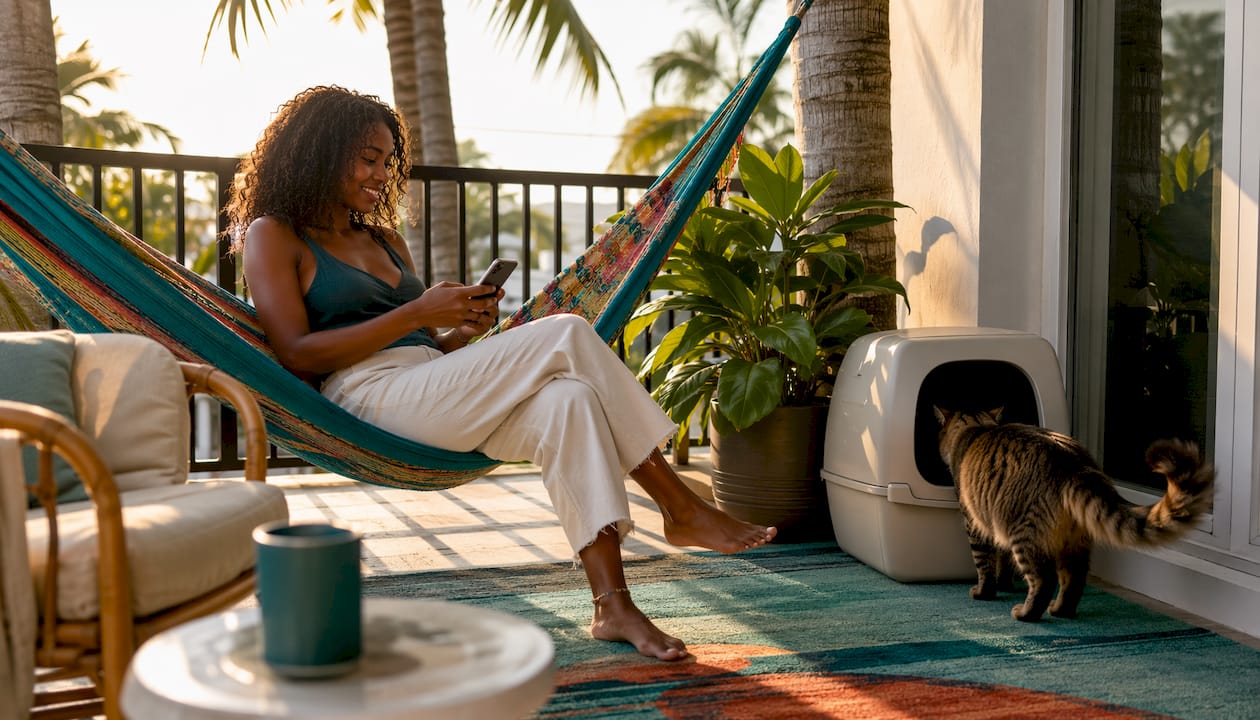
The best tech-forward apartments for cat owners go well beyond a “pets allowed” checkbox. They’re built around your cat’s actual needs: stable feeding schedules, clean air, vertical territory, and the kind of predictable routine that keeps indoor cats healthy for 12 to 18 years. Cynthiagardens in Boca Raton stands out as a leading example of this category, combining transparent pet-friendly policies, AI-assisted leasing, virtual tours, and an interactive property map with a community designed for modern cat owners.
Here’s what separates genuinely tech-forward, cat-centric apartments from the ones that just say they’re pet-friendly:
- Cynthiagardens (Boca Raton, FL): Transparent pricing with no hidden fees, AI chat and voice leasing support, virtual tours, and an interactive property map. Pet-friendly one-bedroom layouts suited for single-cat and multi-cat households.
- Tech-forward communities in San Jose (The Ryden): Cat-5/fiber optic wiring, keyless fob entry, and smart package stations. Cats allowed up to two per household.
- Luxury communities in Santa Clara (Prado Apartments): LATCH keyless entry, InstantON internet, pet spa on-site, and online leasing portal. Monthly pet rent of $50 per cat.
What “tech-forward” actually means for cat owners: It’s not just smart locks and fiber internet. The real differentiators are infrastructure that supports smart pet devices (reliable Wi-Fi coverage throughout the unit, accessible power near litter zones), design layouts with vertical space built in, and management teams that use technology to make leasing and policy communication frictionless.
Pro Tip: Before touring any apartment, ask the leasing team two specific questions: “What is your Wi-Fi dead-zone policy?” and “Are there dedicated power outlets near the bathroom or utility area for smart litter boxes?” A community that answers these confidently is one that has actually thought about pet tech infrastructure.
Table of Contents
- What design elements actually define a cat-friendly tech-forward apartment?
- Seven tech and amenity features every cat owner should look for
- What pet policies and fees should you expect in tech-forward apartments?
- How technology actually supports cat care and owner convenience day to day
- Community lifestyle benefits that matter to cat owners beyond the unit itself
- What does renting a tech-forward cat-friendly apartment actually cost?
- How to evaluate and compare tech-forward apartments specifically for cats
- Which U.S. cities and neighborhoods lead in tech-forward, cat-friendly apartments?
- Tips for getting the most out of virtual and in-person apartment tours as a cat owner
- How cat owners rate tech-forward apartment communities
- Cynthiagardens: a genuinely cat-forward choice in Boca Raton
- Key Takeaways
What design elements actually define a cat-friendly tech-forward apartment?
The physical layout of an apartment determines whether your cat thrives or just tolerates the space. Tech can enhance a good layout, but it cannot fix a bad one.
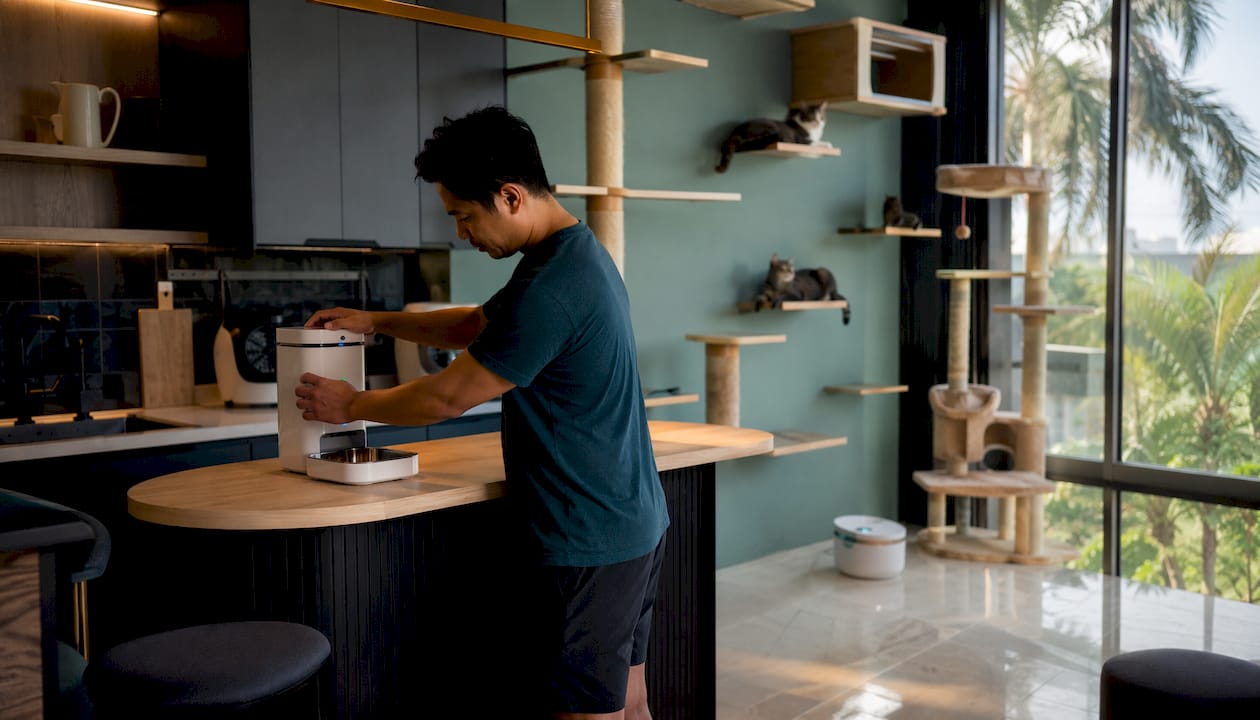
Vertical space is the foundation. Cats experience their environment vertically, not horizontally, so a unit with floor-to-ceiling access points gives a cat more functional territory than a larger flat-floor apartment with nothing to climb. The best communities either pre-install wall-mounted shelving systems or explicitly permit residents to mount them without forfeiting their security deposit.
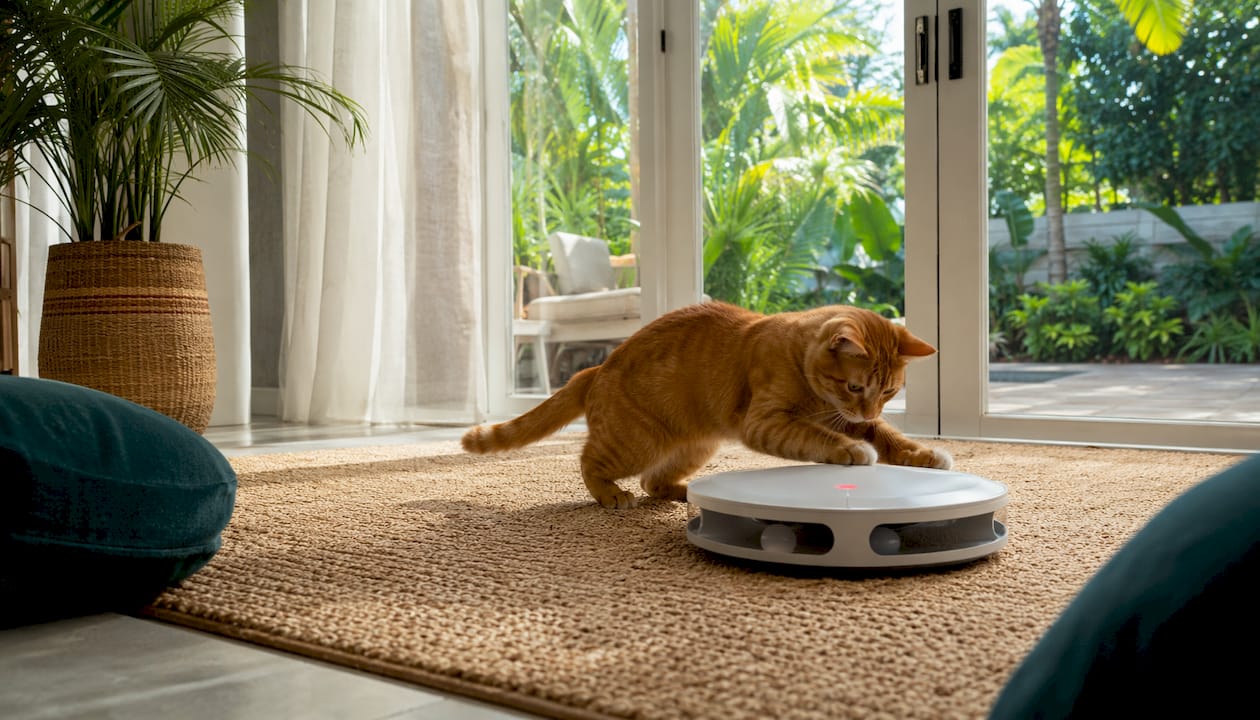
Smart tech infrastructure requires thoughtful placement of power and connectivity. A unit wired for fiber optic speeds with consistent Wi-Fi coverage in every corner, including bathrooms and utility closets where litter stations typically live, is genuinely more cat-friendly than one with a single router in the living room. Dedicated zones for food, litter, rest, and play with stable placement reduce feline stress and make automation more effective.
Core design elements worth evaluating:
- Durable, cat-safe flooring: Hardwood-style or luxury vinyl plank flooring resists scratching, cleans easily, and doesn’t trap dander the way carpet does.
- Odor-resistant surfaces: Sealed countertops and non-porous wall finishes near litter areas make odor control far easier.
- Minimalist, integrated cat furniture: Modern apartment catification moves toward hidden, design-friendly furniture rather than bulky carpeted towers. Think mid-century side tables with concealed cat entrances and sleek acrylic window perches.
- Environmental controls: In-unit programmable thermostats, low-VOC paint, and HEPA-compatible ventilation systems all contribute to air quality that benefits both cats and owners.
- Noise reduction: Solid-core doors and adequate insulation reduce the ambient noise that can stress cats in urban buildings.
- Natural light access: Wide windows with secure screens give cats passive enrichment through bird-watching and sunbathing without fall risk.
- Layout flexibility: Open-concept plans that allow owners to position cat trees near windows without blocking traffic flow are more practical than compartmentalized layouts.
The apartment floor plan you choose shapes your cat’s daily experience more than almost any single tech purchase.
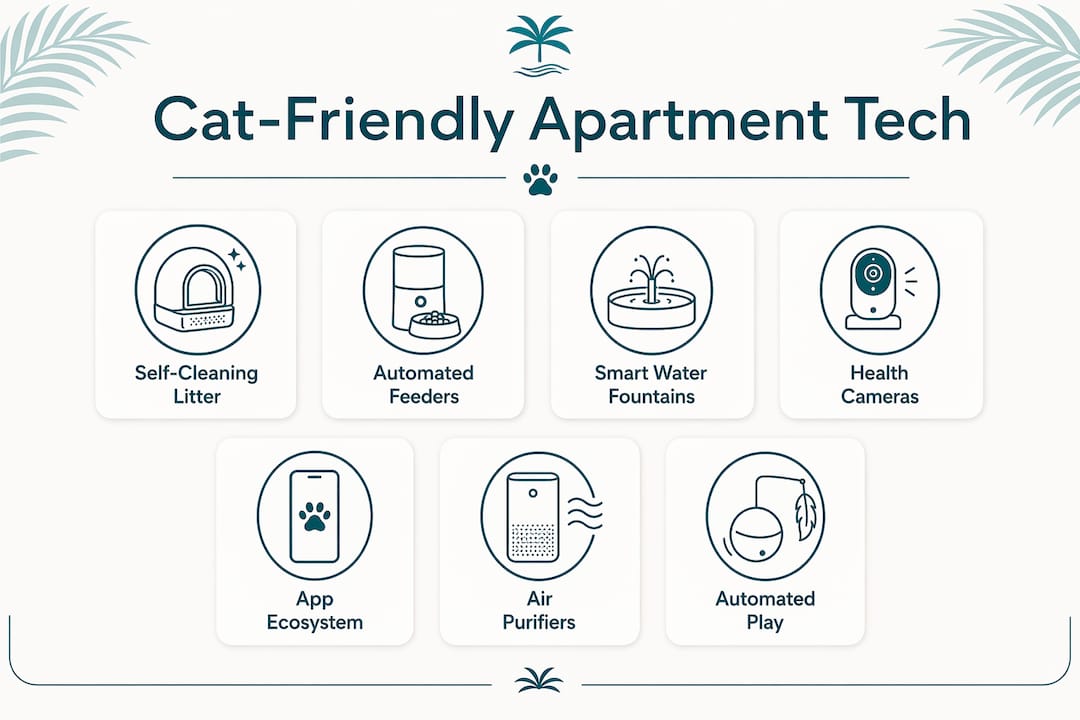
Seven tech and amenity features every cat owner should look for
1. Self-cleaning litter boxes with app monitoring
Self-cleaning litter boxes with automatic cycling and app alerts are the single highest-impact upgrade for apartment cat owners. They reduce odor between manual cleanings, track usage frequency (an early health indicator), and eliminate the daily scooping burden. Units like the Litter-Robot 4 send smartphone notifications when the drawer is full and log each visit, giving owners data to share with their vet.
2. Automated feeders with portion control
Scheduled feeding with app-controlled portion sizes keeps cats on the consistent twice-daily meal routine that veterinarians recommend for indoor cats. Brands like PetSafe and PETLIBRO allow owners to set feeding windows, adjust portions remotely, and receive alerts if a meal is skipped. For owners working long hours, this removes the anxiety of wondering whether the cat has eaten.
3. Smart water fountains with filtration
Quiet, filtered water fountains promote hydration, which directly supports urinary tract health in cats. Ceramic models from brands like Catit and Pioneer Pet run nearly silently, a meaningful consideration in a smaller apartment where noise travels. Some connect to apps that track daily water intake.
4. Integrated health monitoring cameras
Cameras positioned near feeding and litter stations let owners check on their cats remotely during work hours or travel. The Furbo Cat Camera and similar devices include two-way audio and motion alerts. When paired with a smart feeder and litter box, they form a basic health monitoring ecosystem that can flag behavioral changes before they become vet emergencies.
5. App-integrated tech ecosystems
Combining feeder, fountain, and litter box under a single app gives owners a unified health dashboard rather than three separate notification streams. Platforms like HomeRun Pet aggregate data across devices, making it easier to spot patterns, such as decreased water intake alongside increased litter box visits, that warrant a vet call.
6. Air purifiers with HEPA and activated carbon filtration
Cat dander is a significant allergen, and litter dust affects both cats and owners. A HEPA air purifier positioned near the litter area, such as models from Winix or Levoit, captures airborne particles and reduces odor without masking it with fragrance. Some units include air quality sensors that adjust fan speed automatically.
7. Automated play systems
Devices like the Cheerble Wicked Ball or PetSafe FroliCat rotate through play patterns autonomously, providing stimulation during the hours when owners are away. For single-cat households where there’s no feline companion to provide social play, automated toys reduce boredom-driven destructive behavior. They’re most effective when rotated every few weeks so the cat doesn’t habituate to them.
Budget note: Entry-level versions of each category (basic timed feeder, simple fountain, standard HEPA filter) run $30–$80 each. Full smart-device ecosystems with app integration typically run $300–$600 for the complete setup. Neither price point requires landlord approval, since all are freestanding units.
What pet policies and fees should you expect in tech-forward apartments?
Pet policies vary more than most renters expect, and the financial picture goes beyond the monthly rent figure. Here’s a realistic breakdown of what tech-forward, cat-friendly communities typically charge and require.
| Fee Type | Typical Range | Notes |
|---|---|---|
| Refundable pet deposit | — | Returned at move-out if no pet damage |
| Non-refundable pet fee | — | Covers general wear attributed to pets |
| Monthly pet rent | $50 | Prado Apartments charges $50/month per pet |
| Pet insurance (cat) | — | Separate from apartment fees; owner’s responsibility |
| Breed/size restrictions | Rare for cats | Most communities cap at 2 cats per unit |
Common pet policies in tech-forward communities include:
- Cat count limits: Two cats per household is the most common cap, seen at both The Ryden in San Jose and Prado in Santa Clara.
- Vaccination documentation: Most communities require proof of current rabies and FVRCP vaccinations at lease signing and annually.
- Spay/neuter requirements: Many communities require documentation, particularly for cats over six months old.
- Health records on file: Some tech-forward communities use resident portals to store pet health documentation digitally, making renewals easier.
- Noise and nuisance clauses: Excessive vocalization can trigger lease violations; this is rarely an issue with cats but worth reading carefully.
- Damage liability: Renters are typically responsible for claw damage to doors, baseboards, and flooring beyond normal wear.
How tech features influence policy: Communities that offer smart litter monitoring and air purification infrastructure tend to be more confident approving cat residents because the technology reduces the odor and cleanliness concerns that drive restrictive policies. Demonstrating that you use a self-cleaning litter box and HEPA filtration when applying can genuinely improve your approval odds with a hesitant landlord.
Negotiating tip: If a community charges a non-refundable pet fee, ask whether it can be reduced in exchange for a higher refundable deposit. Some property managers prefer the deposit structure because it aligns incentives. Bringing documentation of your smart litter system and your cat’s vet records to the conversation signals responsibility.
Cynthiagardens publishes its pet policies and pricing transparently, with no hidden fees, so you know the full cost before signing. Their community rules page covers pet-specific expectations clearly.
How technology actually supports cat care and owner convenience day to day
The real value of smart pet tech in an apartment isn’t the gadget itself. It’s the consistency it creates. Smart devices maintain feeding, water, and litter routines with a reliability that human schedules rarely match, and predictability is what keeps indoor cats calm and healthy.
Here’s how the tech stack works in practice:
- Feeding automation: A smart feeder dispenses measured meals at the same time every day, regardless of whether the owner is stuck in traffic or traveling. App notifications confirm each dispensing event.
- Hydration tracking: Filtered fountains with flow sensors log daily water intake. A drop in intake over two or three days is often the first sign of a urinary or dental issue.
- Litter monitoring: Self-cleaning boxes with usage logs track visit frequency and duration. Vets increasingly ask owners to bring this data to wellness appointments.
- Remote health checks: Cameras near feeding and litter stations let owners do a visual check during the workday without disturbing the cat.
- Environmental automation: Smart thermostats maintain the 68–78°F range that cats prefer, and air quality sensors trigger purifier adjustments when particulate levels rise.
Monitoring devices that track behavioral changes can alert owners to shifts warranting a vet visit before symptoms become obvious. That early-warning function is where tech delivers its clearest health benefit for indoor cats.
Pro Tip: Don’t automate everything at once. Introduce one device at a time over two to three weeks so your cat can adjust without stress. Start with the feeder, since consistent meal timing is the highest-priority routine change, then add the fountain, then the litter system. Cats habituate better to gradual change than to a sudden overhaul of their environment.
The travel scenario is where owners feel the benefit most acutely. A weekend away used to mean arranging a cat sitter or leaving out excess dry food. With a smart feeder, fountain, camera, and self-cleaning litter box running, a 48-hour absence becomes genuinely low-risk for a healthy adult cat.
Community lifestyle benefits that matter to cat owners beyond the unit itself
The apartment unit is only part of the picture. The community around it, and the neighborhood beyond it, shapes daily life for cat owners in ways that don’t show up on a floor plan.
Tech-forward communities increasingly offer amenities and tools that extend well beyond the front door:
- On-site pet spas and grooming stations: Available at communities like Prado in Santa Clara, these reduce the need for off-site grooming appointments and the car-carrier stress that comes with them.
- Virtual tours and AI leasing assistants: Tech-enhanced leasing processes reduce the friction of apartment hunting for cat owners who need to evaluate pet-specific features before committing to an in-person visit. Cynthiagardens offers AI chat support, voice assistance, and an interactive property map for exactly this purpose.
- Online resident portals: Digital platforms for rent payment, maintenance requests, and pet documentation storage mean less paperwork and faster resolution when something needs attention.
- Community events: Pet-social events and neighbor-awareness programs build the kind of community culture where cat ownership is normalized rather than tolerated.
- Planned community spaces: Outdoor lounges, courtyards, and co-working areas give cat owners a reason to leave the unit, which matters for mental health during long work-from-home stretches.
Neighborhood factors carry real weight. Proximity to a cat-specific or feline-experienced veterinarian is more valuable than proximity to a general pet store. In Boca Raton, Cynthiagardens’ location gives residents access to multiple veterinary practices within a short drive, along with pet supply retailers and green spaces that support the broader cat-owner lifestyle.
The community culture question is harder to evaluate from a listing page but worth asking about directly during a tour: “How do residents typically handle noise or pet concerns with neighbors?” A management team that has a clear, tech-assisted process for this (resident app messaging, documented complaint procedures) is one that takes community quality seriously.
What does renting a tech-forward cat-friendly apartment actually cost?
The total cost of renting in a tech-forward, cat-friendly community has several layers, and the monthly rent figure is only the starting point.
Monthly rent: One-bedroom apartments in tech-forward communities vary significantly by market. In Boca Raton, Cynthiagardens offers one-bedroom units at competitive price points with transparent pricing and no hidden fees. In higher-cost markets such as San Jose and Santa Clara, comparable units run considerably higher.
Pet-related costs on top of rent:
- Monthly pet rent varies depending on the community.
- Annual pet insurance costs vary based on coverage level and the cat’s age.
- One-time non-refundable pet fees vary at move-in.
- Refundable pet deposit amounts vary and are returned at move-out if no damage is found.
Smart device setup costs: Building a functional tech ecosystem for one cat runs $300–$600 for quality devices across the five core categories (feeder, fountain, litter box, camera, air purifier). These are one-time purchases that move with you.
Ongoing consumables: Litter, food, replacement filters for fountains and air purifiers, and litter box waste bags add roughly $50–$100 per month depending on the brands you choose.
The total picture for a cat owner in a tech-forward one-bedroom apartment typically lands at monthly rent plus $75–$175 in pet-related and consumable costs, with a one-time setup investment of $500–$1,000 for deposits, fees, and smart devices. Communities with transparent pricing, like Cynthiagardens, make this math straightforward from day one. You can review affordable one-bedroom options in Boca Raton to get a concrete sense of what the base rent looks like before adding pet costs.
How to evaluate and compare tech-forward apartments specifically for cats
Most apartment comparison checklists are built for general renters. Cat owners need a different set of questions.
Start with the infrastructure, not the amenities list. A community that lists “pet-friendly” as an amenity has cleared the lowest bar. What you’re looking for is evidence that the building was designed with pet tech in mind: fiber or Cat-5 wiring throughout the unit (not just the living room), accessible power outlets in bathroom and utility areas, and a management team that can answer specific questions about smart device use without hesitation.
Evaluate the floor plan for cat functionality. A one-bedroom with an open layout and at least one large window is more cat-friendly than a compartmentalized unit with small windows, regardless of square footage. Check whether the lease permits wall mounting for shelving. Ask whether the unit has hardwood-style or vinyl plank flooring rather than carpet, which traps dander and is harder to clean around litter areas.
Read the pet policy in full before touring. Specifically look for: cat count limits, breed or weight restrictions (rare for cats but occasionally present), noise clauses, damage liability language, and whether the deposit is refundable. A community that publishes this information clearly online, without requiring you to call and ask, is demonstrating the kind of transparency that tends to carry through the entire tenancy.
Ask about the leasing technology. Communities that offer virtual tours, AI chat support, and online lease signing are also more likely to have digital maintenance request systems and resident portals. These tools matter after move-in, not just during the search.
Compare total cost, not just rent. Factor in monthly pet rent, one-time fees, and whether the community’s location reduces or increases your ongoing costs (vet proximity, pet supply access, parking if you need to transport your cat).
The best pet-friendly apartment features to prioritize are the ones that directly affect your cat’s daily experience: flooring, ventilation, natural light, and the lease terms that govern what you can install.
Which U.S. cities and neighborhoods lead in tech-forward, cat-friendly apartments?
Geography matters. Some markets have built a genuine culture of tech-forward, pet-inclusive apartment living. Others are catching up.
South Florida (Boca Raton and surrounding areas): Boca Raton has emerged as a strong market for cat-friendly apartment living, with communities like Cynthiagardens offering transparent pricing, modern amenities, and tech-assisted leasing in a city that combines urban convenience with a relaxed Florida lifestyle. The climate is favorable for indoor cats year-round, and the density of veterinary practices in Palm Beach County gives owners solid access to feline healthcare.
San Francisco Bay Area (San Jose, Santa Clara): The Bay Area leads in tech infrastructure within apartment buildings, with fiber optic wiring, keyless entry systems, and smart package stations common even in mid-tier communities. The trade-off is cost. Pet-friendly apartments in this market command premium rents, and the density of tech workers means competition for units is high.
Seattle, WA: Among major U.S. cities, Seattle has one of the highest rates of pet-friendly apartment availability. The city’s tech-industry culture has pushed property managers to invest in smart building features, and the relatively mild climate suits indoor cats well.
Austin, TX: Austin’s rapid growth has brought a wave of new apartment construction with modern amenities, and the city’s tech-sector population has driven demand for smart home features. Pet policies tend to be more flexible than in older East Coast markets.
Denver, CO: Denver’s outdoor culture extends to pet ownership, and the city’s newer apartment communities increasingly include pet spas, grooming stations, and tech-forward leasing tools alongside cat-friendly policies.
What to look for in any market: The percentage of pet-friendly listings varies significantly by city. Regardless of market, the evaluation criteria remain the same: infrastructure quality, floor plan suitability, policy transparency, and total cost. A well-priced, genuinely cat-optimized apartment in Boca Raton will serve a cat owner better than a nominally tech-forward unit in a high-cost market where the pet fees alone strain the budget.
Tips for getting the most out of virtual and in-person apartment tours as a cat owner
Most renters tour apartments with their own comfort in mind. Cat owners need to tour with their cat’s daily life in mind, which requires a different set of observations.
For virtual tours:
Ask the leasing team to pan the camera slowly around the full perimeter of each room, not just the center. You’re looking for outlet placement near bathroom and utility areas, window size and screen quality, and whether the walls appear to be drywall (mountable for shelving) or concrete (not mountable without landlord approval). Cynthiagardens’ interactive property map and AI chat support make it possible to ask specific questions during a virtual session without waiting for a callback.
Zoom in on the flooring transitions between rooms. Gaps or raised thresholds can be hazards for cats, and carpet-to-hard-floor transitions near litter areas are harder to keep clean.
For in-person tours:
- Check every outlet in the bathroom and utility closet. If there’s no outlet within reach of where a self-cleaning litter box would sit, you’ll need an extension cord, which some leases restrict.
- Open and close the windows. Screens should fit snugly with no gaps. A loose screen on an upper-floor unit is a serious safety risk.
- Listen for ambient noise from neighbors, hallways, and HVAC systems. Cats are sensitive to unpredictable noise, and a unit near an elevator shaft or a shared laundry room will have more of it.
- Ask the leasing agent directly: “Have other residents used smart litter boxes or automated feeders in this unit?” A confident yes suggests the infrastructure supports it.
- Walk the path from the front door to where the litter station would go. If it’s a long, narrow corridor, a large self-cleaning unit may not fit through it.
Pro Tip: Bring a phone charger to an in-person tour and plug it into the outlet nearest to where your litter station would go. If it charges, the outlet is live and accessible. It sounds obvious, but dead outlets in utility areas are more common than you’d expect in older buildings.
How cat owners rate tech-forward apartment communities
Resident feedback on tech-forward, cat-friendly apartments consistently clusters around a few themes: how well the management team communicates, whether the pet policies match what was advertised, and whether the building’s infrastructure actually supports smart pet devices.
Communities that score well in online reviews tend to share several characteristics. Transparent pet policies published upfront, without requiring a phone call to get the real numbers, generate significantly less friction at move-in and move-out. Management teams that use digital communication tools, resident apps, and online portals for maintenance requests receive higher marks for responsiveness. And buildings with reliable, building-wide Wi-Fi coverage get specific praise from cat owners who rely on remote monitoring cameras and app-connected feeders.
Common complaints in lower-rated pet-friendly communities center on surprise fees at move-out, inconsistent enforcement of pet policies among residents, and poor Wi-Fi coverage in units where smart devices are positioned away from the main router.
Cynthiagardens earns positive attention specifically for its no-hidden-fees approach and its tech-forward leasing experience. The combination of AI chat support, virtual tours, and an interactive property map addresses the friction points that cat owners consistently flag during apartment searches: not knowing the real pet costs until late in the process, and not being able to evaluate the unit’s suitability for a cat without an in-person visit. Their pet-friendly one-bedroom apartments page gives prospective residents a clear picture of what to expect before they ever schedule a tour.
When evaluating any community’s reputation, look for reviews that mention specific interactions with the management team rather than generic praise. A review that says “they answered my questions about smart litter box installation before I even signed the lease” tells you more than “great community, love it here.”
Cynthiagardens: a genuinely cat-forward choice in Boca Raton
If you’ve been comparing communities on pet policies and tech features, Cynthiagardens offers something most apartment searches turn up only after several frustrating phone calls: the full picture, upfront.
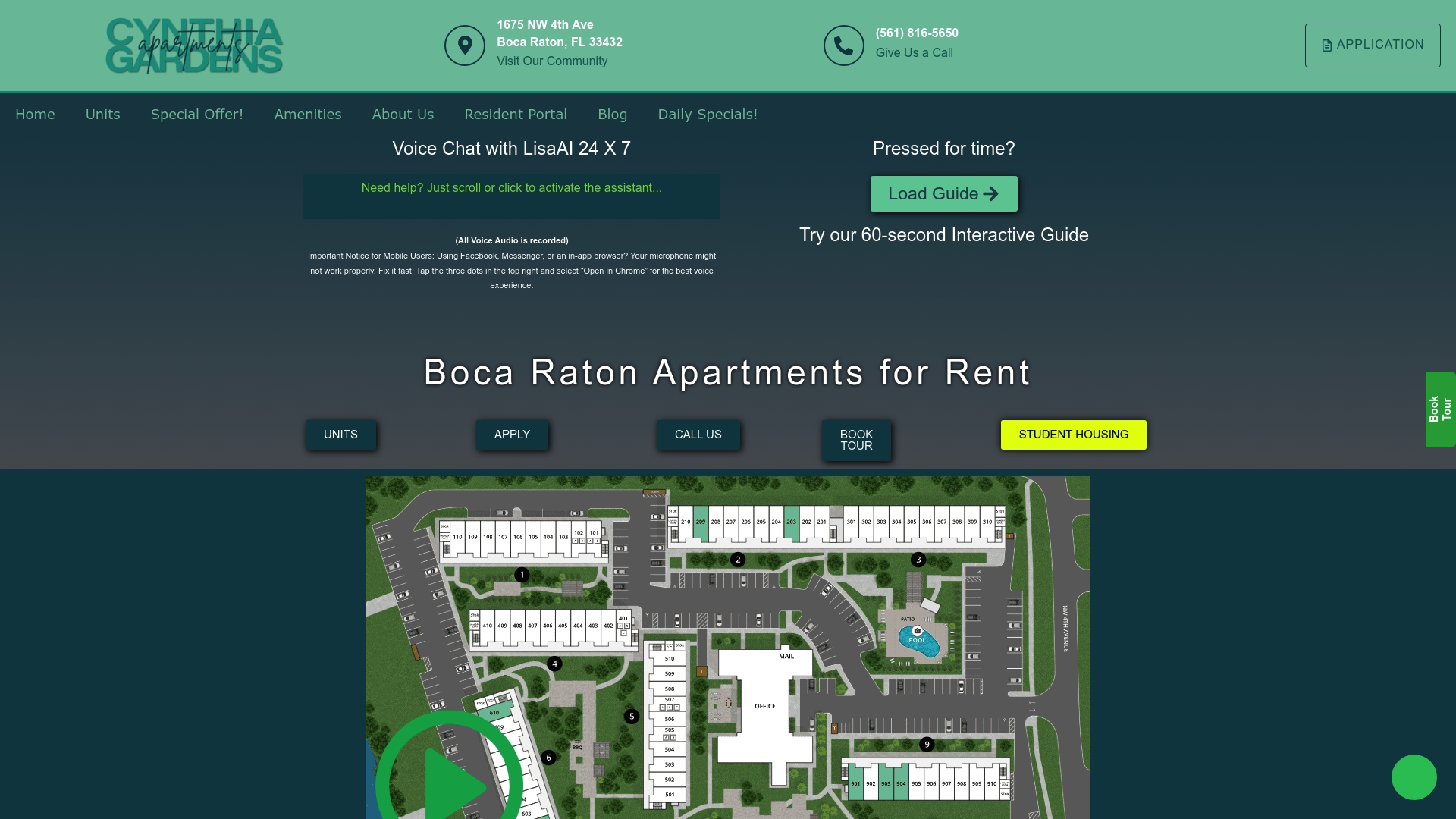
No hidden pet fees. No vague “contact us for pet policy” language. Cynthiagardens publishes transparent pricing and pet-friendly terms from the start, so you can run the real numbers before you tour. The leasing process itself is built for modern renters: AI chat support answers specific questions around the clock, voice assistance handles common inquiries, and the interactive property map lets you evaluate unit placement, window orientation, and proximity to community amenities before setting foot on the property.
For cat owners specifically, the one-bedroom layouts at Cynthiagardens accommodate the core setup that indoor cats need: space for a vertical climbing structure near a window, a private litter station with outlet access, and a feeding zone separated from the litter area. The community’s Boca Raton location puts residents within reach of multiple veterinary practices, pet supply retailers, and the kind of relaxed Florida lifestyle that suits both cats and their owners.
The apartment styles and features page covers unit specifics in detail. To take the next step, schedule a virtual tour or start a conversation with the AI leasing assistant directly on the Cynthiagardens site. You’ll have the information you need to make a confident decision without the back-and-forth that slows down most apartment searches.
Key Takeaways
Tech-forward cat-friendly apartments deliver the most value when transparent pet policies, smart device infrastructure, and cat-optimized floor plans work together from day one.
| Point | Details |
|---|---|
| Indoor cat lifespan | Properly enriched indoor cats live 12–18 years; apartment setup quality directly affects this outcome. |
| Smart device priority | Start with an automated feeder for consistent meal timing, then add fountain and litter monitoring for a full health picture. |
| True cost of pet renting | Budget monthly pet rent ($50), and one-time fees on top of base rent. |
| Evaluate infrastructure first | Check outlet placement near litter areas and Wi-Fi coverage throughout the unit before committing to any community. |
| Cynthiagardens | Offers transparent pet pricing, AI leasing support, virtual tours, and cat-friendly one-bedroom layouts in Boca Raton with no hidden fees. |