
TL;DR:
- Smart leasing tools use technology to automate and improve rental processes, boosting occupancy and efficiency. AI leasing assistants respond instantly to inquiries, capturing leads and reducing no-shows, while integrated CRM-PMS systems eliminate data errors and accelerate leasing workflows. Virtual tours and automated renewal platforms enhance tenant engagement and lower vacancy rates through remote leasing and early lease management.
Smart leasing tools are defined as technology platforms that automate, connect, and accelerate the rental leasing process from first inquiry through lease renewal. The best examples of smart leasing tools include AI-powered leasing assistants, integrated CRM-PMS platforms, virtual tour software, automated lease administration systems, and resident experience platforms. These solutions, collectively known in the industry as PropTech or leasing automation platforms, deliver measurable gains: lead-to-lease conversion rates improve by 5–15% and payroll savings reach $50,000–$300,000 per 1,000 units depending on automation depth. For property managers and leasing professionals, choosing the right combination of these tools determines occupancy rates, tenant satisfaction, and net operating income.
1. What are examples of smart leasing tools powered by AI?
AI-powered leasing assistants are software agents that handle prospect inquiries, schedule tours, and qualify leads without human intervention. They operate 24 hours a day, seven days a week, which is the single biggest gap traditional leasing teams cannot fill. The industry average manual response time to a prospect inquiry is over four hours. AI agents answer in under 60 seconds.

That speed gap has a direct revenue consequence. AI-driven leasing agents capture 40% of after-hours leads and recover 30–50% of no-shows within 24 hours through automated follow-up. Those are leads that would otherwise go cold before a leasing agent arrived at their desk the next morning.
Key capabilities of AI leasing assistants include:
- Instant inquiry response: Answers questions about pricing, availability, and pet policies within seconds.
- Automated tour scheduling: Books, confirms, and reschedules tours without staff involvement.
- No-show recovery: Sends follow-up messages within hours of a missed appointment.
- Lead qualification: Filters prospects by income, move-in date, and unit preference before handing off to a human agent.
- After-hours coverage: Captures and logs every inquiry regardless of time zone or day of week.
Pro Tip: Train your leasing team to review AI conversation logs weekly. The patterns in unanswered questions reveal gaps in your listing copy and pricing pages.
Understanding AI leasing support benefits helps both property managers and prospects get more from the technology. Cynthiagardens uses AI chat support and voice assistance to give prospects immediate answers at any hour.
2. How CRM and property management system integration creates a unified platform
The CRM is the heart of leasing operations and the property management system (PMS) is the brain. When they operate separately, data lives in two places and neither system reflects reality. Bi-directional CRM-PMS data flow eliminates outdated pricing errors and removes manual data entry from the leasing workflow entirely.
The practical result is that a prospect’s information captured in the CRM flows automatically into the PMS the moment a lease is signed. Lease accounting, unit assignment, and move-in scheduling update without a staff member touching a spreadsheet. Leasing automation reduces administrative workload by 73% and accelerates application-to-approval times by 70%.
“Unified CRM-PMS data creates asset intelligence that enables precise marketing spend optimization and vacancy prediction. Disconnected point solutions fail to deliver real intelligence because the data never speaks to itself.”
Benefits of a connected CRM-PMS platform include:
- Real-time availability: Pricing and unit status update instantly across all listing channels.
- Vacancy prediction: Historical occupancy data feeds forward-looking models that flag at-risk units weeks in advance.
- Marketing spend optimization: Leads are tracked from source to signed lease, showing which channels produce the lowest cost per lease.
- Automated task triggers: A lease expiration in the PMS automatically creates a renewal task in the CRM.
Property managers who treat digital leasing tools as a connected system rather than separate apps see the clearest gains in efficiency and decision speed.
3. Virtual tour and remote leasing tools that improve tenant engagement
Virtual leasing tools are defined as platforms that allow prospects to tour, apply, and sign a lease without visiting the property in person. Virtual tours and remote signing speed the leasing process and increase conversion rates by meeting renters where they already are: online, often from another city or state.
The technology stack for a fully remote leasing experience typically includes:
- 3D virtual tour software: Lets prospects walk through a unit at their own pace using a browser or mobile device.
- Interactive property maps: Show unit locations, floor plans, and amenities in a spatial format that static photos cannot replicate. Cynthiagardens offers an interactive property map that helps prospects identify the right unit before scheduling any tour.
- Smart lock integration: Grants self-guided tour access via a time-limited digital key sent to a prospect’s phone.
- E-signature platforms: Allow lease documents to be reviewed and signed from any device without printing or scanning.
- Video call leasing: Connects prospects with a live leasing agent for a guided walkthrough via video.
Modern renters, particularly young professionals and students relocating for work or school, expect to complete most of the leasing process before they ever visit a property. Communities that offer remote apartment touring reduce friction at the top of the funnel and convert more out-of-market prospects into signed leases.
4. Automated lease administration and renewal management systems
Automated lease administration platforms track every active lease, flag upcoming expirations, and generate renewal offers without manual calendar management. The core function is simple: the system knows when every lease ends and acts on that information before the property manager remembers to check. Automated renewal nurturing with AI drops delinquency rates by 20–40% within 90 days.
A well-configured lease administration system handles:
- Expiration tracking: Flags leases 90, 60, and 30 days before end date with escalating alerts.
- Renewal offer generation: Produces personalized renewal letters with updated pricing based on current market rates.
- Automated follow-up sequences: Sends reminders via email and SMS if a tenant has not responded to a renewal offer.
- Document storage: Archives signed leases, addenda, and inspection reports in a searchable digital repository.
- Compliance monitoring: Alerts managers when lease terms conflict with local rent control or notice requirements.
Automated lease workflows reduce human error by 89% and cut vacancy periods by 32%. Those numbers reflect what happens when a system replaces a to-do list: nothing falls through the cracks because the software does not forget.
Pro Tip: Set your renewal outreach to begin 90 days before expiration, not 60. Tenants who receive early renewal offers at a fair rate renew at significantly higher rates than those who receive last-minute notices.
5. Resident experience platforms and their role in smart leasing
Resident experience platforms are software systems built around the full resident lifecycle, from move-in onboarding through lease renewal and eventual move-out. They differ from leasing tools in scope: where a leasing tool closes the deal, a resident experience platform manages everything that happens after the keys are handed over. Clear digital onboarding flows correlate with an 86% higher resident recommendation rate.
These platforms connect directly to leasing workflows because a positive resident experience is the most cost-effective renewal strategy available. A resident who receives a guided digital onboarding, timely maintenance updates, and proactive communication is far more likely to renew than one who felt ignored after signing.
Core features of resident experience platforms include:
- Digital onboarding checklists: Walk new residents through move-in steps, utility setup, and community rules in a mobile-friendly format.
- Maintenance request portals: Allow residents to submit, track, and rate repair requests without calling the office.
- Rent payment automation: Sends reminders before due dates and supports autopay enrollment to reduce delinquency.
- Benefits orchestration: Bundles value-added services like renters insurance, credit reporting for on-time payments, and utility concierge into a single resident dashboard.
- Community communication tools: Push announcements, package alerts, and event invitations directly to residents’ phones.
| Feature | Primary Benefit |
|---|---|
| Digital onboarding | Reduces move-in confusion and staff call volume |
| Maintenance portal | Increases resident satisfaction and response speed |
| Rent autopay | Lowers delinquency and reduces collection labor |
| Benefits orchestration | Adds perceived value without raising rent |
| Community messaging | Builds retention through consistent communication |
AI tools that handle rent reminders via SMS achieve over 90% read rates within minutes of delivery. That read rate is why SMS-based payment reminders outperform email for delinquency reduction across multifamily portfolios.
Key Takeaways
The most effective leasing management strategy combines AI-powered lead response, unified CRM-PMS data, virtual tour technology, automated lease administration, and resident experience platforms into a single connected workflow.
| Point | Details |
|---|---|
| AI response speed wins leads | AI agents answer in under 60 seconds, capturing after-hours prospects that manual teams miss. |
| CRM-PMS integration removes errors | Bi-directional data flow eliminates manual entry and keeps pricing accurate across all channels. |
| Virtual tools convert remote renters | Smart locks, 3D tours, and e-signatures let prospects lease without an in-person visit. |
| Automated renewals protect occupancy | Early renewal outreach and AI follow-up sequences reduce vacancy periods by 32%. |
| Resident platforms drive retention | Digital onboarding and SMS rent reminders correlate with higher recommendation rates and lower delinquency. |
What I’ve learned about adopting smart leasing technology
The biggest mistake I see property management teams make is treating leasing technology as a plug-and-play install. They purchase a platform, connect it to their PMS, and expect results by the end of the month. Effective adoption requires training staff to manage AI workflows and adjusting operational processes, not just adding a new tool to an existing broken system.
The approach that actually works follows a “one trend, one pilot, then scale” model. Phased adoption prevents operational chaos and builds measurable value before you commit budget to a full rollout. Start with AI lead response because the ROI is fastest and the staff disruption is lowest. Then add CRM-PMS integration. Then layer in resident experience features.
The teams that struggle are the ones who buy five disconnected tools and call it a tech stack. Disconnected point solutions fail to deliver real intelligence because the data never speaks to itself. A leasing assistant that cannot see the PMS availability data will quote wrong prices. A renewal platform that cannot read lease expiration dates from the PMS is just a calendar with extra steps.
The teams that win treat AI as a workflow transformation, not a shortcut. They assign a staff member to own each tool, review performance weekly, and adjust configurations based on what the data shows. That discipline is what separates communities with measurable ROI from those still waiting for results six months after launch. Real estate marketing strategies that support tech-driven lead capture also amplify the gains from leasing automation by filling the top of the funnel with qualified traffic.
— Ayman
Cynthiagardens: a tech-forward leasing experience in Boca Raton
Cynthiagardens puts the tools described in this article to work for renters and leasing professionals in Boca Raton, Florida. The community offers AI chat support, voice assistance, virtual tours, and an interactive property map so prospects can find the right unit and complete most of the leasing process before ever visiting in person.
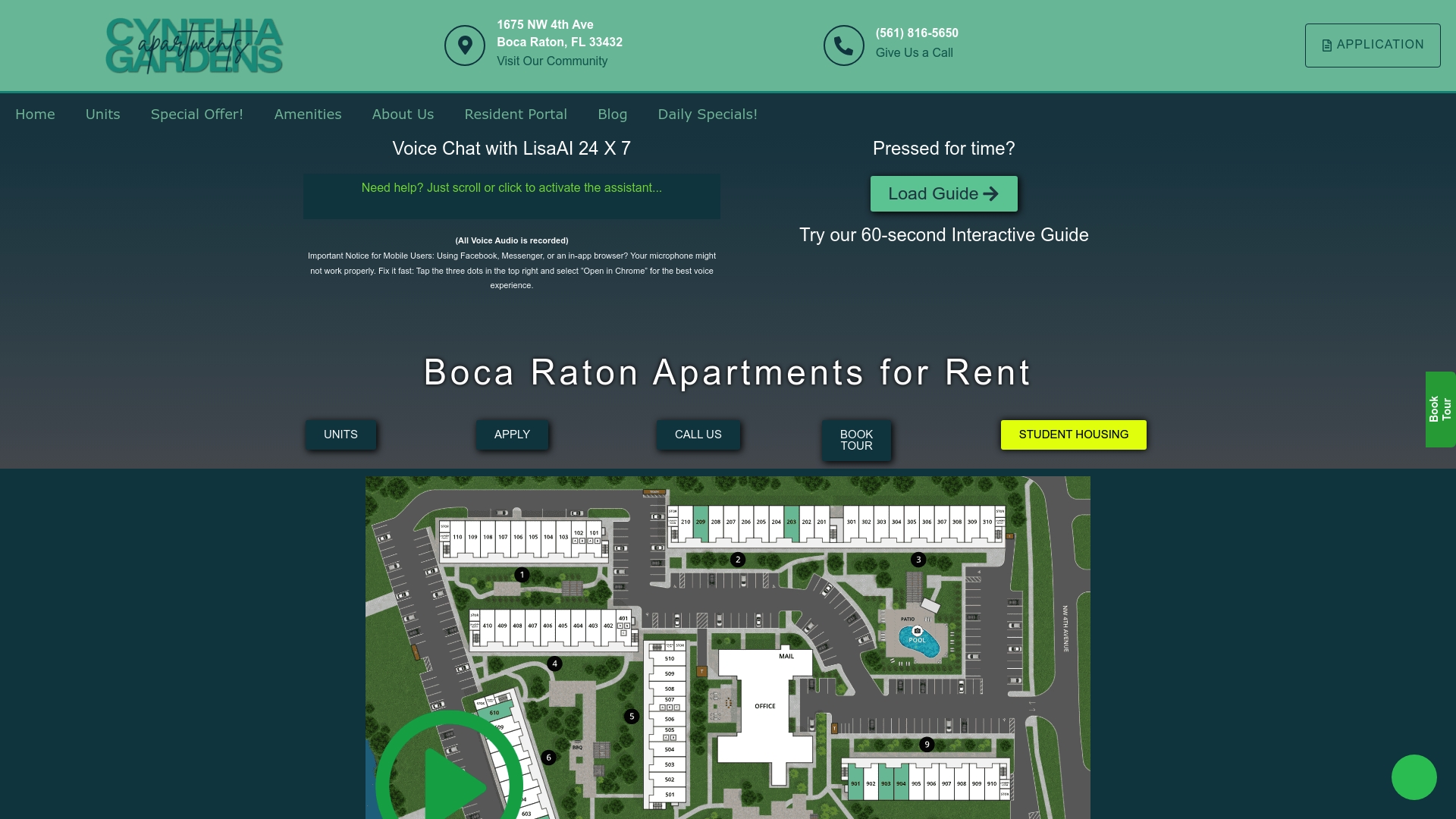
For young professionals, students, and pet owners looking for transparent pricing with no hidden fees, the apartment styles and features at Cynthiagardens reflect exactly what modern leasing technology is designed to support: fast answers, clear information, and a confident decision. The one-bedroom leasing workflow at Cynthiagardens is built around the same principles covered here, making it a practical reference point for leasing professionals who want to see these tools in action.
FAQ
What are the most common examples of smart leasing tools?
The most common examples include AI leasing assistants, integrated CRM-PMS platforms, virtual tour software, automated lease administration systems, and resident experience platforms. Each category addresses a distinct stage of the leasing lifecycle.
How quickly do AI leasing tools show a return on investment?
AI-powered leasing tools typically deliver ROI within 90 days, driven by payroll savings of $50,000–$300,000 per 1,000 units and a 5–15% improvement in lead-to-lease conversion rates.
What is the difference between a CRM and a property management system?
A CRM manages prospect and tenant relationships from first inquiry through lease signing, while a PMS handles operational functions like rent accounting, maintenance, and unit management. Integrated together, they eliminate data silos and manual entry.
Do virtual leasing tools actually increase conversion rates?
Virtual tours and remote signing tools increase conversion rates by reducing friction for out-of-market prospects. Renters who can tour, apply, and sign digitally complete the leasing process faster than those who must visit in person.
How do automated lease renewal systems reduce vacancy?
Automated systems flag expiring leases 90 days in advance, generate renewal offers, and send follow-up reminders via SMS and email. This early outreach, combined with AI-driven delinquency management, reduces vacancy periods by 32%.