
TL;DR:
- The virtual leasing process enables renters to view, apply for, and sign rental agreements entirely online. It combines virtual tours, digital applications, screening, and e-signatures, streamlining remote apartment rentals. Prospective tenants should verify listings carefully and negotiate a physical walkthrough clause to ensure accuracy before move-in.
The virtual leasing process is the method of renting an apartment entirely through digital tools, letting you view, apply for, and sign a lease without a single in-person visit. Remote leasing services have grown from a pandemic workaround into a standard practice, and the data backs that shift. Listings with virtual tours generate 40% more leads and 72% more net leases compared to listings without them. For renters relocating across state lines or working demanding schedules, the online leasing procedure removes the biggest friction point: geography.
What is the virtual leasing process, and how does it work?
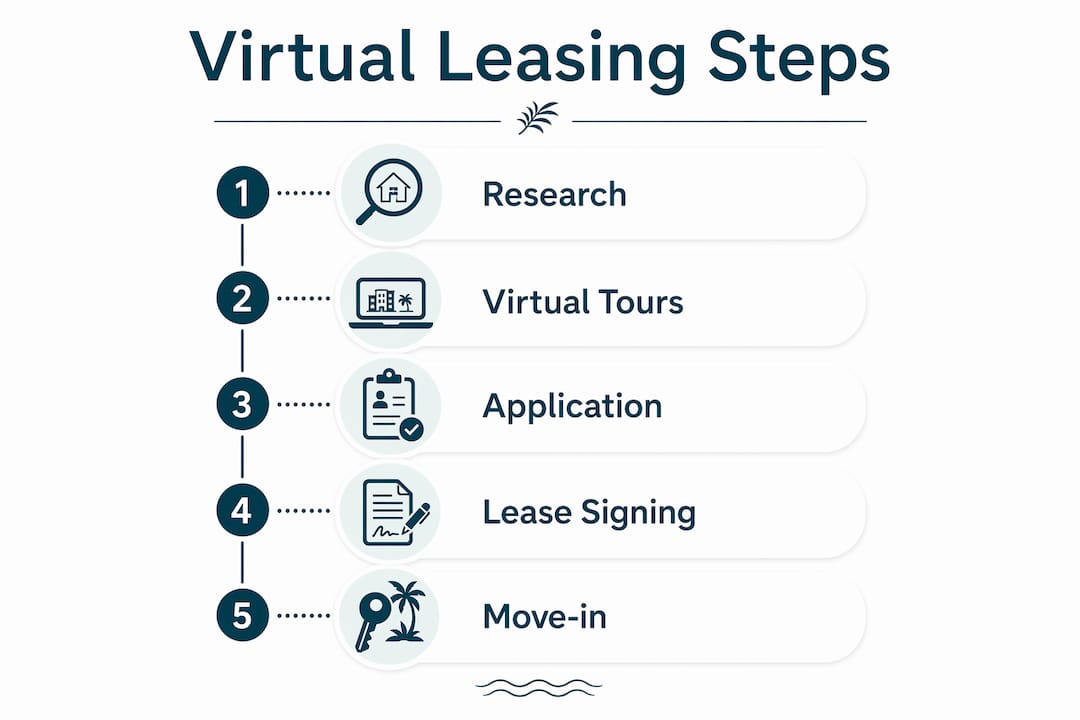
The virtual leasing process covers every step from your first apartment search to the moment you receive your keys, all handled digitally. The industry term for this broader category is “remote leasing,” and it combines virtual tours, digital rental applications, digital tenant screening, and electronic lease signing in to one connected workflow. Understanding each layer helps you move faster and avoid costly mistakes.

The process works because renters and property managers now share a common set of tools. Video platforms, e-signature software, and identity verification services have matured enough to replace paper-based workflows without sacrificing security. Cynthiagardens, for example, supports AI chat, voice assistance, virtual tours, and an interactive property map so renters can filter and evaluate units before ever picking up the phone.
Pro Tip: Start your search with communities that publish floor plans, pricing, and virtual tours on their website. Properties that hide this information often have longer, more frustrating leasing timelines.
What tools and technologies power remote leasing?
The technology stack behind a modern online leasing procedure falls into four categories: touring, applying, signing, and communicating.
Touring formats
64% of renters prefer a first viewing without an agent-led tour. That preference breaks down into 42% favoring self-guided tours, 14% choosing live virtual tours, and 8% opting for recorded video. That means most renters want control over the pace and focus of their first look.
- Self-guided tours: You access the unit independently using a smart lock code. No scheduling around an agent’s calendar.
- Live virtual tours: A leasing agent walks through the unit on a live video call via Zoom or FaceTime while you direct the camera.
- Recorded video tours: Pre-filmed walkthroughs available on demand, useful for a quick first filter.
- 3D walkthroughs: Platforms like Matterport create interactive, photorealistic floor plans you can navigate at your own speed.
Application and screening tools
Digital rental applications collect income verification, rental history, and references through secure online forms. Digital tenant screening services pull credit reports, background checks, and eviction records in minutes rather than days. This speed benefits you as much as the landlord. A fast screening decision means you can commit to a unit before another applicant does.
Signing and communication tools
E-signature platforms such as DocuSign and HelloSign handle lease execution legally in all 50 states. Both platforms use audit trails and timestamps, so your signed lease is as legally binding as a paper document. For communication, live video calls handle complex questions, while messaging platforms create a written record of every commitment made before you sign.
| Tool category | Common platforms | Primary function |
|---|---|---|
| Virtual tours | Matterport, FaceTime, Zoom | Unit viewing and evaluation |
| Digital applications | Property management portals | Rental history and income submission |
| Tenant screening | TransUnion SmartMove, Experian RentBureau | Credit, background, eviction checks |
| E-signature | DocuSign, HelloSign | Legally binding lease execution |
| Identity verification | Persona, Stripe Identity | Fraud prevention and access management |
How does the virtual leasing timeline work, step by step?
A clear timeline prevents the most common renter mistake: rushing the process and missing red flags. The recommended virtual leasing timeline starts 4–6 months before your move date and moves through distinct phases.
Months 4–6 before move: Research
Start with neighborhood research using Google Maps, Walk Score, and local subreddits. Identify your non-negotiables: commute time, pet policies, parking, and price ceiling. This phase is about filtering cities and neighborhoods, not individual units.
Months 2–3 before move: Active virtual browsing
Begin scheduling virtual tours and submitting inquiries. Engage with interactive property maps to compare unit layouts and availability in real time. Narrow your list to three to five serious candidates.
Weeks 6–8 before move: Application
Submit your virtual rental application with all supporting documents ready. Prepare your last two pay stubs, two years of tax returns if self-employed, a government-issued ID, and contact information for two previous landlords. Incomplete applications slow screening and cost you the unit.
Pro Tip: Create a single folder, either on Google Drive or Dropbox, with all your leasing documents pre-loaded. When you find the right unit, you can submit a complete application within minutes instead of hours.
Weeks 2–4 before move: Lease review and signing
Read every clause before signing. Pay close attention to early termination fees, pet addendums, and utility responsibility language. If anything is unclear, request a live video call with the leasing agent. 57% of renters want a real person available to answer specific questions about fees, rent, and lease terms even in a virtual process. That preference is reasonable. Complex lease language deserves a direct conversation, not a chatbot.
Move-in week: Logistics
Confirm move-in date, key pickup or smart lock access, and parking arrangements in writing. Request a digital move-in checklist to document the unit’s condition before you unpack a single box.
How do you verify a listing virtually to avoid scams?
Rental scams are more common in remote leasing than in traditional in-person searches. The distance creates opportunity for fraud, and renters who skip verification steps pay for it. Verifying a listing’s legitimacy before paying any money requires three parallel checks.
- Cross-check photos with Google Street View. Paste the property address into Street View and compare the exterior. Scammers frequently steal photos from legitimate listings and attach them to fake addresses.
- Confirm the management company’s identity. Search the company name on your state’s Secretary of State business registry. A legitimate property management company has a registered business entity.
- Request live proof during video walkthroughs. Ask the agent to show today’s date on their phone and pan the camera to include hallways and the unit number on the door. This single step eliminates most fraudulent tours.
- Check public records. County property appraiser websites list the legal owner of every parcel. If the person showing you the unit is not the owner or a licensed property manager, stop the process.
- Never wire money or pay via gift card. Legitimate landlords accept checks, ACH transfers, or credit card payments through documented portals.
Red flags include pressure to pay a deposit before a tour, refusal to conduct a live video walkthrough, and lease terms that arrive as uneditable image files rather than standard documents.
Pro Tip: Run a reverse image search on every listing photo using Google Images or TinEye. If the same photos appear under a different address or city, the listing is fraudulent.
What are the limits of virtual leasing, and when do you need more?
Virtual tours are effective for initial filtering. They are not sufficient for a final leasing decision on their own. Virtual tours cannot capture sensory information: street noise at 7:00 AM, cooking smells from neighboring units, or the hum of HVAC equipment. These factors matter for daily quality of life and no camera resolves them.
The most effective approach treats the online leasing procedure as a funnel, not a finish line. Use virtual tools to eliminate 80% of your options quickly. Reserve your time and energy for the two or three units that survive that filter. For those finalists, pursue additional verification.
Poor conversion rates from self-guided tours often trace back to inadequate follow-up rather than the format itself. That means the burden falls on you to follow up proactively. Send a written summary of every verbal commitment made during a tour. Ask for written confirmation of the unit’s current condition, any planned repairs, and included amenities.
The strongest protection available to remote renters is a lease clause allowing a physical walkthrough within 72 hours of move-in. Negotiate this clause before signing. It lets you exit the lease without penalty if the unit differs materially from its virtual representation. Not every landlord will agree, but asking costs nothing and signals that you are an informed renter.
Technology should support human judgment, not replace it. Real leasing agents who respond quickly and knowledgeably to specific questions are a sign of a well-run property. If a community’s only response to your detailed questions is an automated message, treat that as a data point about how they will respond to maintenance requests after you move in.
Key Takeaways
The virtual leasing process works best when renters combine digital tools with proactive verification, clear timelines, and direct human communication at critical decision points.
| Point | Details |
|---|---|
| Start early | Begin neighborhood research 4–6 months before your move to avoid rushed decisions. |
| Verify every listing | Cross-check photos, confirm management identity, and request live proof during video tours. |
| Prepare documents in advance | Upload all required files to a shared folder so you can submit a complete application immediately. |
| Negotiate a 72-hour walkthrough clause | This lease protection lets you exit without penalty if the unit differs from its virtual representation. |
| Use human support for complex questions | 57% of renters want a real person available for fee and lease term questions, and that instinct is correct. |
What I’ve learned from watching renters navigate virtual leasing
The biggest mistake I see renters make is treating the virtual leasing process as a purely passive experience. They watch a tour, fill out a form, and wait. The renters who succeed treat it like a job interview where they are also interviewing the employer.
The technology is genuinely good now. A well-produced 3D walkthrough tells you more about a floor plan than a rushed in-person visit. But the technology only shows you what the property manager chose to film. The hallway outside the unit, the parking garage, the mail area, the trash room: these spaces reveal how a property is actually maintained. Ask to see them on a live call. If the agent hesitates, that hesitation is your answer.
I also think renters underestimate the value of written follow-up. After every virtual tour or phone call, send a brief email summarizing what was discussed and what was promised. This creates a paper trail and often prompts the leasing team to correct any misunderstandings before you sign. It also signals that you are organized, which makes you a more attractive applicant.
The real estate lead capture side of this industry has become sophisticated enough that properties with strong digital marketing often have stronger leasing operations overall. A community that invests in good virtual tour technology and responsive digital communication tends to invest in the resident experience too. Use the quality of a property’s digital presence as a proxy for how seriously they take operations.
— Ayman
How Cynthiagardens supports your virtual leasing experience
Cynthiagardens is a modern apartment community in Boca Raton, Florida built specifically for young professionals, students, and pet owners who want a straightforward path to signing a lease.
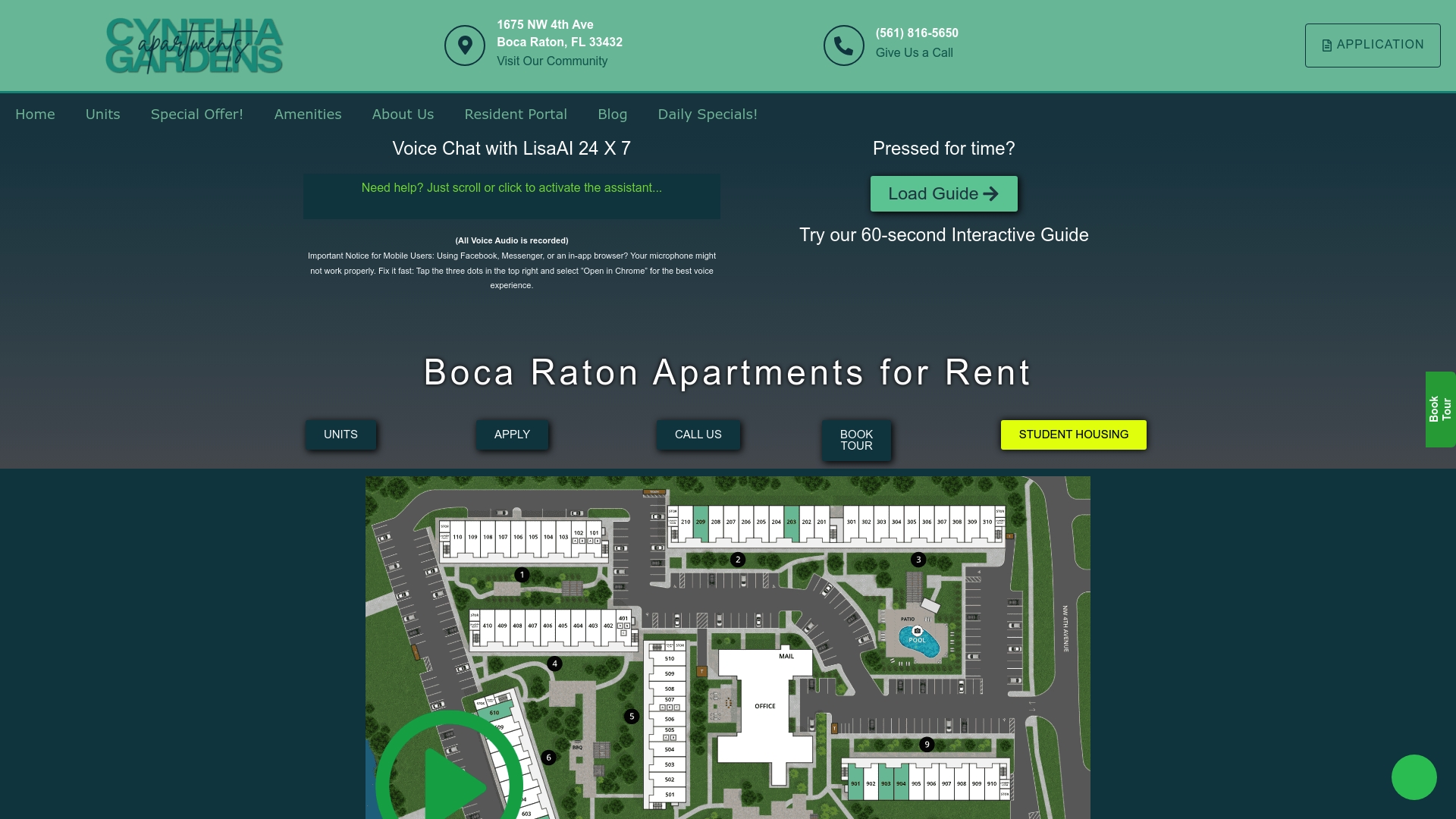
Cynthiagardens offers virtual tours, an interactive property map, AI chat support, and voice assistance so you can evaluate units, ask questions, and understand pricing without waiting for a callback. Transparent pricing with no hidden fees means the number you see is the number you pay. If you are ready to start your virtual rental application or want to explore available one-bedroom apartments, Cynthiagardens makes every step of the online leasing procedure accessible from your phone or laptop.
FAQ
What is the virtual leasing process?
The virtual leasing process is the method of renting an apartment entirely through digital tools, covering virtual tours, online applications, digital tenant screening, and electronic lease signing without requiring in-person visits.
How far in advance should I start leasing virtually?
The recommended timeline starts 4–6 months before your move date for neighborhood research, with active virtual browsing beginning 2–3 months out and lease signing completed roughly 30 days before move-in.
Are electronically signed leases legally binding?
Yes. E-signature platforms such as DocuSign and HelloSign produce legally binding agreements in all 50 states, supported by audit trails and timestamps that satisfy standard lease execution requirements.
How do I avoid rental scams when leasing remotely?
Cross-check listing photos against Google Street View, confirm the management company’s registration through your state’s business registry, and request a live video walkthrough where the agent shows today’s date and the unit number on the door.
What is a 72-hour physical walkthrough clause?
A 72-hour physical walkthrough clause is a lease provision that lets you cancel the lease without penalty if the unit differs materially from its virtual representation after you move in. Negotiate this clause before signing any remote lease.