
TL;DR:
- Property management involves overseeing rental properties to ensure proper maintenance, tenant relationships, leasing, and financial tasks. It helps retain tenants, comply with laws, and protect investment assets through professional standards and technology. Owners should consider professional management as portfolios grow or locations become remote to maximize returns and minimize risks.
Property management is defined as the professional daily oversight, operation, and maintenance of real estate assets on behalf of property owners. The role of property management covers four core functions: physical asset management, tenant relations, leasing, and financial administration. Each function directly affects tenant satisfaction and investment returns. Understanding how these functions work together helps owners and investors make better decisions about their properties, their tenants, and their long-term financial goals.
What are the primary functions of property management?
Core property management functions include physical asset management, tenant relations and leasing, and financial administration with trust account management. These three pillars define what professional managers do every day and why owners hire them.
Physical asset management
Physical asset management covers maintenance, inspections, capital improvements, and vendor coordination. A property manager schedules routine inspections, responds to repair requests, and coordinates licensed contractors for larger projects. Reliable contractor networks improve both maintenance quality and tenant satisfaction. Vetting contractors includes checking licenses, insurance, and references, negotiating rates, and overseeing payments.

Tenant relations and leasing
Tenant relations covers marketing vacancies, screening applicants, executing leases, and resolving conflicts. A skilled manager fills vacancies faster by writing strong listings, using multiple marketing channels, and qualifying tenants thoroughly. Lease execution and conflict resolution protect owners from disputes that could escalate into costly legal problems.
Financial administration
Financial administration includes rent collection, trust account management, owner reporting, and tax compliance. Monthly owner reporting and 1099 issuance comply with IRS Publication 527. This means owners receive documented income records that simplify tax filing and protect them during audits.
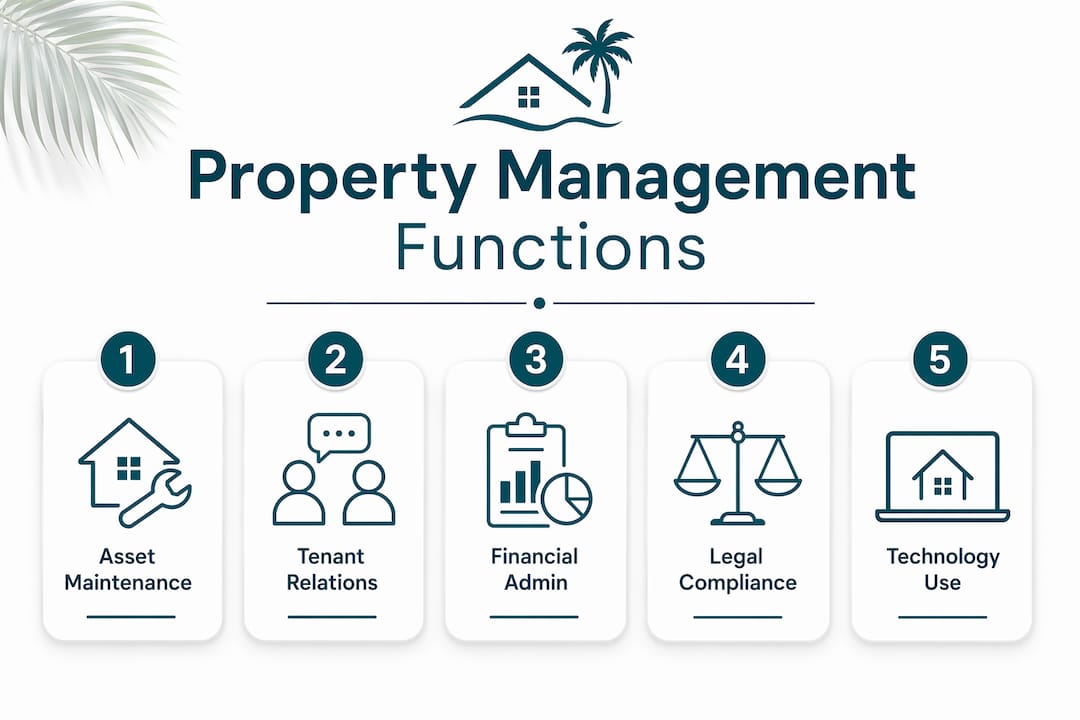
| Function | Key Responsibilities |
|---|---|
| Physical asset management | Maintenance, inspections, vendor coordination, capital improvements |
| Tenant relations and leasing | Vacancy marketing, screening, lease execution, conflict resolution |
| Financial administration | Rent collection, trust accounts, owner statements, IRS compliance |
| Management agreements | Tiered expense authority, decision thresholds, fiduciary duties |
Pro Tip: Ask any prospective property manager to show you a sample management agreement before signing. The agreement should spell out expense approval thresholds, reporting schedules, and fiduciary obligations in plain language.
How does effective property management improve tenant satisfaction and retention?
Proper tenant screening and prompt maintenance response are the primary drivers of tenant retention and reduced vacancy costs. Retention matters because every vacancy represents lost rent, turnover costs, and marketing expenses. A well-managed property keeps good tenants longer.
Tenant screening sets the foundation. A thorough screening process checks credit history, rental history, income verification, and references. Placing a qualified tenant from the start reduces the risk of late payments, property damage, and early lease terminations. Skipping this step is one of the most expensive mistakes a landlord can make.
Prompt maintenance response is the second major driver. Tenants who submit a repair request and receive a fast, professional response feel respected. That feeling translates directly into lease renewals. Tenants who wait weeks for basic repairs start looking for other options.
Communication management between tenants and owners also shapes the tenant experience. A property manager acts as the point of contact, filtering routine requests and escalating only what requires owner attention. This structure prevents misunderstandings and keeps relationships professional.
Property management best practices for tenant satisfaction include:
- Conducting thorough background and credit checks before approving any applicant
- Responding to maintenance requests within 24 hours for non-emergency issues
- Sending lease renewal reminders 60–90 days before expiration
- Providing a clear, written process for submitting maintenance requests
- Communicating any property changes or policy updates in writing
Pro Tip: Set a fixed communication schedule with tenants. A monthly email update about property news or maintenance schedules reduces inbound calls and makes tenants feel informed rather than ignored.
What legal and financial compliance responsibilities does property management handle?
Property management acts as a buffer protecting owners from the legal complexities of Fair Housing laws and landlord-tenant statutes. This protection is one of the most underappreciated benefits of professional management. A single compliance mistake can result in fines, lawsuits, or forced lease terminations.
Property managers are fiduciary agents legally bound to duties of loyalty, care, and disclosure under common law. This means the manager must act in the owner’s best interest at all times, disclose conflicts of interest, and handle funds with strict accountability. Owners who do not verify these protections in their management agreement carry unnecessary legal risk.
Compliance responsibilities span several areas:
- Adhering to Fair Housing Act requirements in all advertising and tenant selection
- Handling evictions according to state-specific landlord-tenant law procedures
- Providing legally required disclosures at lease signing
- Maintaining separate trust accounts for security deposits and rent funds
- Issuing annual 1099 forms and monthly owner statements per IRS Publication 527
- Complying with local habitability standards and building codes
The cost of professional management fees is the primary trade-off owners face. Fees reduce net rental income in the short term. The risk mitigation, legal protection, and operational consistency they provide typically outweigh that cost for owners managing more than one or two properties.
Pro Tip: Before signing any management agreement, confirm it explicitly names the manager as a fiduciary agent. Generic agreements that omit this language leave owners with weaker legal recourse if disputes arise.
What are modern property management best practices and technologies?
Digital tools coordinate tasks across portfolios and maintain records that would take hours to manage manually. Technology has shifted property management from paper-based processes to real-time digital systems. This shift benefits both owners and tenants.
Modern management platforms handle maintenance tracking, lease document storage, online rent collection, and financial reporting in one place. Owners can log in and view their portfolio performance at any time without waiting for a monthly mailed statement. Tenants can submit maintenance requests and pay rent from a phone. These conveniences reduce friction on both sides of the relationship.
Management agreements specify decision thresholds for expense authorization, with routine repairs under $200–$500 approved by managers without owner consent and larger expenses requiring owner authorization. This tiered approval process prevents delays on minor repairs while keeping owners in control of significant spending decisions.
Virtual and remote leasing tools have expanded the reach of property marketing. Digital leasing tools allow managers to conduct virtual tours, process applications online, and execute leases electronically. This reduces vacancy periods by reaching prospective tenants who cannot visit in person.
Reliable contractor networks remain a cornerstone of effective operations. Managers who maintain pre-vetted vendor lists respond to maintenance issues faster and at better rates than owners who search for contractors after a problem occurs.
Pro Tip: If you own multiple properties, look for a management platform that integrates maintenance tracking with financial reporting. Seeing repair costs alongside rental income in one dashboard makes it far easier to spot underperforming assets.
How can investors and owners choose the right property management approach?
Professional management services shift operational burdens from owners, freeing them from daily maintenance tasks to focus on higher-level investment analysis and portfolio growth. The right approach depends on the owner’s time, expertise, property type, and financial goals.
Self-management works for owners with a single property, local presence, and time to handle tenant calls, maintenance coordination, and legal compliance personally. It preserves the full rental income but demands consistent attention. One missed maintenance call or compliance error can cost more than a year of management fees.
Hiring a professional manager makes sense when the portfolio grows beyond two or three properties, when the owner lives far from the property, or when the owner lacks experience with landlord-tenant law. Management fees reduce net profits in the short term but increase operational efficiency and risk mitigation. Owners focused on portfolio analysis and expansion consistently find that delegating daily operations accelerates their growth.
Key factors to evaluate when choosing a property management approach:
- Number of properties owned and geographic spread
- Owner’s available time per week for tenant and maintenance issues
- Familiarity with local landlord-tenant laws and Fair Housing regulations
- Distance from the property and ability to respond to emergencies
- Budget for management fees relative to expected rental income
- Long-term investment goals: active management versus passive income
Key Takeaways
Effective property management protects investment returns by combining legal compliance, tenant retention, and financial accountability under one professional framework.
| Point | Details |
|---|---|
| Core functions defined | Property management covers asset maintenance, tenant relations, leasing, and financial administration. |
| Tenant retention drives returns | Thorough screening and prompt maintenance response reduce vacancy costs and protect rental income. |
| Legal compliance is non-negotiable | Managers handle Fair Housing, evictions, and IRS reporting, shielding owners from costly violations. |
| Technology improves operations | Digital platforms track maintenance, collect rent, and report financials in real time for owners. |
| Choose based on your goals | Self-management suits small local portfolios; professional management fits growing or remote investments. |
What I’ve learned about property management after years in real estate
Most owners underestimate how much the legal layer of property management is worth. They focus on the management fee and calculate what it costs them per month. They rarely calculate what a single Fair Housing violation or an improperly handled eviction would cost them in legal fees, fines, and lost rent.
The tenant experience is the other area where I see owners consistently underinvest. A tenant who feels ignored after submitting a maintenance request does not just leave at lease end. They leave a negative review, tell their network, and sometimes break the lease early. The cost of that outcome dwarfs the cost of a 24-hour maintenance response policy.
Technology adoption has changed the math on remote ownership. Five years ago, owning a rental property in a city where you did not live was genuinely difficult. Today, a manager with the right digital tools can handle leasing, maintenance, and reporting for a property 1,000 miles away with the same efficiency as one down the street. That shift has opened real estate investing to a much wider group of owners.
The one thing I would tell any new investor: read the management agreement before you sign anything else. The fiduciary language, the expense thresholds, and the reporting schedule in that document determine the quality of your ownership experience more than any other factor. A good agreement protects you. A weak one leaves you exposed.
— Ayman
Well-managed apartments at Cynthiagardens in Boca Raton
Cynthiagardens applies the property management principles covered in this article every day across its Boca Raton apartment community. Transparent pricing, prompt maintenance response, and a tech-forward leasing experience are built into how the community operates, not added as afterthoughts.
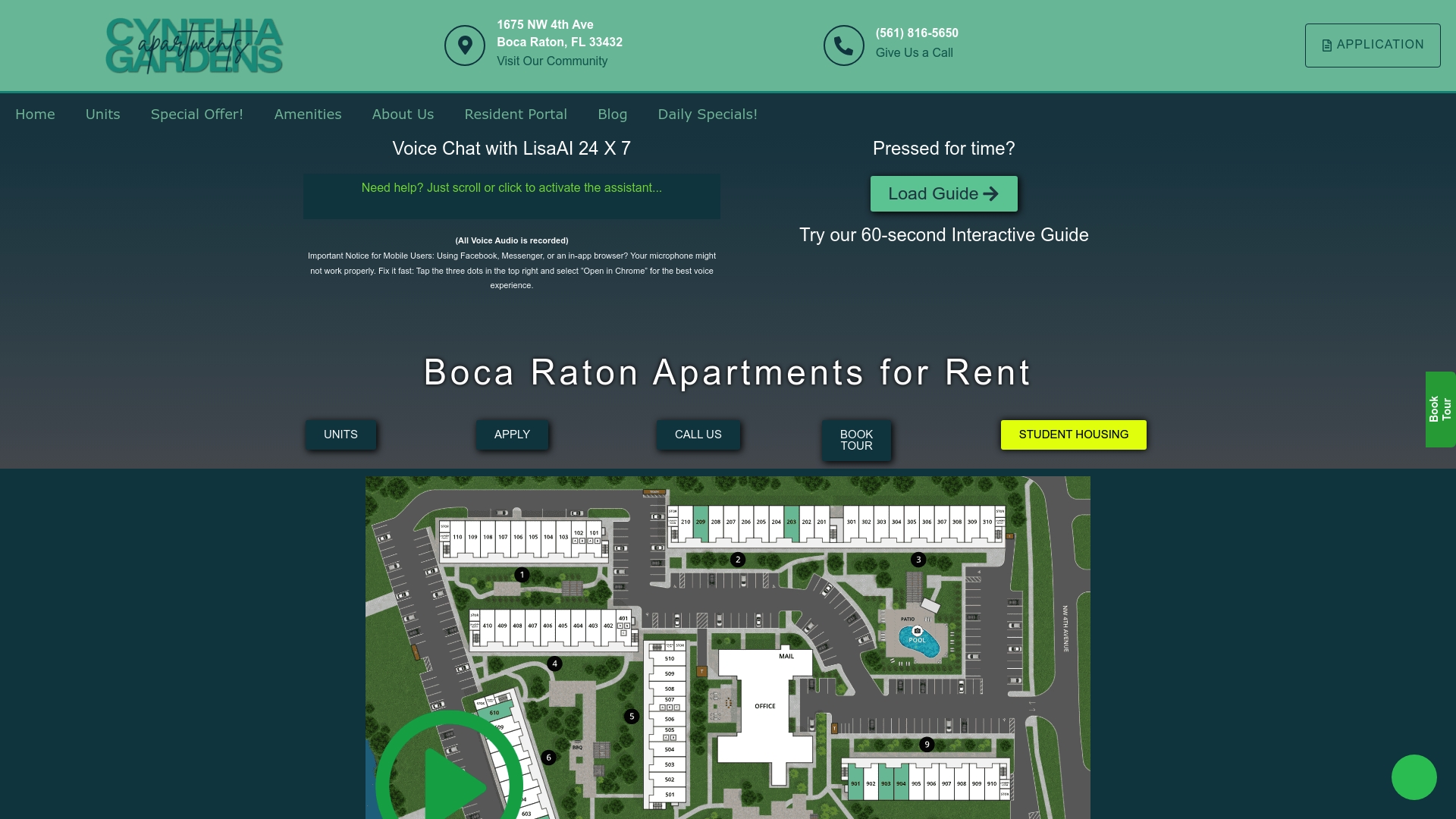
Prospective residents can explore available apartments in Boca Raton through virtual tours, an interactive property map, and AI chat support. Every unit is a well-maintained one-bedroom designed for young professionals, students, and pet owners who want quality without hidden fees. If you want to see what attentive property management looks like from the tenant side, Cynthiagardens is a clear example.
FAQ
What is the role of property management?
Property management is the professional oversight of rental properties on behalf of owners, covering maintenance, tenant relations, leasing, and financial administration. Its primary goal is to protect asset value while maximizing rental income.
What does a property manager do daily?
A property manager handles maintenance requests, tenant communication, rent collection, vendor coordination, and compliance with landlord-tenant laws. Daily tasks vary by portfolio size but always center on keeping the property occupied and operational.
How does property management improve tenant retention?
Thorough tenant screening and prompt maintenance response are the two strongest drivers of retention. Tenants who are well-qualified at move-in and receive fast service during their tenancy renew leases at significantly higher rates.
What legal protections does property management provide?
Property managers act as fiduciary agents bound by duties of loyalty, care, and disclosure. They handle Fair Housing compliance, eviction procedures, required lease disclosures, and IRS reporting, reducing the owner’s direct legal exposure.
When should a landlord hire a property manager?
Hiring a property manager makes sense when an owner has more than two or three properties, lives far from the rental, or lacks time and expertise to handle compliance and tenant issues personally. The management fee is typically offset by reduced vacancy, fewer legal errors, and better tenant quality.