
TL;DR:
- High-speed internet is essential for renters, affecting remote work, entertainment, and daily comfort. Most tenants expect reliable, pre-installed connectivity from move-in day and should verify lease terms regarding provider flexibility before signing. Installing managed Wi-Fi and fiber internet improves satisfaction, especially for pet owners and remote workers, by offering stable, fast service across the building.
High-speed internet is now a decisive factor in where renters choose to live. The role of high speed internet for renters extends far beyond casual browsing. It shapes job performance, entertainment quality, and daily comfort. 91.7% of renters consider fast internet important when choosing a home, placing it just behind air conditioning and in-unit laundry. For renters working remotely or living with pets in communities like Cynthiagardens in Boca Raton, reliable connectivity is not a luxury. It is the foundation of a functional home.
How does high-speed internet shape renters’ daily lives?
Fast internet does more than support Netflix. It determines whether you can hold a video call without freezing, submit work on deadline, or stream a movie after a long day. The industry now treats internet as the “fourth utility” alongside water, electricity, and gas in multifamily properties. That framing matters because it shifts internet from a nice-to-have feature to core infrastructure.
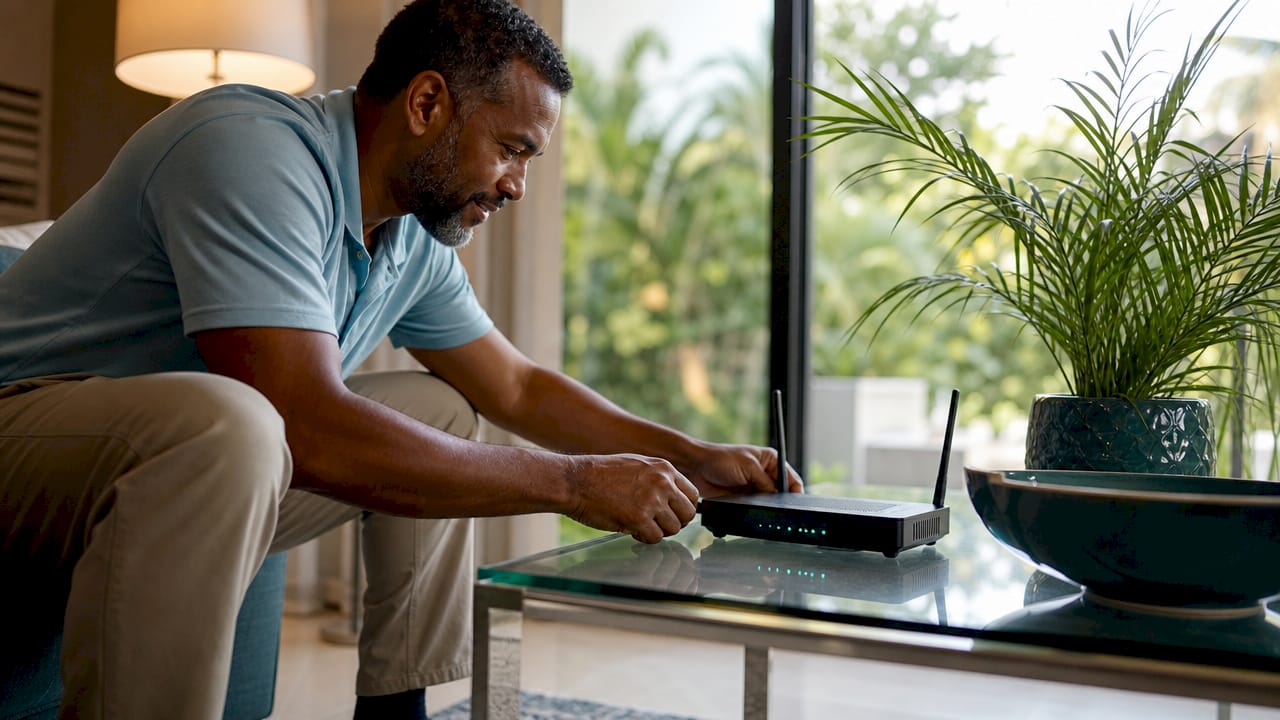
The importance of fast internet for tenants is most visible in remote work. Fiber-enabled remote work opportunities increased by 22% in surveyed regions, and reliable connectivity can reduce commute time by 5.8 hours monthly. That is real time returned to your day. For renters juggling work calls, client deadlines, and personal errands from a one-bedroom apartment, a dropped connection is not an inconvenience. It is a professional liability.
Entertainment and lifestyle expectations have also shifted. Renters now expect:
- Streaming without buffering across multiple devices simultaneously
- Low-latency gaming that requires stable, fast upload and download speeds
- Smart home device support including video doorbells, smart locks, and voice assistants
- Video calling for work, family, and telehealth appointments
74.8% of renters expect internet to be pre-installed and working on move-in day. That expectation reflects how central connectivity has become to the renting experience. Property managers who meet it see higher tenant retention and faster leasing velocity.
What renters should know about internet service models and leases
Not all apartment internet is set up the same way. Understanding how your lease handles connectivity saves you from surprise costs and service gaps.
No federal law requires landlords to provide internet. Internet is classified as an amenity, not a utility, which means responsibility depends entirely on your lease. Three common arrangements exist in the rental market:
- Amenity-included internet: The landlord bundles internet into rent. You get Day One service with no setup required. The trade-off is that you may not choose your provider.
- Resident-arranged service: You contact a provider directly, set up your own account, and pay separately. This gives you full control over speed tiers and pricing.
- Managed Wi-Fi: A property-wide network managed by a third-party provider. Coverage extends across the building, including common areas, and service is active before you move in.
Bundled internet services offer convenience but may limit your flexibility and pricing transparency. The FCC prohibits landlords from signing exclusive deals that completely block tenants from choosing alternative providers. That protection matters if you need a faster tier or a backup connection for remote work.
Pro Tip: Before signing a lease, ask specifically whether you can bring a secondary internet provider if the building-included service does not meet your speed needs. Get the answer in writing.
Managed Wi-Fi is the model gaining the most traction in modern apartment communities. Managed Wi-Fi networks provide centralized control, pre-installed service, and reliable coverage across multi-unit buildings. For renters, this means no waiting on a technician, no equipment rental fees, and no dead zones in the hallway.
What technical factors should renters evaluate beyond speed?
Speed is the number most renters check first. It is also the least complete measure of internet quality. Three metrics actually determine your day-to-day experience.
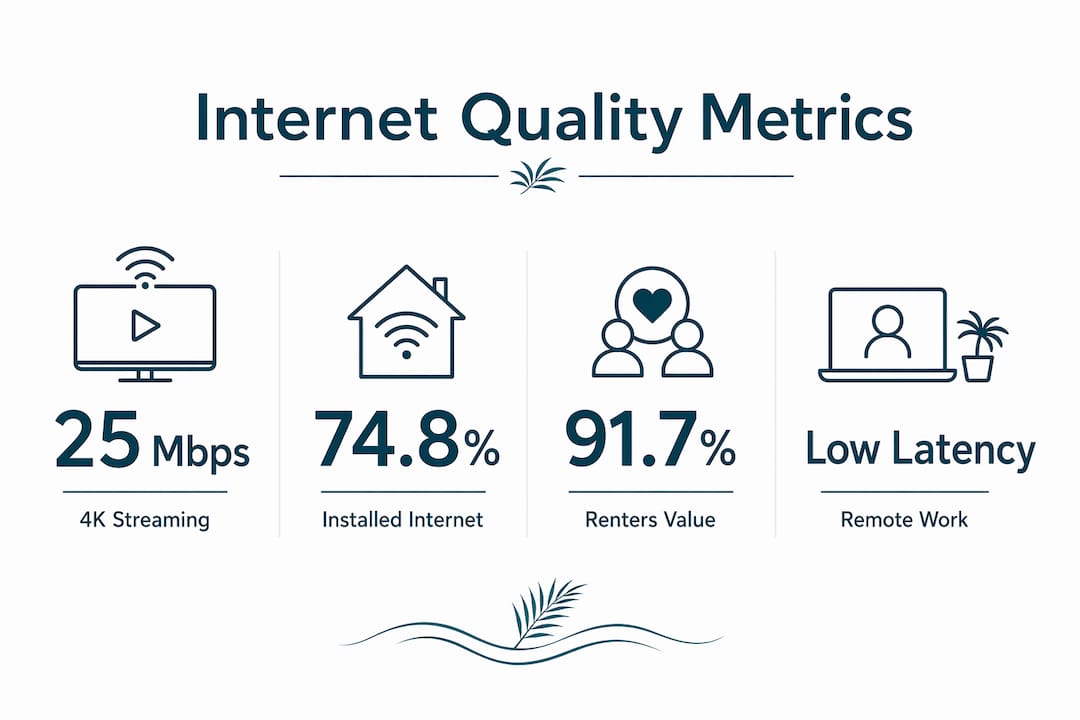
Download speed measures how fast data arrives at your device. Streaming 4K video requires roughly 25 Mbps per screen. Upload speed determines how fast your device sends data out, which is critical for video calls and file sharing. Latency measures the delay between sending a request and receiving a response. Low latency is what separates a smooth video call from one that feels like a satellite phone.
Fiber connections deliver more reliable upload and latency performance than cable or older infrastructure. Cable internet often provides fast downloads but slower uploads, which creates problems for anyone on frequent video calls. Fiber’s symmetrical speeds make it the better choice for remote work productivity.
| Technology | Download speed | Upload speed | Latency | Best for |
|---|---|---|---|---|
| Fiber | Very high | Very high | Very low | Remote work, video calls |
| Cable | High | Moderate | Low to moderate | Streaming, general use |
| DSL | Moderate | Low | Moderate | Light browsing |
| Fixed wireless | Moderate | Moderate | Moderate | Areas without fiber |
Network reliability and building coverage matter just as much as the technology type. A fiber connection that drops every afternoon is worse than a stable cable connection. In multi-unit buildings, shared infrastructure can create congestion during peak hours. Ask property managers whether the building uses dedicated bandwidth per unit or a shared pool.
Pro Tip: During your apartment tour, ask to run a speed test from inside the unit using a free tool like Fast.com or Speedtest by Ookla. A real-time result tells you more than any brochure.
Connectivity customization is becoming a key differentiator in the rental market. Features like device prioritization, guest network access, and parental controls let you manage your home network the way you manage your schedule. Renters who can prioritize their work laptop over a streaming device during business hours report higher satisfaction with their internet service overall.
How does internet quality affect pet-friendly renters specifically?
Pet owners who work remotely have a specific set of connectivity needs that standard renters do not. You are home more often, which means your internet carries more load throughout the day. Video calls with clients happen while your dog naps nearby. Smart cameras monitor your pet while you step out. All of that requires a connection that does not drop.
Connectivity combined with pet-friendly policies creates a well-rounded living experience for remote workers with pets. Modern apartments that integrate smart home technology with pet amenities attract lifestyle-conscious renters who are willing to stay longer and pay on time. That is a win for both sides of the lease.
70% of renters expect connectivity in common areas, not just inside their units. For pet owners, this matters in practical ways:
- Lobby and mailroom Wi-Fi lets you handle a quick email while your dog waits by the door
- Outdoor common area coverage supports video calls from a courtyard or pet area
- Smart building access like app-controlled entry works only when building-wide connectivity is reliable
- Pet camera apps require stable upload speeds to stream live video from inside your unit
Reliable building-wide internet enhances rental satisfaction and retention, which drives faster leasing in competitive markets. Landlords who invest in managed Wi-Fi and pet-friendly infrastructure attract renters who treat their apartment as a long-term home, not a temporary stop.
Key takeaways
High-speed internet is now a core utility for renters, and evaluating it with the same rigor as rent price or square footage directly improves your living experience and work performance.
| Point | Details |
|---|---|
| Internet is a core utility | The multifamily industry now treats internet as the fourth utility, equal to water and electricity. |
| Pre-installed service matters | 74.8% of renters expect working internet on move-in day; managed Wi-Fi delivers this reliably. |
| Upload speed and latency count | Fiber’s symmetrical speeds make it the best choice for video calls and remote work. |
| Lease terms determine your options | Bundled internet may limit provider choice; confirm your rights before signing. |
| Pet owners need more bandwidth | Smart cameras, remote work, and smart home devices add consistent load throughout the day. |
Why I think renters underestimate internet infrastructure
Most renters spend 20 minutes inspecting a kitchen and 30 seconds thinking about internet. That ratio is backwards. I have seen renters sign leases in buildings with shared DSL infrastructure, then spend 12 months frustrated by slow uploads and dead zones. The kitchen looked great. The connection was unusable by 6 p.m.
My honest advice: treat internet infrastructure like a structural feature of the apartment. Ask the right questions on your tour, run a speed test in the unit, and read the lease clause about connectivity before you sign. If the building uses managed Wi-Fi, find out who manages it and what the uptime guarantee is.
The renters I see most satisfied with their living situations are the ones who matched their connectivity needs to their apartment before moving in, not after. For remote workers with pets, that means fiber or managed Wi-Fi, building-wide coverage, and a lease that does not lock you out of bringing a backup provider. Those three things are not hard to find. They just require asking the right questions early.
— Ayman
Cynthiagardens: pet-friendly apartments with internet-ready living in Boca Raton
Cynthiagardens is a modern apartment community in Boca Raton, Florida built for renters who work remotely, live with pets, and expect their home to keep up with their life. Every unit is designed with connectivity in mind, and the leasing process itself is tech-forward with AI chat support, virtual tours, and an interactive property map.
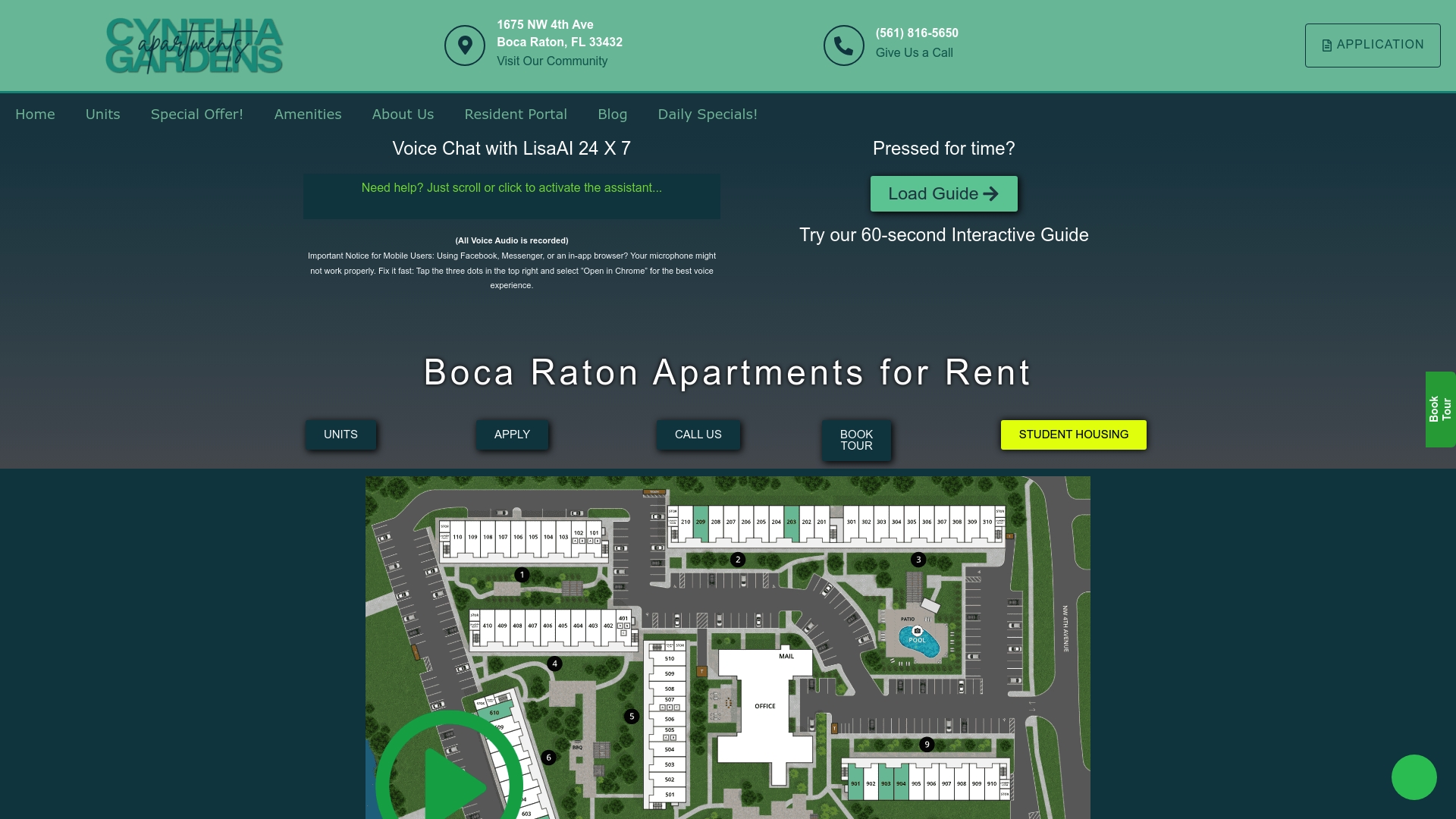
Pet-friendly one-bedroom apartments at Cynthiagardens combine transparent pricing with modern amenities, so you know exactly what you are getting before you sign. Renters who want to see the full range of available apartment styles and features can explore the property virtually at any time. Cynthiagardens is the kind of community where your internet works on day one and your dog is welcome from day one too.
FAQ
What percentage of renters consider high-speed internet important?
91.7% of renters consider high-speed internet important when choosing a home. It ranks third overall behind air conditioning and in-unit laundry.
Is a landlord required to provide internet access?
No federal law requires landlords to provide internet. Internet is an amenity, not a utility, so responsibility depends on your individual lease agreement.
What internet type is best for remote work in an apartment?
Fiber is the best option for remote work because it delivers symmetrical upload and download speeds with very low latency. Cable internet works for streaming but often underperforms on video calls due to slower upload speeds.
What is managed Wi-Fi and how does it benefit renters?
Managed Wi-Fi is a building-wide network operated by a third-party provider, pre-installed and active before move-in day. It eliminates setup delays, reduces dead zones, and typically covers common areas as well as individual units.
Can a landlord restrict which internet provider I use?
The FCC prohibits landlords from signing exclusive deals that completely block tenant provider choice. If your lease bundles internet with rent, confirm whether you can add a secondary provider if the included service does not meet your needs.
Recommended
- Why Renters Need Internet Access in 2026
- Tech-Savvy Renting Tips for Modern Renters in 2026
- Apartment Finding Sites The Ultimate Renter’s Guide – Luxury Apartments for Rent in Boca Raton | Premium Boca Raton Apartments | Aapartments Boca Raton
- How to Find Affordable Apartments A Renter’s Guide – Luxury Apartments for Rent in Boca Raton | Premium Boca Raton Apartments | Aapartments Boca Raton