
TL;DR:
- Roommate matching is a data-driven process that pairs individuals based on lifestyle habits and personal preferences. It reduces conflicts, financial risks, and time spent finding compatible housemates by screening on over 40 compatibility factors.
Roommate matching is defined as a data-driven compatibility process that pairs individuals seeking shared housing based on lifestyle habits, personality traits, and personal preferences. Unlike posting a random ad on Craigslist or asking a friend of a friend, roommate matching uses structured data to reduce conflict before two people ever sign a lease. Platforms like CoHabby and Bunky have made this process widely accessible, and apartment communities across the country now offer it as a built-in leasing feature. For young professionals, students, and anyone navigating shared housing, understanding how roommate matching works is the first step toward finding a living situation that actually sticks.
What is roommate matching and how does it work?
Roommate matching is the structured process of pairing renters based on 40-plus lifestyle dimensions such as sleep schedules, cleaning habits, noise tolerance, and guest frequency. The goal is to filter out mismatches before they become lease-breaking conflicts. This is the industry term for what many renters casually call “finding the right roommate,” but the formal process is far more systematic than a casual conversation.
The typical roommate matching process follows these steps:
- Complete a compatibility questionnaire. You fill out a detailed profile covering your daily routines, work schedule, social habits, and cleanliness standards. Honest answers here are non-negotiable. Apartment communities like Rambler Riverfront resend forms periodically to keep profile data current before match releases.
- Receive a compatibility score. The platform or property manager runs your data against other profiles. Some services use algorithms; others rely on manual review by a leasing team. Both approaches aim to surface candidates with the highest lifestyle overlap.
- Review your matches. You receive a shortlist of potential roommates ranked by compatibility. Student housing programs often release matches in summer before a fall move-in, giving both parties time to connect.
- Conduct mutual interviews. Both renters assess each other. This is not a one-sided screening. SpareRoom and Zillow both recommend treating this stage as a mutual interview process where each person evaluates fit.
- Confirm the match and sign individual leases. With individual leasing, you are not financially responsible for your roommate’s portion of the rent. That structure removes one of the biggest financial risks in shared housing.
Pro Tip: Fill out your compatibility profile as if you are describing your worst day, not your best. If you stay up until 2 a.m. on weekends, say so. Accurate data produces better matches.
What are the real benefits of roommate matching?

Lifestyle compatibility predicts shared housing satisfaction more than physical space quality. Two compatible roommates in a modest apartment will have a better experience than two incompatible people in a luxury unit. That single insight explains why formal roommate matching services have grown so quickly.
The core benefits include:
- Fewer conflicts from day one. Screening for lifestyle dealbreakers upfront means you and your roommate already agree on the basics before you share a kitchen.
- Financial protection. Individual leasing arrangements mean you pay only your bedroom’s rent. An empty room or a roommate who stops paying does not become your financial problem.
- Time savings. Platforms that screen on 40-plus data points eliminate dozens of incompatible candidates before you ever have a conversation.
- Lower risk of lease-breaking. Mismatch on lifestyle dealbreakers like cleaning and guest frequency leads to financial loss and emotional stress. Matching reduces that risk significantly.
- Community living benefits. Apartment communities that offer roommate matching programs also tend to provide shared amenities, organized events, and a built-in social network.
Roommate matching vs. informal roommate searching
| Factor | Roommate matching | Informal searching |
|---|---|---|
| Compatibility screening | 40-plus lifestyle data points | Self-reported, unverified |
| Financial risk | Individual leasing available | Often joint lease liability |
| Time to find a match | 2–6 weeks with a structured process | Unpredictable, often longer |
| Conflict likelihood | Lower due to pre-screening | Higher without shared standards |
| Red flag detection | Built into the platform process | Relies entirely on your judgment |
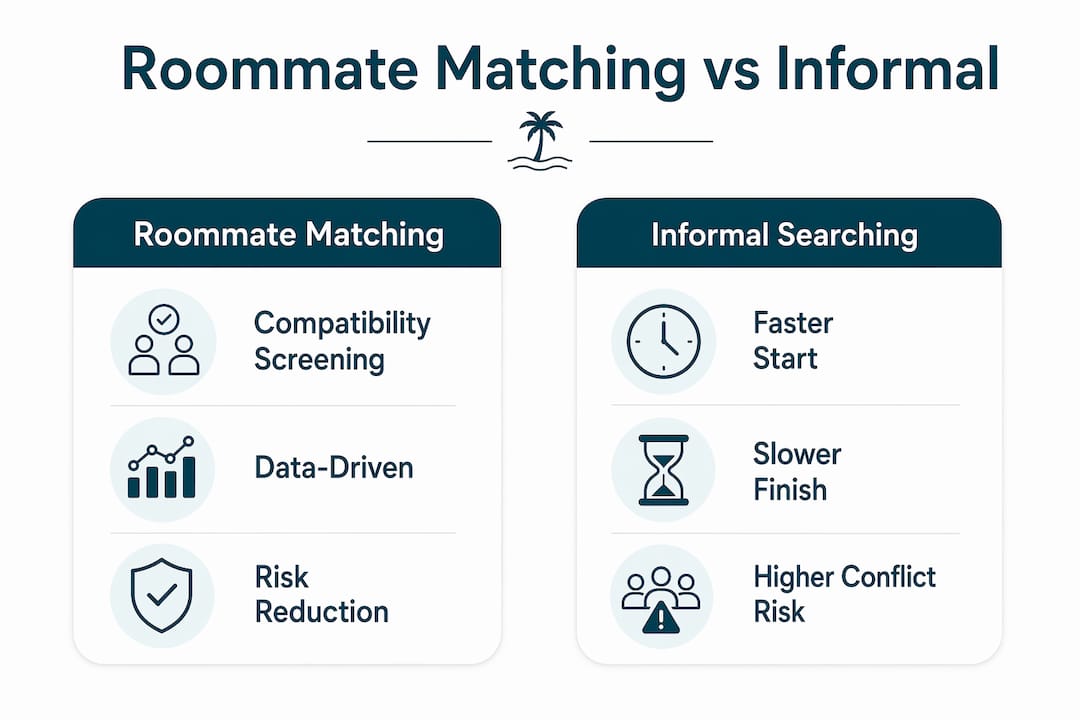
The table makes the trade-off clear. Informal searching is faster to start but slower and riskier to finish.
Which lifestyle factors matter most in roommate compatibility?
Roommate matching success hinges on aligning non-negotiables before you move in. These are the factors that, when misaligned, cause the most friction in shared living.
Sleep schedules and noise tolerance. A night-shift nurse and a 6 a.m. gym-goer can coexist, but only if both know what they are signing up for. Noise tolerance is one of the most commonly cited sources of roommate conflict, and platforms that score it explicitly give you a real advantage.
Cleanliness standards. This is the single most divisive lifestyle factor in shared housing. What one person calls “clean enough” another calls a health hazard. Platforms that ask specific questions about dish frequency, bathroom cleaning schedules, and shared space expectations produce far more useful data than a vague “how clean are you?” slider.
Guest frequency and social habits. Respect for personal space is the top roommate quality for 31% of renters. Knowing whether your potential roommate hosts friends three nights a week or prefers a quiet home is critical information.
Communication style and conflict resolution. Some people address issues directly. Others avoid confrontation entirely. Neither style is wrong, but two people with opposite approaches will struggle. Bunky’s matching model specifically focuses on syncing daily rhythms and cultivating mutual respect as the foundation of a good match.
- Sleep schedule alignment
- Noise tolerance thresholds
- Cleanliness and chore expectations
- Guest and social frequency
- Communication and conflict style
- Work-from-home or study habits
- Pet ownership and allergies
- Temperature and thermostat preferences
Pro Tip: Before filling out any compatibility questionnaire, write down your three absolute non-negotiables. Those are the filters that matter most. Everything else is negotiable.
How to find the right roommate using matching services
Finding the right roommate through a matching service takes 2–6 weeks when done thoroughly. Rushing the process is the most common mistake renters make, and it almost always leads to skipped steps and poor outcomes.
- Build an honest, detailed profile. Include your actual schedule, real cleanliness habits, and genuine social preferences. A profile designed to attract the most matches will attract the wrong matches.
- Use filters to prioritize your non-negotiables. Most platforms let you filter by sleep schedule, pet ownership, smoking status, and work schedule. Start with your hardest requirements and narrow from there.
- Treat every conversation as a mutual interview. You are evaluating them as much as they are evaluating you. Ask specific questions: How do you handle dishes? What does a typical Friday night look like for you? Do you work from home?
- Check references. Ask for contact information from a previous landlord or housemate. Candidates who are unwilling to provide references are a clear red flag.
- Schedule a video call before committing. A written profile tells you facts. A video call tells you how someone communicates, how they handle questions, and whether the energy feels right.
- Trust your instincts. Renters who ignore early red flags consistently report higher rates of conflict and lease disputes. If something feels off, it usually is.
- Draft a roommate agreement. Before move-in, put your shared expectations in writing. Cover chores, guests, quiet hours, and shared expenses. This document is not legally binding in most states, but it creates accountability and prevents misunderstandings.
Pro Tip: Ask your potential roommate how they handled a conflict with a previous housemate. The answer tells you more about their communication style than any questionnaire.
A roommate selection guide built for your specific market can also help you prioritize the right criteria based on local rental norms and community expectations.
Key Takeaways
Roommate matching works because it replaces guesswork with structured compatibility data, reducing conflict, financial risk, and the time it takes to find a stable shared living arrangement.
| Point | Details |
|---|---|
| Definition of roommate matching | A data-driven process that pairs renters based on lifestyle habits, personality traits, and personal preferences. |
| Core process steps | Complete a questionnaire, receive a compatibility score, review matches, interview mutually, and sign individual leases. |
| Top compatibility factors | Sleep schedules, cleanliness standards, guest frequency, and communication style drive the most conflicts when misaligned. |
| Financial protection | Individual leasing means you pay only your bedroom’s rent, removing liability for an empty room or a non-paying roommate. |
| Practical advice | Allow 2–6 weeks for a thorough search, check references, and draft a roommate agreement before move-in. |
Why I think most renters underestimate the matching process
Most renters treat roommate matching like a dating app swipe. They look at a profile photo, skim the basics, and decide in 30 seconds. That approach works about as well as you would expect.
The renters I have seen navigate shared housing successfully all share one habit: they treat the process like a job interview, not a social introduction. They prepare specific questions. They check references. They do not rush because a lease deadline is approaching. The ones who skip steps almost always regret it within 90 days.
The other mistake I see constantly is prioritizing location and price over lifestyle fit. Budget and commute matter, but they are fixed factors. You can adjust your budget. You cannot adjust your roommate’s habit of leaving dirty dishes in the sink for four days. Lifestyle compatibility predicts satisfaction far more reliably than any physical feature of the apartment.
One more thing: the roommate agreement is not optional. I have watched roommates who genuinely liked each other fall into serious conflict over chores and guests because they never wrote anything down. A one-page document covering the basics prevents 80% of the arguments that end shared living arrangements early.
The best roommate matches feel less like a compromise and more like a good fit from the start. That outcome does not happen by accident. It happens because both people were honest, thorough, and patient enough to do the process right.
— Ayman
Shared living made easier at Cynthiagardens
Cynthiagardens is a modern apartment community in Boca Raton, Florida, built for young professionals, students, and pet owners who want shared living done right. The community offers a roommate matching program that connects solo renters with compatible housemates, so you never have to recruit a roommate on your own or take on financial risk for an empty room.
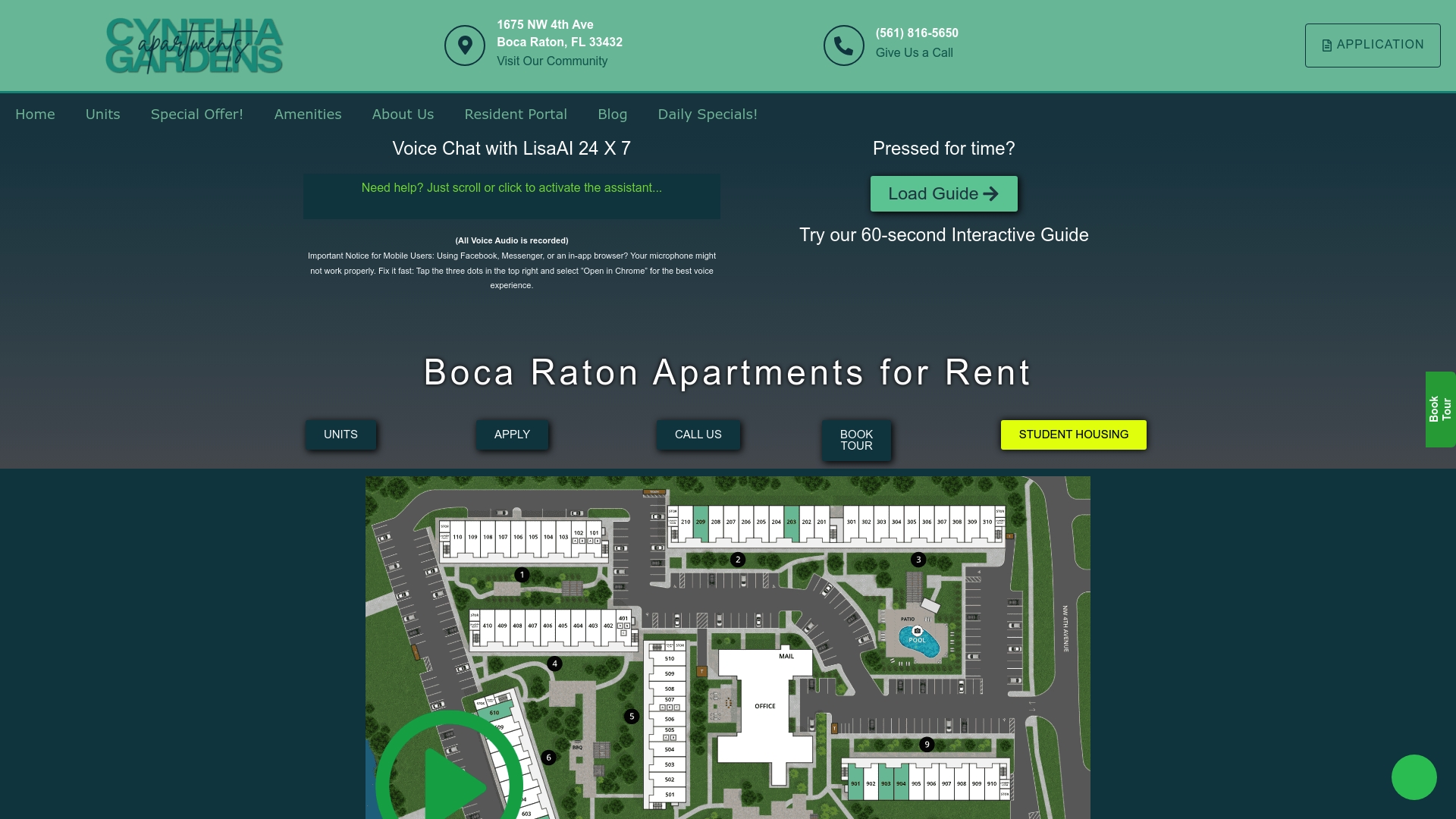
With individual leasing options, transparent pricing, and modern amenities, Cynthiagardens removes the friction from shared housing. The leasing experience includes AI chat support, virtual tours, and an interactive property map so you can find the right apartment quickly and with confidence. If you are ready to find a compatible living situation in Boca Raton, Cynthiagardens is worth a closer look.
FAQ
What is roommate matching in simple terms?
Roommate matching is a process that pairs renters based on lifestyle habits and personality data to find compatible housemates. It uses questionnaires and compatibility scoring to reduce conflict before two people share a home.
How long does the roommate matching process take?
A thorough roommate search typically takes 2–6 weeks. Rushing the process increases the risk of skipping key steps like reference checks and video interviews.
What lifestyle factors matter most in roommate matching?
Sleep schedules, cleanliness standards, guest frequency, and communication style are the most critical factors. Platforms that screen on 40-plus lifestyle dimensions produce the most reliable matches.
What is individual leasing in a roommate matching program?
Individual leasing means each roommate signs a separate lease for their bedroom. You are not financially responsible for an empty room or a roommate who stops paying rent.
What are the best roommate matching apps available?
CoHabby and Bunky are two widely used roommate matching platforms that use structured compatibility data to pair renters. Many apartment communities also offer their own in-house matching programs as part of the leasing process.
Recommended
- What Is a Roommate Matching Service? A Renter’s Guide
- Roommate selection guide for Boca Raton renters
- Apartment Finding Sites The Ultimate Renter’s Guide – Luxury Apartments for Rent in Boca Raton | Premium Boca Raton Apartments | Aapartments Boca Raton
- How to Find Affordable Apartments A Renter’s Guide – Luxury Apartments for Rent in Boca Raton | Premium Boca Raton Apartments | Aapartments Boca Raton