
TL;DR:
- Roommate matching services use detailed questionnaires and algorithms to connect compatible housemates before initial contact. They vary from algorithmic platforms to university portals and listings, each requiring different levels of user effort. Trust and safety are enhanced through verification features like ID checks, verified badges, and secure messaging. Honest, specific responses improve match accuracy, while acting promptly on university deadlines is crucial. Ultimately, these tools provide a structured approach to finding compatible living arrangements, but personal verification remains essential.
A roommate matching service is a platform that connects people seeking shared housing by collecting detailed lifestyle preferences and using compatibility scoring to predict how well two individuals will live together. Unlike a basic classified ad or a word-of-mouth referral, these services use structured questionnaires and algorithms to surface the most compatible candidates before you ever exchange a phone number. Platforms like CoHabby, Roomster, and RoomSync have formalized this process, making it accessible to college students, young professionals, and anyone looking to split rent without the guesswork. The core promise is simple: share who you are upfront, and the service finds people who match your living style.
What is a roommate matching service and how does it work?
A roommate matching service works by gathering behavioral and lifestyle data from each user, then converting that data into a compatibility score that ranks potential matches. The process typically follows four stages: profile creation, questionnaire completion, match generation, and contact facilitation.
Here is how the workflow unfolds in practice:
- Profile creation. You create an account and fill in basic details: location, budget, move-in date, and whether you have pets. This filters the candidate pool before any compatibility scoring begins.
- Lifestyle questionnaire. This is where the real work happens. Detailed lifestyle questions cover sleep schedules, cleanliness standards, comfort with guests, noise tolerance, and social habits. The more specific the question, the more predictive the answer. A question like “how many days can dishes sit in the sink before it bothers you?” produces far more useful data than “are you clean?”
- Compatibility scoring. The platform runs your answers through a weighted algorithm. Categories like sleep and cleanliness carry heavier weights because they generate the most friction in shared living. The output is a percentage score or ranked list of compatible candidates.
- Match review and contact. You browse your matches, review their profiles, and initiate contact through a secure in-app messaging system. You do not share personal contact details until you are comfortable.
The critical insight here is that these services solve what researchers call the “information gap.” Compatibility scoring closes the gap that exists when two strangers only discover their incompatibilities after signing a lease together. Front-loading that information changes the entire dynamic of the roommate search.
Pro Tip: Answer every questionnaire item as honestly as possible, not as you wish you were. If you stay up until 2 a.m. on weekends, say so. Accurate answers produce accurate matches. Flattering answers produce conflicts.

What types of roommate matching platforms are there?
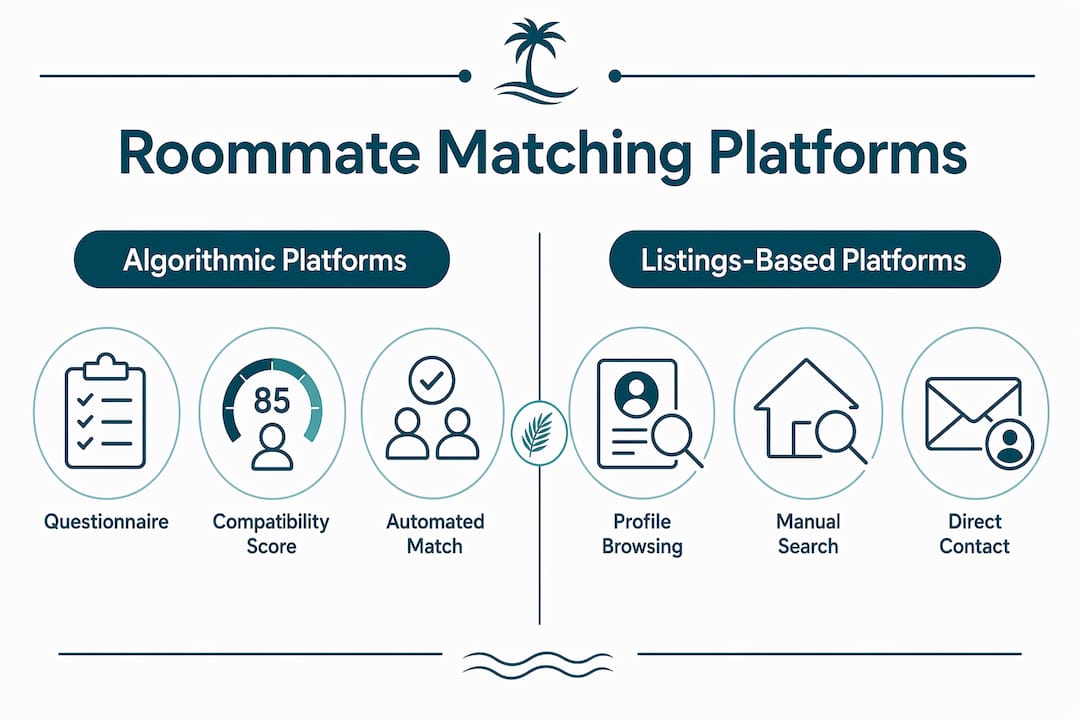
Not every roommate finder service works the same way. The workflow and required user effort differ significantly depending on the platform model. Three distinct types exist, and understanding the difference saves you time and frustration.
| Platform type | How matching works | User effort required | Examples |
|---|---|---|---|
| Algorithmic matching | Compatibility algorithm scores lifestyle data and ranks matches automatically | Low vetting effort; personal judgment still needed | CoHabby, RoomSync |
| University housing portal | Questionnaire generates match percentages; mutual acceptance required by deadline | Moderate; students must invite and confirm matches on time | Georgia Tech Housing, UConn My College Roomie |
| Listings marketplace | Landlords post rooms; users browse, apply, and screen candidates manually | High; users conduct their own interviews and reference checks | SpareRoom |
Algorithmic platforms like CoHabby and RoomSync do the heavy lifting. You complete a questionnaire, receive a ranked list of compatible candidates, and reach out directly. These services are best for renters who want a structured, data-driven starting point.
University housing portals add an administrative layer. Georgia Tech and UConn use matching questionnaires that generate percentage scores, but students must actively search for candidates, send invitations, and receive mutual acceptance before a roommate group is finalized. Miss the administrator-set deadline and the match does not happen, regardless of how high the compatibility score was.
Listings-based platforms like SpareRoom function more like a real estate marketplace. SpareRoom’s workflow centers on landlord listings, applicant replies, pre-screening questionnaires, and reference checks. There is no compatibility algorithm. The burden of vetting falls entirely on the user, which requires more time but also gives you full control over the screening process.
For college students, a university portal is usually the right starting point because it integrates directly with housing assignments. For young professionals, an algorithmic roommate matching platform or a listings service like SpareRoom offers more flexibility on location and budget.
How do roommate matching services handle trust and safety?
Trust is the feature that separates a useful roommate matching platform from a risky one. The best services layer multiple verification and safety mechanisms so that you know the person you are messaging is real before you agree to share a lease.
The most common safety features include:
- ID validation. Roomster offers free ID validation and moderated profile review. Real people check profiles alongside automated smart checks, reducing fake accounts and scam listings significantly.
- University email verification. Student-focused apps verify users through their institutional email address. University email verification provides a trust layer that is especially important in student housing, where users are often connecting with strangers for the first time.
- Verified badges. Many platforms display a badge on profiles that have completed ID or document checks. These badges signal that the platform has confirmed at least basic identity details.
- Secure in-app messaging. Reputable services keep early conversations inside the platform. This protects both parties by preventing the premature exchange of phone numbers, home addresses, or financial details.
- Moderated profiles. Human review catches red flags that automated systems miss, including misleading photos, inconsistent information, or suspicious behavior patterns.
Verified badges and ID checks reduce scam risk but cannot guarantee absolute security. Early-stage communication should stay cautious and limited to secure channels regardless of verification status.
Pro Tip: Never share your Social Security number, bank account details, or full home address with a potential roommate during the initial messaging phase. Wait until you have met in person and verified their identity independently.
What practical tips improve your results with roommate matching?
Getting the most out of a roommate finder service requires more than just signing up. How you complete your profile and interpret your results directly affects the quality of your matches.
- Be specific in your questionnaire answers. Specific questionnaire items improve prediction accuracy over vague responses. Describe your actual habits, not your ideal habits. If you work from home five days a week, that detail matters to a potential roommate who values quiet during business hours.
- Understand what a compatibility score means and what it does not. A high score indicates lifestyle alignment based on the data you both provided. It does not predict personality chemistry or guarantee a conflict-free relationship. Use the score as a filter, not a final verdict.
- Act on university deadlines immediately. Administrator-set cutoffs require timely mutual acceptance to finalize roommate groups. If you are using a university portal, treat the deadline like a registration deadline. Missing it can leave you with a random assignment even if you found a great match.
- Use the mutual acceptance mechanic strategically. University portals work like a friend request system. You invite a potential roommate, they accept, and the group is confirmed. Reach out to your top matches early and communicate your timeline clearly.
- Verify key details before signing anything. Confirm lease terms, utility responsibilities, and house rules directly with your potential roommate before committing. A compatibility score reflects lifestyle preferences. It does not cover financial expectations or legal agreements.
For renters in specific markets, a local guide like this Boca Raton roommate resource can add context that a national platform cannot provide, including neighborhood dynamics, typical lease structures, and community norms.
Key takeaways
Roommate matching services reduce conflict by collecting detailed behavioral data upfront, giving renters a structured way to find compatible housemates before signing a lease.
| Point | Details |
|---|---|
| Core function | Platforms collect lifestyle data via questionnaires and convert it into compatibility scores. |
| Three platform types | Algorithmic services, university portals, and listings marketplaces each require different levels of user effort. |
| Safety features matter | ID validation, university email verification, and secure messaging are the baseline for trustworthy platforms. |
| Questionnaire accuracy | Honest, specific answers produce better matches than idealized or vague responses. |
| Deadlines are critical | University portal users must act on matches before administrator cutoffs to secure their roommate group. |
Why I think most people underestimate these platforms
Most renters treat a roommate matching service like a fancier version of Craigslist. They scroll through profiles, pick someone who seems fine, and hope for the best. That approach misses the entire point of what these platforms actually offer.
The behavioral data collected in a well-designed compatibility questionnaire is genuinely predictive. Sleep schedules and cleanliness standards are not minor preferences. They are the two categories that generate the most roommate conflicts in shared housing, and they are almost impossible to assess from a brief conversation or a profile photo. When a platform weights those categories heavily in its scoring, it is doing something that informal searches simply cannot replicate.
What I have found, though, is that the algorithm is only as good as the honesty of the person filling it out. People consistently answer questionnaires as their best selves rather than their actual selves. They say they are “pretty clean” when they mean “clean enough.” They say they go to bed around midnight when they mean 2 a.m. on most nights. The result is a high compatibility score that falls apart in week three of the lease.
The platforms doing this best are moving toward more behavioral and situational questions rather than self-reported preference scales. A question that asks what you would actually do if your roommate left dishes out for three days reveals far more than asking how important cleanliness is to you on a scale of one to five.
My honest recommendation: use the score as a starting point, not a conclusion. Meet your top matches in person, ask specific scenario-based questions, and check the roommate selection guide for your local market before committing. The technology is genuinely useful. The judgment call at the end still belongs to you.
— Ayman
Find your fit at Cynthia Gardens in Boca Raton
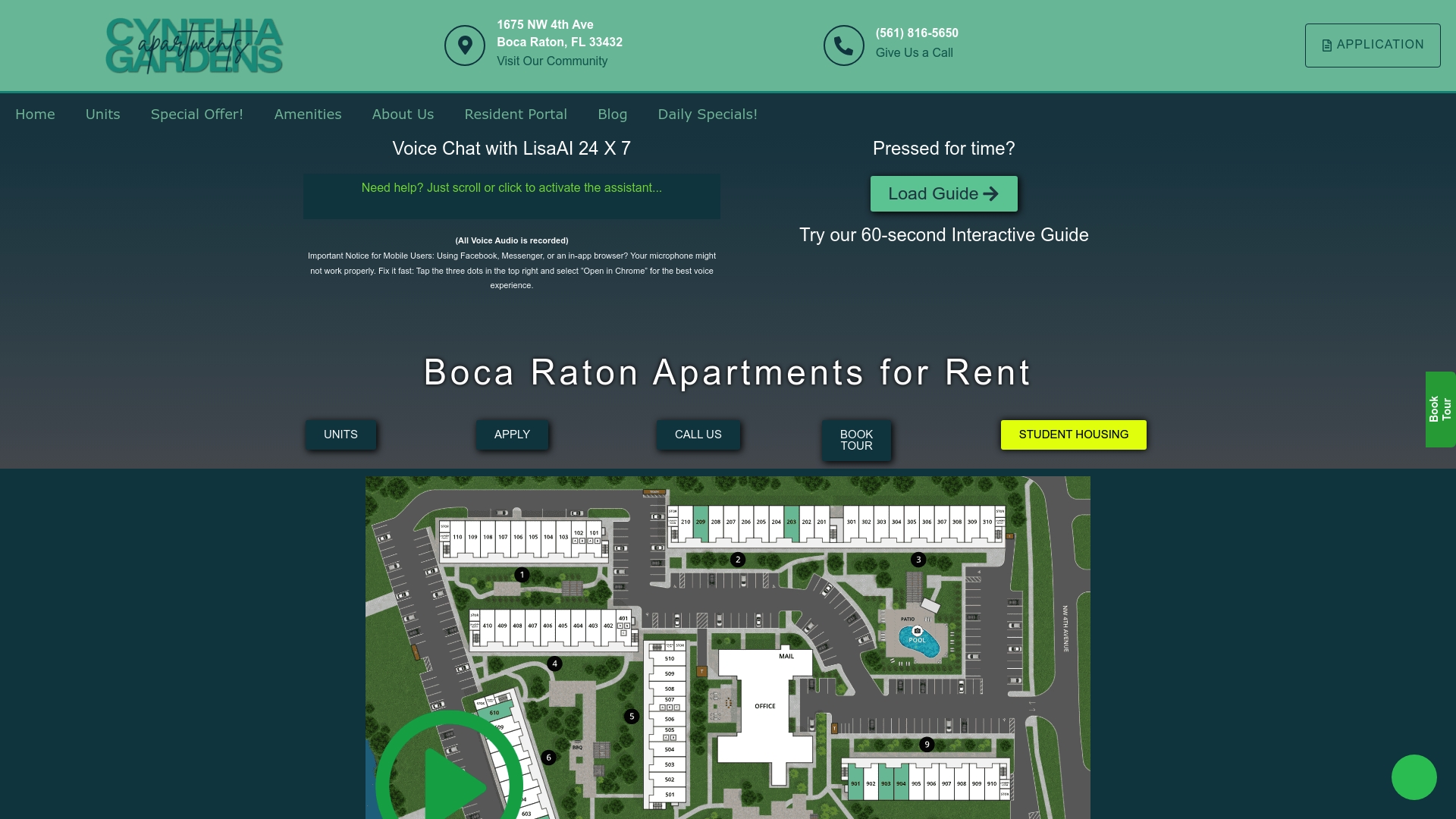
If you are searching for a well-maintained apartment community where the living environment is already designed with compatibility in mind, Cynthia Gardens in Boca Raton is worth a close look. The community offers one-bedroom apartments with transparent pricing, no hidden fees, and amenities that appeal to young professionals and students alike. You can explore apartment styles and features through virtual tours, an interactive property map, and AI chat support that answers your questions in real time. Understanding community rules and lifestyle expectations before you move in is exactly the kind of upfront clarity that makes shared living work. Cynthia Gardens makes that information easy to find.
FAQ
What is the difference between a roommate matching service and a listings site?
A roommate matching service uses compatibility algorithms and lifestyle questionnaires to rank potential roommates by predicted fit. A listings site like SpareRoom functions as a marketplace where users browse available rooms and screen candidates manually without algorithmic scoring.
How accurate are roommate compatibility scores?
Compatibility scores are predictive, not guaranteed. Specific questionnaire items improve accuracy, but scores reflect the data users provide. Honest, detailed answers produce more reliable results than vague or idealized responses.
Are roommate matching apps safe to use?
Reputable platforms like Roomster use ID validation and moderated profiles to reduce fake accounts and scam listings. Users should keep early conversations inside the platform’s secure messaging system and avoid sharing sensitive financial information before meeting in person.
Do university roommate portals work differently from regular apps?
Yes. University portals like those at Georgia Tech and UConn require mutual acceptance and must be completed before an administrator deadline. Missing that cutoff can result in a random roommate assignment even if a high-compatibility match was already identified.
What should I do before finalizing a roommate match?
Meet your match in person, confirm lease terms and financial responsibilities directly, and verify their identity independently. A compatibility score covers lifestyle preferences. It does not replace a direct conversation about rent splits, guest policies, and shared expenses.
Recommended
- Roommate selection guide for Boca Raton renters
- How to Find Roommates in Boca Raton Today – Luxury Apartments for Rent in Boca Raton | Premium Boca Raton Apartments | Aapartments Boca Raton
- Apartment Finding Sites The Ultimate Renter’s Guide – Luxury Apartments for Rent in Boca Raton | Premium Boca Raton Apartments | Aapartments Boca Raton