
TL;DR:
- Rent transparency requires landlords to disclose all mandatory rental costs upfront before lease signing. It enhances market fairness by reducing hidden fees, empowering tenants with accurate budgeting and stabilization verification. Legal frameworks like NYC’s Local Law 86 and the FTC’s federal rules enforce full fee disclosure, promoting honest rental practices nationwide.
Rent transparency is the practice of disclosing all mandatory rental costs clearly and upfront before a renter signs any lease or pays any fee. This includes base rent, application fees, amenity charges, and every recurring or one-time cost attached to a unit. Two major legal developments define the current moment: NYC’s Local Law 86, which took effect January 26, 2026, and the FTC’s March 2026 proposed federal rulemaking on deceptive rental fee practices. For renters and housing activists, understanding what rent transparency means is the first step toward using it as a real enforcement tool.
What is rent transparency and how does it work in practice?
Rent transparency is defined as the full, upfront disclosure of every cost a renter will pay, presented clearly enough to support genuine comparison shopping. It covers two distinct categories that are often confused: fee and price transparency, which means disclosing all mandatory charges in listings and leases, and rent stabilization transparency, which means informing tenants whether their unit falls under rent control protections and how to verify that status. Separating these two categories matters because they have different rights and enforcement paths.
In practical terms, fee transparency requires landlords to list every charge attached to a rental before a prospective tenant commits. The charges that most often catch renters off guard include:
- Application fees that are non-refundable even when the unit is rented to someone else
- Amenity fees for pools, gyms, or parking that appear nowhere in the advertised rent
- Administrative fees charged at move-in with no clear explanation of their purpose
- Pet fees that are labeled as deposits but are actually non-refundable
- Utility billing fees added by third-party billing services on top of actual utility costs
Unclear pricing increases search costs and undermines market competition, harming renters while also penalizing honest landlords who advertise true total costs. When one landlord hides $200 per month in fees and another lists everything upfront, the honest landlord looks more expensive in a search result even when the actual cost is identical. That distortion is the core market problem rent transparency laws are designed to fix.
Pro Tip: Before touring any apartment, ask the landlord or leasing agent for a complete written list of all monthly and one-time fees. If they cannot produce one immediately, treat that as a red flag about how they manage the lease relationship.

What are the key laws and regulations supporting rent transparency in 2026?
Three legal frameworks define the current state of rent transparency in the United States, each operating at a different level of government and targeting a different aspect of the problem.
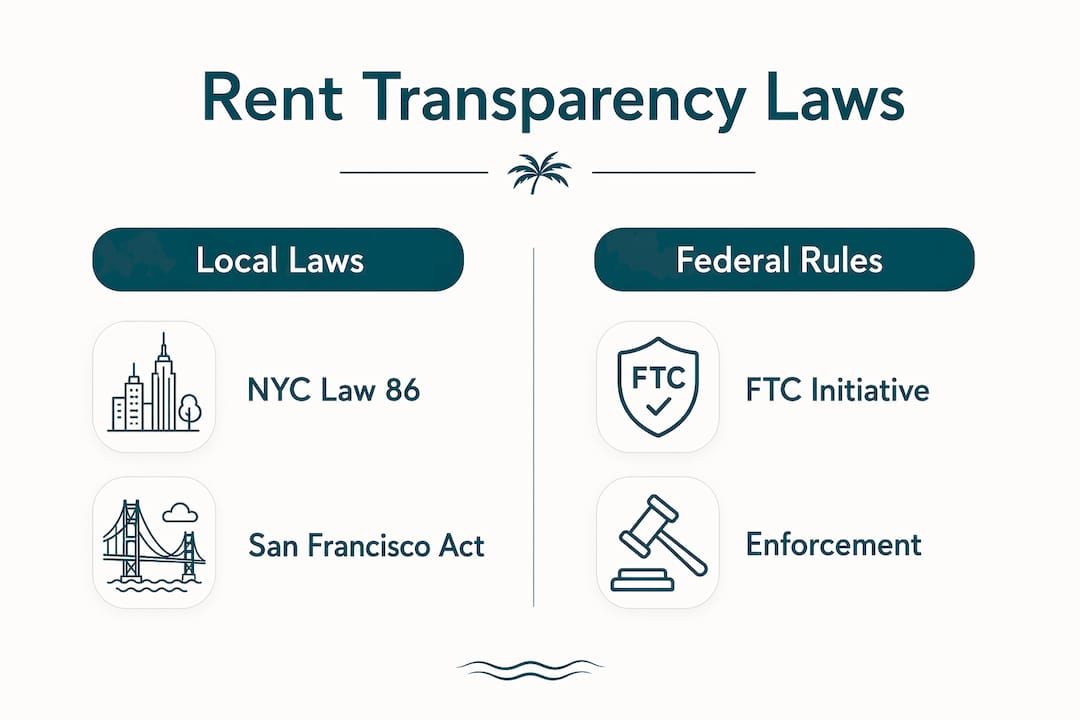
| Law or Initiative | Jurisdiction | Key Requirement | Enforcement |
|---|---|---|---|
| Local Law 86 (Rent Transparency Act) | New York City | Bilingual notices in common areas disclosing rent stabilization status and DHCR contact info | Penalties for non-compliant landlords |
| FTC Proposed Rulemaking (March 2026) | Federal | Disclosure of nature, purpose, refundability, and recurrence of all fees | Federal enforcement, potential fines |
| No Hidden Rent Act (proposed) | San Francisco | Itemized fee disclosure in listings and leases, equal font size for fees and base rent | Pending legislative approval |
NYC’s Local Law 86 is the most concrete enforcement mechanism currently in effect. As of January 26, 2026, landlords must post bilingual notices in building common areas that include the property’s registration number, the building address, and direct instructions for contacting the New York State Division of Housing and Community Renewal (DHCR). The law also requires annual landlord registration, creating a paper trail that tenants can audit independently.
The FTC’s federal initiative goes further in scope. Landlords must disclose the nature, purpose, refundability, optionality, and recurrence of every fee in rental housing. Failure to comply may result in federal enforcement action for deceptive practices. The FTC also signaled that property management software platforms and listing sites will need to adapt their interfaces to support these disclosures, meaning the obligation extends beyond individual landlords to the technology layer of the rental market.
San Francisco’s No Hidden Rent Act proposal adds a design requirement that most laws overlook: fees must appear in the same font size as base rent in all listings. That single rule prevents the common practice of burying a $150 monthly amenity fee in fine print while displaying the base rent in bold.
Pro Tip: If you rent in New York City, photograph the transparency notice in your building’s common area. That registration number is your key to requesting your unit’s full rent history directly from DHCR, which can reveal whether you are being overcharged.
How does rent transparency affect tenants, landlords, and housing markets?
The effects of rent transparency spread across three groups, and the benefits are not evenly distributed. Tenants gain the most immediately, but the long-term market effects benefit everyone except landlords who profit from confusion.
For tenants, the most direct benefit is budget certainty. When you know the true monthly cost of an apartment before signing, you can compare it accurately against other options. Renters who understand rent price transparency can also verify whether their unit qualifies for rent stabilization protections, which caps how much a landlord can raise rent each year. Without that information, many tenants in stabilized units pay above-legal rents simply because they do not know to ask.
The tenant-level benefits include:
- Accurate budgeting before signing, not after move-in surprises
- Rent history access through DHCR or equivalent state agencies, enabling tenants to verify stabilization status and challenge overcharges
- Legal standing to pursue enforcement when landlords violate disclosure requirements
- Comparison shopping across listings that reflect true total costs rather than teaser base rents
For landlords who already operate honestly, rent transparency creates a level playing field. When all landlords must disclose the same information in the same format, the honest ones stop being penalized for their honesty. Non-transparent pricing disincentivizes fair landlords who advertise true total rent, because they appear more expensive in search results even when they are not.
At the market level, transparency reduces what economists call search costs. When renters can trust that a listed price reflects the actual cost, they spend less time investigating hidden charges and more time evaluating whether a unit fits their needs. That efficiency benefits the entire rental market, including housing activists who argue that opacity is one of the structural forces keeping affordable housing inaccessible to lower-income renters.
What are common challenges and misconceptions about rent transparency?
The biggest misconception renters carry is that rent transparency and rent stabilization are the same thing. They are not. Rent stabilization is a policy that limits how much rent can increase each year. Rent transparency is an information requirement. A unit can be rent-stabilized and still have a landlord who never discloses that fact. A market-rate unit can have full fee transparency and still charge whatever the market allows. Conflating the two leads renters to either over-rely on transparency laws for price protection they do not provide, or to ignore stabilization rights they actually have.
A second challenge is enforcement. Laws requiring disclosure are only as strong as the penalties for non-compliance and the mechanisms for tenants to report violations. Advocacy efforts highlight that landlords have little financial incentive to volunteer rent stabilization information, which is exactly why mandated notices with specific content requirements matter more than general good-faith expectations.
“Transparency without enforcement is just paperwork. The value of laws like Local Law 86 comes from the combination of mandatory disclosure, accessible verification tools like DHCR, and real penalties for landlords who ignore the requirement.”
Verification is also more complex than most renters realize. NYC’s DHCR system allows tenants to request rent history for their specific unit, but that process requires knowing the building’s registration number, which is why the Local Law 86 notice requirement is so specific about what information must be posted. Without that notice, most tenants would not know where to start. Housing activists play a critical role here by educating renters about these tools and helping them navigate the verification process when landlords are uncooperative.
A third misconception is that transparency laws only matter in large cities. The FTC’s federal rulemaking applies nationally, meaning landlords in Boca Raton, Austin, and Phoenix face the same potential disclosure obligations as those in New York or San Francisco. Renters everywhere should understand their rights under both state and emerging federal frameworks, and use resources like guides on spotting hidden rental fees before signing any lease.
Key takeaways
Rent transparency is the legal and practical requirement that landlords disclose all mandatory costs upfront, giving renters the information they need to compare options accurately and enforce their rights.
| Point | Details |
|---|---|
| Two types of transparency | Fee disclosure and rent stabilization transparency are separate issues with different enforcement tools. |
| NYC Local Law 86 | Mandates bilingual notices with DHCR contact info in all rent-stabilized buildings as of January 2026. |
| FTC federal rulemaking | Requires disclosure of fee nature, purpose, refundability, and recurrence at the national level. |
| Market competition benefit | Full cost disclosure levels the playing field for honest landlords and reduces renter search costs. |
| Tenant verification power | Renters can request rent history directly from DHCR using the registration number posted in their building. |
Why rent transparency is the tenant rights issue most renters overlook
I have spent years watching renters sign leases without knowing what they were actually agreeing to pay. The hidden fee problem is not accidental. It is structural. Listing platforms optimize for low advertised prices, landlords respond by moving real costs into fees, and renters end up budgeting for $1,400 per month and paying $1,750. The gap between those numbers is where housing instability starts.
What strikes me about the 2026 legal developments is that they finally treat this as both a consumer protection issue and a market competition issue, not just a fairness complaint. The FTC framing is significant. When a federal agency says that hidden fees harm competition and not just individual renters, it creates a much stronger legal basis for enforcement than tenant advocacy alone ever could.
The piece I think most renters still miss is that transparency laws are tools, not guarantees. NYC’s Local Law 86 gives you a registration number. That number gives you access to DHCR records. Those records can prove overcharging. But you have to know to use them. Education and accessible resources are what convert legal rights into actual outcomes. If you are a housing activist, the most valuable thing you can do right now is teach renters in your community how to read a transparency notice and what to do with the information it contains. The law has created the opening. Renters and advocates have to walk through it.
— Ayman
Transparent renting starts before you sign
Cynthiagardens is built on the principle that renters deserve to know exactly what they are paying before they commit to anything. Every apartment at Cynthiagardens in Boca Raton comes with clear, upfront pricing and no hidden fees buried in the fine print. You can explore available apartment styles and features with full cost visibility, use the interactive property map and virtual tours to compare options confidently, and get answers through AI chat support without waiting on a callback. If you want to understand how transparent pricing changes the renting experience, the Cynthiagardens guide on finding affordable apartments is a practical next step.
FAQ
What is rent transparency in simple terms?
Rent transparency is the requirement that landlords disclose all mandatory costs, including fees, before a renter signs a lease. It gives renters the full picture of what they will actually pay each month.
How does rent transparency differ from rent stabilization?
Rent stabilization limits how much rent can increase each year, while rent transparency requires landlords to disclose all costs upfront. A unit can be stabilized without the landlord ever informing the tenant of that status.
What does NYC’s Local Law 86 require from landlords?
Local Law 86 requires landlords to post bilingual notices in building common areas that include the property registration number and DHCR contact information, enabling tenants to verify their rent stabilization status independently.
What fees must landlords disclose under FTC rules?
Under the FTC’s proposed rulemaking, landlords must disclose the nature, purpose, refundability, optionality, and recurrence of every fee. Non-compliance can result in federal enforcement action for deceptive practices.
How can renters use transparency laws to challenge overcharges?
Renters in NYC can use the registration number from their building’s transparency notice to request full rent history from DHCR, which can reveal whether they are being charged above the legal stabilized rent.
Recommended
- What Is All-Inclusive Rent? A Renter’s Clear Guide
- How to Find Affordable Apartments A Renter’s Guide – Luxury Apartments for Rent in Boca Raton | Premium Boca Raton Apartments | Aapartments Boca Raton
- What to Look for in Rental Apartments: A 2026 Guide – Luxury Apartments for Rent in Boca Raton | Premium Boca Raton Apartments | Aapartments Boca Raton