
TL;DR:
- In 2025, virtual leasing has become the standard through deep integration of AI, fee transparency, and self-guided tours. These technologies increase leads, improve conversion rates, and shift the leasing role toward relationship building over administrative tasks. Operational success depends on connecting behavioral data to CRMs and making transparency a core design feature.
The rental market didn’t just shift toward digital in 2025. It restructured entirely around it. Understanding why virtual leasing in 2025 became the standard rather than the exception requires looking past the basic premise of “touring an apartment online” and recognizing the deeper architecture at work: fee transparency tools embedded in tour flows, AI assistants handling hundreds of nightly conversations, and CRM systems logging behavioral signals from self-guided visits. For real estate professionals and tech-forward property communities, this is the year the infrastructure caught up with the opportunity.
Key Takeaways
| Point | Details |
|---|---|
| Virtual tours drive more leads | Properties with virtual tours receive up to 400% more inquiries and generate longer on-site engagement per visitor. |
| AI assistants close the after-hours gap | Platforms using AI leasing assistants manage the majority of initial inquiries outside office hours, improving conversion rates around the clock. |
| Transparent pricing is now a compliance issue | The FTC is pushing total rent disclosure at the point of advertisement, making fee transparency a legal priority inside virtual leasing workflows. |
| CRM integration is what makes tours actionable | Behavioral signals captured during self-guided tours must sync to CRM platforms immediately to reduce lead drop-off and speed up follow-up. |
| Leasing agents gain more by doing less admin | Virtual leasing shifts agent focus from scheduling and data entry to objection handling and closing, increasing the value of each human touchpoint. |
Why virtual leasing in 2025 changed how rentals work
The phrase “virtual leasing” often gets used loosely. In the industry, the more precise term is digital-first leasing: a model where prospective tenants move from discovery to application entirely through technology, with human agents entering the flow at strategic conversion points rather than at every step.

What makes the 2025 version distinct from earlier iterations is the depth of tooling available. Virtual tours have grown from static photo walkthroughs into 360-degree immersive experiences where prospects spend an average of 5 to 10 minutes exploring a unit. That kind of engagement dwarfs what a typical listing photo session produces.
Self-guided tour infrastructure, offered by platforms like Tour24 and similar providers, allows prospects to book and complete property tours at 11 PM on a Tuesday without any staff involvement. The benefits extend past convenience. These tours generate higher lead quality because prospects who take the initiative to schedule and complete a self-guided tour are already further along in their decision process than someone who sent a casual inquiry.
AI virtual leasing assistants sit on top of all of this as the always-on layer. They answer questions, qualify leads, and schedule showings. When a prospect messages at 2 AM asking about pet policies or parking availability, the assistant responds instantly rather than letting that lead go cold overnight.
Pro Tip: If you’re evaluating virtual leasing platforms, test the AI assistant yourself before committing. Ask edge-case questions about fees, availability, and lease terms. A weak assistant that gives vague or inaccurate responses will cost you leads faster than no assistant at all.
The tenant experience benefit here is real and measurable. 90% of renters report feeling more confident selecting a property after completing a virtual tour, which means fewer surprises post-signing and fewer requests to break lease early. For operators, that confidence translates directly into reduced vacancy costs.
Transparent pricing as a built-in leasing feature
One of the most significant and underreported shifts in digital leasing is where pricing disclosure now lives. It’s no longer a line item in an email attachment or something discussed during an in-person walkthrough. In 2025, fee transparency is embedded inside the tour and application flow itself.
The regulatory pressure driving this shift is concrete. The FTC has proposed mandatory total rent disclosure at the point of advertisement, targeting deceptive practices where mandatory fees appear only at the end of an application process. For real estate professionals, this is not a distant regulatory concern. It is a design requirement that your leasing platform needs to meet now.
Platforms that have responded to this push are building price transparency directly into the tour experience. Tour24’s ToriAI integration with Engrain, expanded in 2025, embeds all-in pricing and fees within the self-guided tour itself so that prospects see total rent figures while they are physically walking through the unit. That timing matters. Disclosing fees at the point of decision, not after, prevents the friction that kills applications.
| Pricing disclosure method | When prospect sees fees | Risk level |
|---|---|---|
| Fees listed in listing photos | At first contact | Low |
| Fees discussed during agent call | After initial interest | Medium |
| Fees shown in application portal | At application step | High |
| Fees embedded in virtual tour | During property exploration | Low |
The practical benefits for landlords and tenants are aligned here, which is rare. Landlords who disclose fees early attract more serious applicants and reduce the number of applications abandoned at the fee-disclosure stage. Tenants build trust faster when they aren’t surprised by $200 monthly admin charges on signing day. Communities like Cynthiagardens in Boca Raton that lead with transparent, no-hidden-fee pricing aren’t just doing the ethical thing. They are building a conversion funnel that works more efficiently. You can read more about how clear rent disclosure shapes the renting experience in Boca Raton.
Pro Tip: Audit your current leasing flow and map every point where a mandatory fee is first mentioned. If that point is after the prospect has submitted personal information, you’re in the high-risk category both for regulatory exposure and lead abandonment.
AI and CRM integration inside leasing workflows
The real operational leverage of remote leasing solutions in 2025 comes from what happens after a prospect completes a virtual tour. That is the moment most operators leave performance on the table.
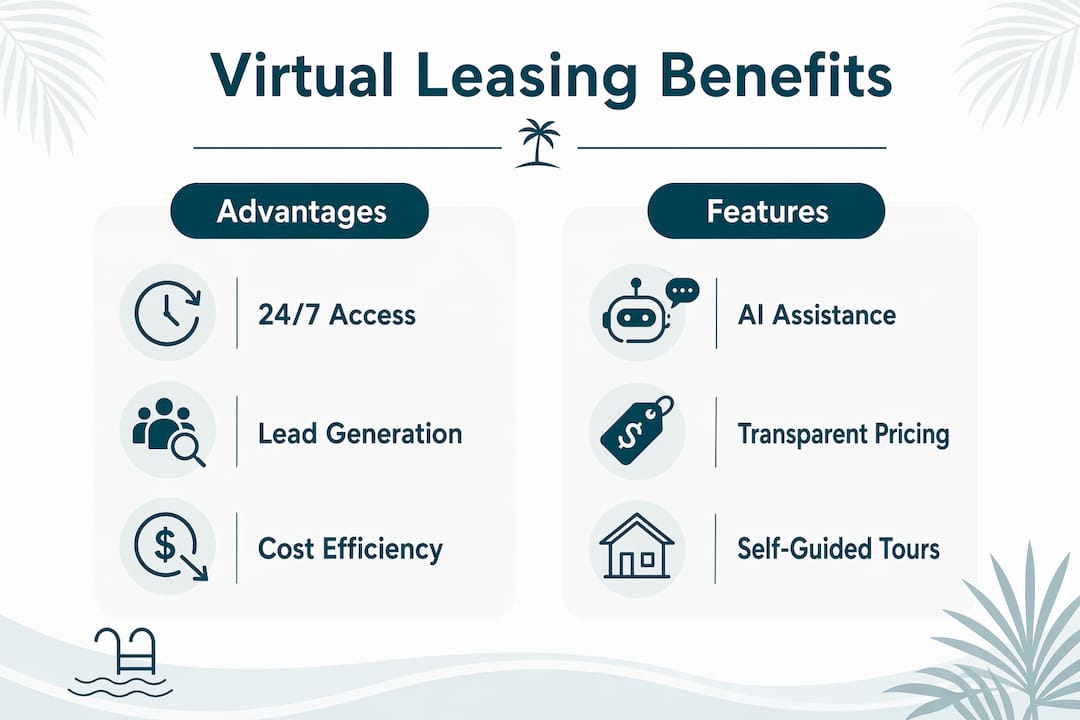
Platforms like Tour24’s ToriAI capture behavioral signals in real time during a self-guided tour. Which units did the prospect spend the most time in? Which features did they interact with? Did they check pricing on a two-bedroom after starting in a one-bedroom? All of that data, when synced into a CRM immediately, changes the follow-up call from a cold check-in to a targeted conversation.
The performance numbers on AI-assisted leasing are striking. AI-assisted apartment searches produce a 46% tour conversion rate, compared to 19% from searches that didn’t use AI assistance. That gap is not explained by better listings. It is explained by better, faster, more personalized follow-up at the right moments.
Here’s what an AI and CRM-integrated leasing workflow looks like in practice:
- A prospect books a self-guided tour through the AI assistant at 9:30 PM
- The tour platform logs which units and amenities they engaged with
- That behavioral data syncs to the CRM before the office opens
- A leasing agent receives a prioritized lead card with visit context
- The follow-up call references the prospect’s actual tour behavior
- The agent focuses the conversation on units the prospect already showed interest in
What this removes from the agent’s plate is just as important. No more cold calls asking “did you have any questions about the property?” No more manual data entry from tour sign-in sheets. No more guessing about a prospect’s priorities. Veris Residential documented this efficiency when their Quinn AI managed over 240,000 leasing messages with 60% of interactions handled outside office hours. That volume of communication, managed without additional staff, represents a material cost reduction.
Traditional leasing vs. virtual leasing in 2025
It helps to put the advantages of online leasing in direct contrast with traditional workflows. The differences are larger than most operators initially expect.
| Factor | Traditional leasing | Virtual leasing in 2025 |
|---|---|---|
| Availability | Office hours only | 24/7 with AI assistance |
| Geographic reach | Local walk-ins and calls | National and international prospects |
| Tour scheduling | Agent coordination required | Self-service booking |
| Fee disclosure timing | During or after application | Embedded in tour flow |
| Lead follow-up | Manual, often delayed | Automated, behavior-based |
| Agent role | Administrative and sales | Relationship-focused and sales |
Speed and cost efficiency are the obvious wins. But the reach expansion is where the future of leasing in 2025 gets genuinely interesting. Young professionals relocating for work, students moving from out of state, and pet owners who want to verify pet-friendly amenities before investing in a visit can all complete a thorough, confident evaluation of a property without traveling. That pool of prospects simply does not exist in a traditional leasing model.
The challenges are real and worth naming. Compliance with fee transparency regulations requires platform updates and ongoing legal review. Not all prospective tenants are equally comfortable with self-guided digital flows, which means operators need to maintain a human fallback path that doesn’t feel like a downgrade. Data security around behavioral tracking and application information requires genuine infrastructure investment. You can explore real estate market trends in 2026 for context on how these adoption challenges are playing out across the industry.
The operators who get this right understand that virtual leasing technology doesn’t remove the human from the process. It repositions the human to where they create the most value. Leasing agents who are freed from administrative task management to focus on relationship building and closing are more effective, not less essential.
My take on where virtual leasing actually matters most
I’ve spent enough time watching leasing operations from the inside to have a genuine opinion on where most real estate professionals get this wrong. They treat virtual leasing as a marketing upgrade. A better-looking website. A fancier tour video. That framing misses the point entirely.
What I’ve seen actually move the needle is treating virtual leasing as an operational system, not a presentation layer. The operators who get the biggest lift are the ones who connect their tour platforms to their CRMs, who train their agents to use behavioral data from self-guided tours in follow-up conversations, and who make fee disclosure a front-end design decision rather than a back-end compliance checkbox.
The AI-versus-agent conversation is also getting distorted in ways I find frustrating. AI assistants are not replacing leasing agents. They are replacing the parts of a leasing agent’s job that agents genuinely dislike and that prospects find frustrating: slow responses, repeated questions, generic follow-ups. What remains is the interesting work. The closing conversation. The objection that requires empathy. The tenant who needs to feel heard before they sign.
My practical advice: audit one thing this month. Take your current leasing flow and map every moment where a prospect might hit friction, confusion about fees, unanswered questions after hours, or a tour that doesn’t connect to a follow-up. Fix the worst one. That single improvement will teach you more about your virtual leasing gaps than any platform demo.
The communities that are going to win in 2025 and beyond are the ones that treat transparency and responsiveness not as features, but as baseline expectations.
— Ayman
See how Cynthiagardens makes virtual leasing work
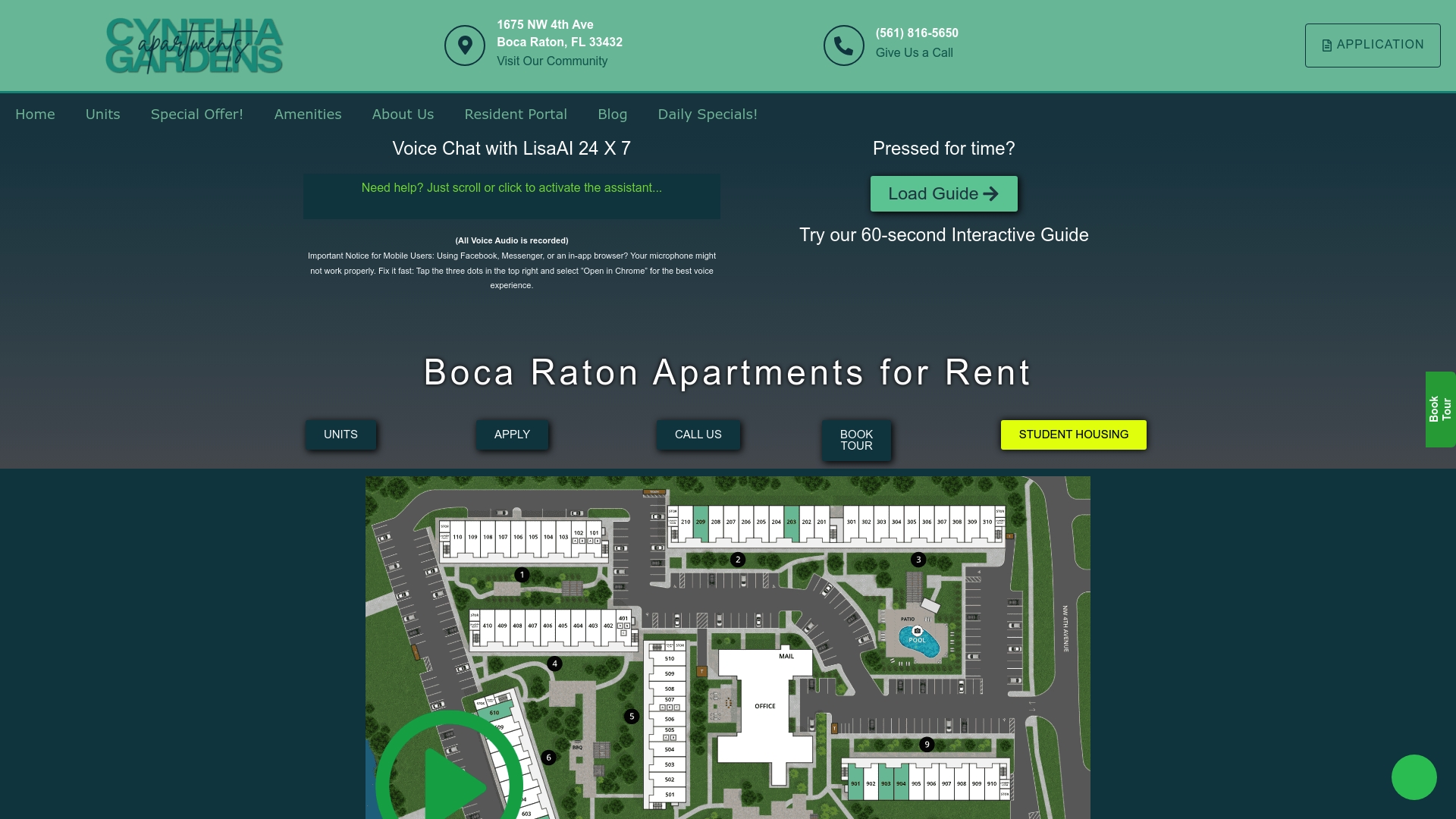
Cynthiagardens in Boca Raton was built with exactly these priorities in mind. AI chat support and voice assistance handle inquiries around the clock. Virtual tours give prospective tenants a thorough look at available one-bedroom apartments before scheduling a visit. Pricing is displayed without hidden fees from the first interaction, not buried in an application form. If you want to see what a tech-forward leasing experience looks like for young professionals, students, and pet owners in Boca Raton, the Cynthiagardens property page is the place to start. You can also explore virtual tour benefits specific to Boca Raton to understand how the model translates to real results.
FAQ
What is virtual leasing and how does it work?
Virtual leasing, also called digital-first leasing, is a rental model where prospective tenants complete the discovery, tour, and application process through technology. It typically involves 360-degree virtual tours, AI leasing assistants, and online application tools that remove the need for in-person visits before signing.
Why should real estate operators invest in virtual leasing in 2025?
Properties with virtual tours receive up to 400% more inquiries than those without, and AI-assisted searches generate a 46% tour conversion rate compared to 19% for non-assisted searches. The operational ROI is measurable and documented.
How does transparent pricing fit into virtual leasing?
The FTC has proposed total rent disclosure at the point of advertisement, which makes fee transparency a regulatory issue as much as a design choice. Leading platforms now embed all mandatory fee information directly inside the virtual tour flow.
Can AI leasing assistants fully replace human leasing agents?
No. AI handles routine inquiries and scheduling with proven efficiency, as Veris Residential’s Quinn AI demonstrated by managing over 240,000 messages. Human agents remain critical for relationship building, objection handling, and lease closing conversations that require empathy and judgment.
What is the biggest operational mistake in virtual leasing adoption?
Failing to connect tour engagement data to your CRM. When behavioral signals from self-guided tours don’t sync to follow-up systems immediately, the lead intelligence gathered during the tour is wasted and the follow-up defaults to generic outreach that underperforms.