
TL;DR:
- In Boca Raton, lease renewal involves more than re-signing and can reset rent, rules, and protections.
- Understanding specific terms, notice periods, and market trends empowers renters to negotiate better renewal conditions.
Lease renewal might feel like a formality, but in Boca Raton’s fast-moving rental market, treating it that way is an expensive mistake. Many renters in one-bedroom apartments assume renewal is just re-signing the same document. It’s not. A renewal can reset your rent, update your rules, and restart your legal obligations, and the difference between a lease extension vs. renewal is more than technical. It can change what protections apply to you, what disclosures your landlord must make, and how much flexibility you have going forward. This guide cuts through the confusion so you can make the right call at the right time.
Table of Contents
- What is lease renewal and how does it work in Florida?
- Notice periods and renewal deadlines: What Boca renters must know
- How market trends in Boca Raton impact your renewal terms
- Practical steps for lease renewal: A Boca Raton renter’s checklist
- The real secret to lease renewal success in Boca Raton
- Find the right lease and renewal support with Cynthia Gardens
- Frequently asked questions
Key Takeaways
| Point | Details |
|---|---|
| Renewal isn’t automatic | Lease renewal involves new decisions and possibly new terms, not just a signature. |
| Know your deadlines | Florida law requires 30–60 days’ notice for lease renewal or move-out, so timing is key. |
| Market trends matter | Local Boca Raton rental trends can affect your rent and negotiation power at renewal. |
| Treat renewal as negotiation | Renters who compare offers and communicate early get better outcomes on price and flexibility. |
What is lease renewal and how does it work in Florida?
Most renters use the words “renewal,” “extension,” and “new lease” interchangeably. Landlords don’t. Each term carries specific implications for your rights, your rent, and the legal framework that governs your tenancy. Understanding the difference is step one before you sign anything.
A lease renewal means you and your landlord agree to continue the tenancy under a new or updated document. It often looks like your original lease, but key terms, including rent, pet policies, parking fees, and move-out procedures, can change. A lease extension simply pushes the end date of your existing lease forward without drafting a substantially new document. A new lease starts from scratch, sometimes requiring new disclosures and possibly re-qualifying you for the unit.
Here’s a quick comparison to put those differences in context:
| Type | Document | Rent changes? | Key changes possible? | Legal reset? |
|---|---|---|---|---|
| Lease renewal | New or updated agreement | Often, yes | Yes | Usually yes |
| Lease extension | Amendment to existing | Rarely | Minor only | Rarely |
| New lease | Entirely new contract | Yes | Yes | Yes |
This distinction matters enormously in Florida because Florida Statutes § 83.575 requires that fixed-term leases give at least 30 and no more than 60 days’ notice if either party does not intend to renew. That’s a firm legal window, not a suggestion.
Common terms that frequently change at renewal include:
- Base rent: Market-driven increases are the most common adjustment
- Pet fees or pet rent: Many Boca Raton communities review these annually
- Utility allocation: Some properties shift from flat-rate to usage-based billing at renewal
- Guest and noise policies: Updated community rules often roll in at renewal
- Parking and storage fees: These are increasingly itemized in newer agreements
Before anything else, pull out your current lease and review it like a contract, because that’s exactly what it is. Our lease renewal checklist is a great starting point to make sure you’re tracking every clause that could change.
Pro Tip: Check how your lease defines “renewal.” Some leases automatically renew to month-to-month unless you take action. Others expire hard at the end date. These two scenarios have very different outcomes for you as a renter. If you’re unclear, look at the rental contract tips that apply to complex multi-clause agreements.

Notice periods and renewal deadlines: What Boca renters must know
You found a one-bedroom you love, you’ve settled in, and the lease end date feels far away. Then it sneaks up on you. Missing a notice deadline in Florida isn’t just inconvenient. It can cost you your apartment, your deposit leverage, or saddle you with a higher month-to-month rent.
Florida law limits the required notice period to no less than 30 days and no more than 60 days before lease end. Most Boca Raton apartment complexes require 45 to 60 days’ notice, sitting at the upper end of what state law allows. That means if your lease ends June 30, your window to notify your landlord may open as early as May 1.
Here’s a summary of how notice periods typically break down in Boca Raton leases:
| Scenario | Typical notice required | Legal minimum | Legal maximum |
|---|---|---|---|
| You won’t renew | 45 to 60 days | 30 days | 60 days |
| Landlord won’t renew | 30 to 60 days | 30 days | 60 days |
| Month-to-month exit | 15 days | 15 days | 15 days |
To make sure you never miss your window, follow this step-by-step process:
- Find your exact lease end date. Pull the signed copy and confirm the final day.
- Calculate your notice window. Count back 60 days from your end date and mark it on your calendar.
- Check your lease for specific language. Your lease may require written notice via certified mail or email, so know the format.
- Watch for a renewal offer from your landlord. Many Boca communities send renewal letters 60 to 90 days out. Don’t wait for theirs before starting your own review.
- Set two calendar reminders. One at 60 days out (decision time) and another at 35 days out (final chance to act).
Pro Tip: Don’t trust your memory on this. Boca Raton landlords vary widely on how and when they send renewal offers. Some mail letters, others email, and a few do nothing at all and rely on the lease language. Review your renewal agreement process well before the window opens so you’re making a deliberate choice, not a reactive one.
How market trends in Boca Raton impact your renewal terms
Understanding the legal mechanics is only half the battle. The other half is knowing what’s happening in the Boca Raton rental market when your renewal lands on your desk. Because landlords are looking at the same market data you should be.
Rental pricing in Boca Raton fluctuates based on local demand, seasonal patterns (winter months typically spike with snowbird activity), and the broader South Florida housing market. When vacancy rates are low and comparable one-bedroom units are renting fast, landlords have pricing power. When the market softens, you have negotiating leverage. Checking current Boca Raton market data before your renewal conversation is one of the smartest moves you can make.
Rental market conditions affect renewal strategy directly because landlords can reprice at renewal, and many do. A 5% to 10% increase on a one-bedroom unit isn’t uncommon in competitive South Florida submarkets. Knowing what comparable units are actually renting for gives you a factual foundation for any negotiation.
Several factors shape whether your renewal terms improve, hold steady, or get worse:
- Building occupancy: If your complex is near full, your landlord has less incentive to offer concessions
- Your tenant history: On-time payments, no complaints, and clean unit inspections make you a desirable tenant worth keeping
- Lease length offered: A longer commitment often comes with a smaller increase or added perks
- New community amenities: If significant upgrades happened, expect landlords to price them in
- Comparable listings in your ZIP code: The closer comparable units are to your current rent, the more leverage you have
“Treat renewal like a negotiation checkpoint. Confirm your exact lease end date and notice deadline, then compare the offered terms to market listings and your budget before signing any renewal.”
You don’t have to accept the first offer. Here’s where you can create leverage with data:
- Pull three to five comparable one-bedroom listings from your neighborhood and note their pricing
- Ask your landlord if they’re offering any renewal incentives such as a free month, waived fees, or a locked rate for two years
- Request a flexible lease term if your job or school schedule makes a standard 12-month commitment risky
You can explore Boca rental trends across various neighborhoods to understand which pockets of the city are appreciating faster. If you want a deeper look at how pricing affects your long-term budget, our breakdown on Boca rental affordability is worth reviewing before your renewal conversation.
Practical steps for lease renewal: A Boca Raton renter’s checklist
You have the legal knowledge. You have the market context. Now here’s how to put it all together in a practical sequence that works whether you’re renewing for the first time or the third.
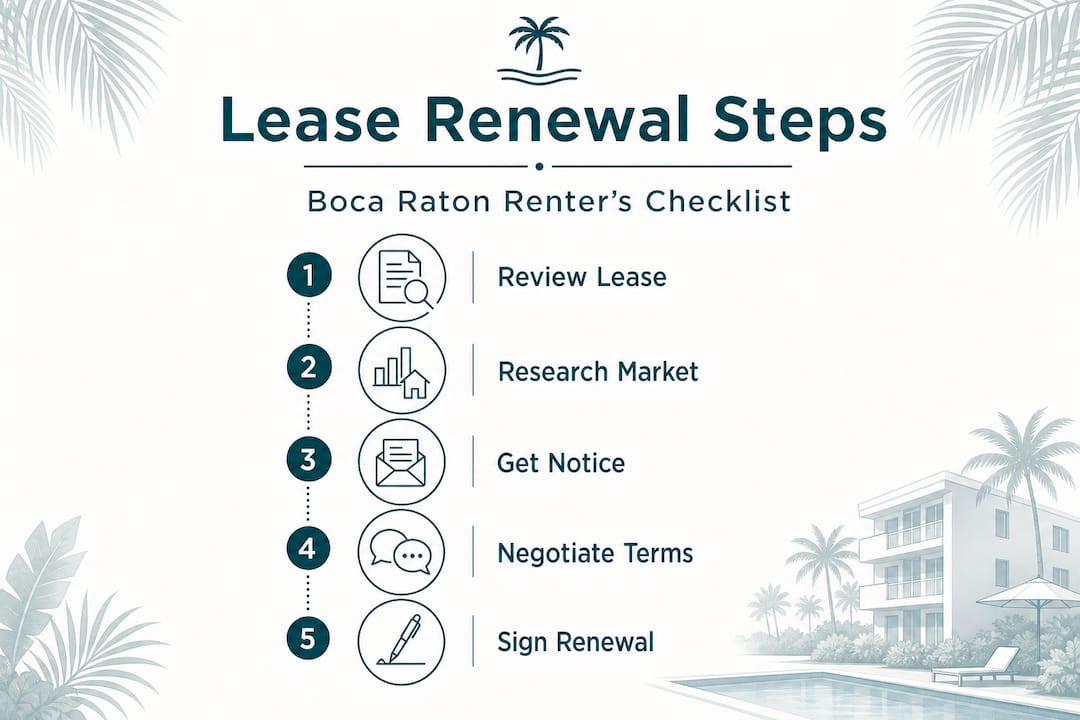
Treat your renewal like a negotiation checkpoint. Confirm the exact lease end date and notice deadline, compare the offered terms to current market listings, and align everything with your budget before signing. This approach routinely produces better outcomes than passively accepting whatever arrives in your inbox.
Follow this checklist:
- Mark your calendar 90 days out. This is when you start, not when you decide.
- Re-read your full lease. Focus on the renewal clause, notice requirements, and any automatic renewal language.
- Request current market comps. Use online listing tools to benchmark one-bedroom prices near your unit.
- Evaluate your housing needs. Is a one-bedroom still the right fit? Would a short-term lease option give you better flexibility for an uncertain season?
- Ask your landlord for the renewal offer in writing. Verbal offers don’t protect you.
- Review every changed term. Don’t just check the rent line. Look at fees, rules, and move-out procedures.
- Negotiate with data. Bring comparable listings to support your ask for a lower increase or added concession.
- Confirm the renewal document matches what was discussed. Before signing, read the final version carefully.
Pro Tip: Always ask if renewal incentives are on the table. Free parking for the first month, a waived administrative fee, or a locked rate for 24 months are all things Boca landlords have offered when asked. The catch is that many of these incentives go only to renters who bring them up first. If you don’t ask, the answer is always no.
Document everything. Every email, every offer letter, every concession agreed upon verbally should be followed up with a written confirmation. This protects you if disputes arise later.
The real secret to lease renewal success in Boca Raton
Here’s something most lease renewal guides won’t say directly: most renters in Boca Raton give away leverage they never knew they had.
The common assumption is that the renewal terms your landlord sends are fixed. They feel official. They arrive in an envelope or a formal email. Renters see them and reach for a pen. But a renewal offer is a starting point, not a final decision, and landlords in competitive markets like Boca Raton often leave room to negotiate precisely because they prefer a known, reliable tenant over a vacancy and a turnover cost.
The renters who consistently lock in the best terms aren’t necessarily the loudest or most demanding. They’re the ones who start the conversation early, come prepared with local data, and ask thoughtful questions. “What does a two-year renewal rate look like?” or “Are there any current renter retention incentives?” signals that you’re an informed tenant, not someone who can be rolled over.
Here’s the uncomfortable truth about Boca’s rental market: it moves fast, and many young professionals and students are too busy or too unfamiliar with Florida landlord-tenant law to push back. That information gap costs real money over time. A 7% rent increase on a $1,800-a-month one-bedroom adds $126 per month, or $1,512 per year. That’s not nothing.
The renters who come armed with renewal guide insights and a clear sense of the market often negotiate that increase down to 3% or 4%, sometimes in exchange for a longer commitment or simply because they asked professionally and with data. Proactive communication transforms renewal from a passive event into an active decision you control.
The real secret is this: your landlord is not your adversary, but they are running a business. Approach renewal the same way.
Find the right lease and renewal support with Cynthia Gardens
Navigating lease renewal in a competitive market doesn’t have to be stressful when you have the right resources and a community built around transparency.
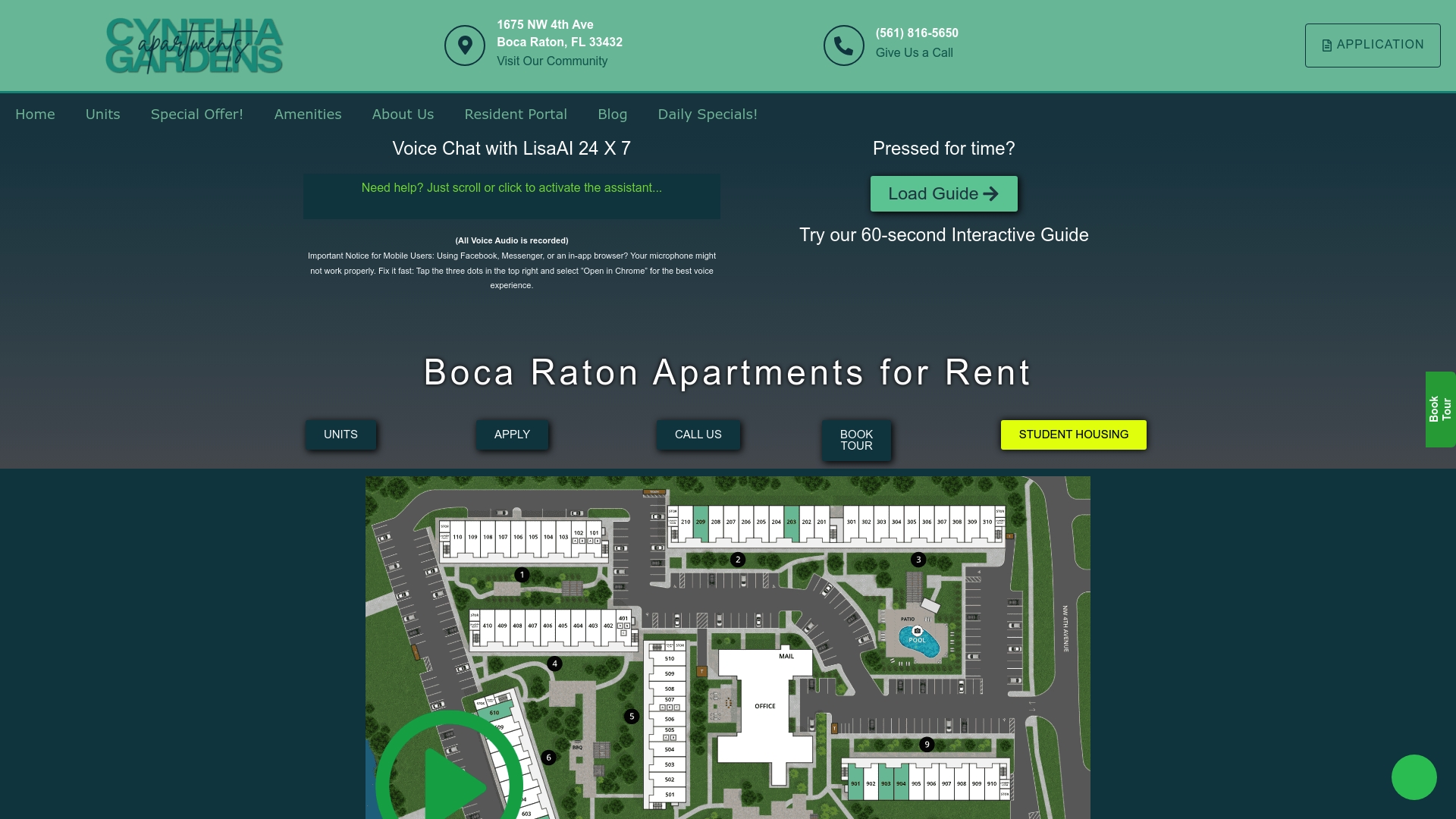
At Cynthia Gardens, we’ve designed every part of our leasing experience to remove friction and confusion for Boca Raton renters. Our one-bedroom leasing workflow walks you through every step from initial inquiry to renewal, so nothing catches you off guard. Whether you’re figuring out which floor plan fits your lifestyle or want to explore the apartment styles and features available in our community, you’ll find clear answers fast. Our tech-forward tools, including virtual tours, AI chat support, and an interactive property map, are here to help you find and keep the right home with confidence.
Frequently asked questions
How early should I start my lease renewal process in Boca Raton?
Ideally, start reviewing your lease and local market rates at least 60 days before your lease ends, since Florida law requires at least 30 to 60 days’ notice and you need time to negotiate or apartment hunt if needed.
What is the difference between a lease renewal and a lease extension?
A lease renewal creates a new contract cycle with updated terms and potentially new disclosures, while an extension simply adds time to your current lease with minimal changes.
Can my rent increase when I renew my lease in Boca Raton?
Yes, landlords regularly adjust renewal pricing based on local demand, and market conditions affect repricing at renewal, so always compare your offer to current listings before signing.
Am I required to give notice if I plan to move out at the end of my lease?
Yes, Florida Statutes § 83.575 requires at least 30 days’ and no more than 60 days’ notice if you are not renewing a fixed-term lease.
What if I miss the notice deadline for lease renewal?
Missing the deadline can trigger automatic conversion to a month-to-month tenancy, which often comes with a higher rent rate and less stability than a standard fixed-term renewal.
Recommended
- Smart Renting: Tips for Finding the Best Boca Apartment Deals – Luxury Apartments for Rent in Boca Raton | Premium Boca Raton Apartments | Aapartments Boca Raton
- Short-term leases in Boca Raton: flexibility and savings
- Remote leasing: faster, flexible apartment rental in Boca Raton
- Smart Guide to Finding Your Ideal Apartment Rental in Boca Raton – Luxury Apartments for Rent in Boca Raton | Premium Boca Raton Apartments | Aapartments Boca Raton