TL;DR:
- Effective small apartment organization relies on decluttering, vertical storage, and multi-functional furniture.
- Zone-based arrangement optimizes space, tailoring areas for work, sleep, relaxation, and pet care.
- Consistent routines and mindful habits prevent clutter buildup more than additional storage solutions.
Living in a small Boca Raton apartment means every square foot has a job to do. Whether you’re a student cramming for finals, a young professional working from home, or a pet owner sharing a one-bedroom with a furry roommate, the challenge is the same: too much life, not enough space. The good news is that organization is not about having more room. It’s about using the room you have more intentionally. This guide walks you through expert-backed strategies that work specifically for compact apartments, from the initial purge all the way to zone-based setups that keep your daily routine running smoothly.
Table of Contents
- Declutter and set smart criteria before organizing
- Maximize vertical storage for small apartments
- Smarter furniture: Multi-functional picks for flexible living
- Zone-based organization for work, study, and pet life
- Pet-friendly organization: Cleaning, routines, and hidden zones
- Our take: The real reason small apartments stay disorganized
- Ready to organize your Boca apartment from day one?
- Frequently asked questions
Key Takeaways
| Point | Details |
|---|---|
| Declutter first | Start any organization project by ruthlessly sorting and removing unused items in your apartment. |
| Use vertical space | Maximize storage with tall shelves, wall organizers, and over-door racks that keep floors clear. |
| Multi-functional furniture | Opt for dual-purpose furniture like Murphy beds or storage ottomans to save space and offer hidden storage. |
| Create zones for activities | Divide your apartment by activity, not just by rooms, for an intuitive, organized living experience. |
| Pet organization matters | Designate specific, easy-to-clean areas for pets and use routines for a tidy, fresh apartment. |
Declutter and set smart criteria before organizing
Before you start buying bins or rearranging shelves, lay the right foundation. No amount of storage products will save a cluttered apartment. The first move is always the purge.
The two most effective decluttering frameworks for small spaces are the Four-Box method and the KonMari method. Four-Box is exactly what it sounds like: every item goes into one of four boxes labeled Keep, Donate, Store, or Trash. KonMari, developed by Marie Kondo, asks you to hold each item and ask whether it brings you genuine joy. Both methods work well, but Four-Box tends to be faster for people who just want results without the philosophy.
Here’s a simple process to follow:
- Start room by room, not drawer by drawer. Tackle one full zone before moving to the next.
- Be ruthless with duplicates. Two can openers, four spatulas, and six tote bags are not an emergency kit.
- Apply the “one in, one out rule” immediately after decluttering so clutter does not rebuild.
- Schedule a short 15-minute session every two months to prevent backslide.
If you’re moving in fresh, check out our move-in decluttering hacks before your boxes arrive. Setting up smart from day one is much easier than trying to fix bad habits six months later.
“In apartments under 750 square feet, you simply cannot afford sentimental paralysis. If it doesn’t earn its place, it goes.”
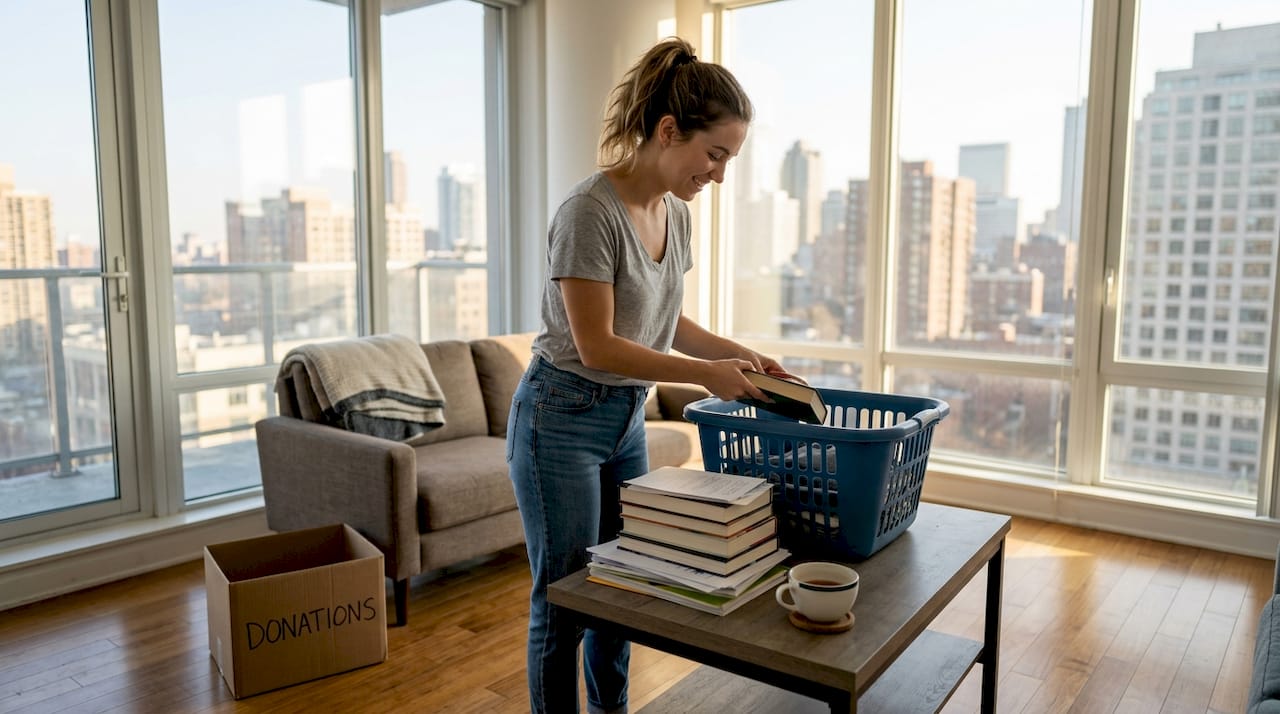
Pro Tip: Before your next decluttering session, do a quick walk-through with a laundry basket. Collect anything that does not belong in the room you’re in. Then sort it. This one trick cuts session time in half.
Beyond the emotional lift, a decluttered apartment is genuinely easier to clean and creates less visual stress. Studies consistently show that visual clutter raises cortisol levels, which is the last thing you need in a space where you also work and unwind. Our first apartment setup checklist can help you prioritize what actually belongs in your space from the start.
Maximize vertical storage for small apartments
Once the clutter is gone, you’re ready to use every inch to your advantage. Most renters think horizontally. They fill counters, tabletops, and floors. The smarter move is to think vertically.
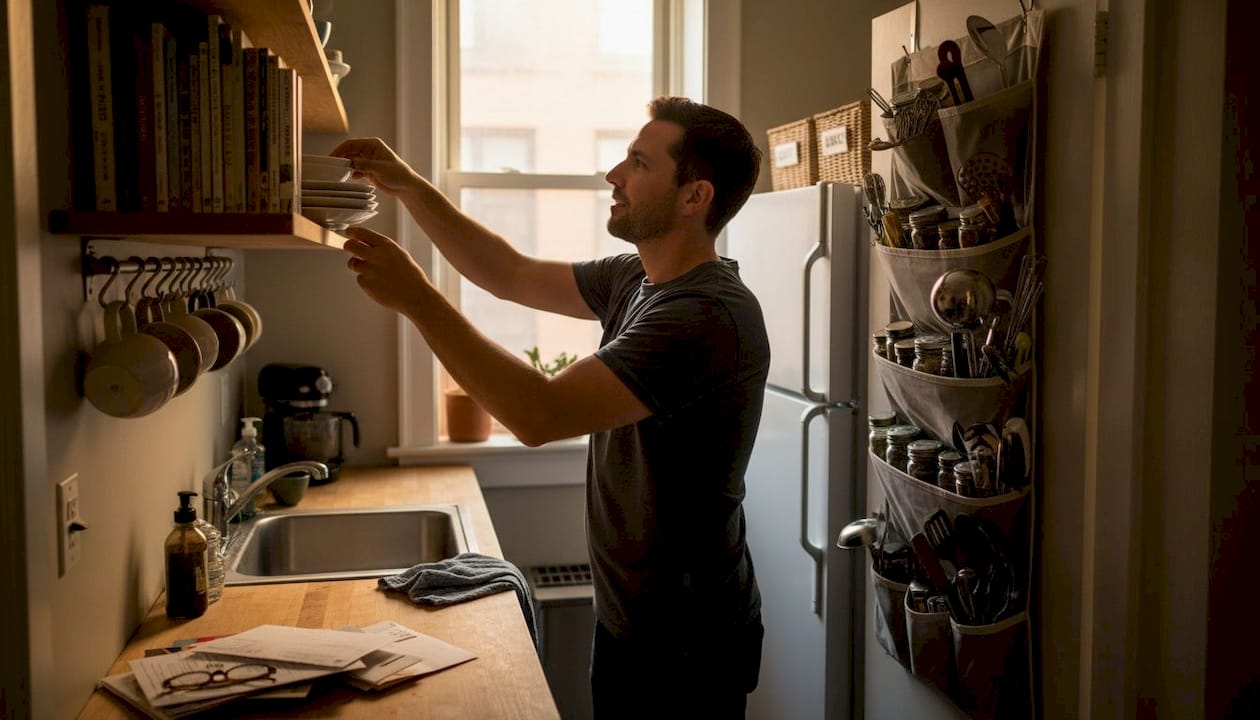
Vertical storage using tall shelving, wall-mounted units, and over-door organizers maximizes floor space in small apartments, which is exactly what students and young professionals need. Here’s a quick comparison to show why it works:
| Storage type | Floor space used | Visual weight | Renter-friendly? |
|---|---|---|---|
| Horizontal shelving unit | High | Heavy | Often yes |
| Tall bookshelf (72"+) | Low | Moderate | Yes |
| Wall-mounted floating shelf | None | Light | With adhesive |
| Over-door organizer | None | Very light | Yes |
| Under-bed storage drawers | None | Hidden | Yes |
The best spots to add vertical storage in a Boca apartment:
- Bathroom: A tall narrow shelf beside the toilet frees up the entire vanity.
- Closet: Double your hanging space with a second rod. Stack shoe racks floor to ceiling.
- Entryway: A wall-mounted hook rail handles bags, keys, leashes, and jackets without eating square footage.
- Home office corner: Stack monitor risers and use pegboards for supplies.
Corners are the most underused real estate in any apartment. A corner ladder shelf can hold books, plants, and decor without touching your main wall space. You can maximize space with vertical storage by pairing these ladder shelves with modular cube units that expand as your needs change.
Pro Tip: Use the top of your refrigerator and kitchen cabinets for infrequently used items stored in labeled bins. Most people ignore this zone completely. In a small kitchen, it’s prime storage real estate.
For renters specifically, adhesive solutions have improved dramatically. Modern adhesive hooks and strips hold serious weight and come off cleanly. Check the storage solutions guide for product recommendations that won’t cost you your security deposit.
Smarter furniture: Multi-functional picks for flexible living
Now that every surface is working harder, it’s time to let your furniture do double (or triple) duty. The single biggest space mistake in small apartments is filling the room with single-purpose furniture.
Multi-functional furniture like storage ottomans, Murphy beds, and nesting tables serves dual purposes and is essential for compact living. Here’s a practical breakdown of the most useful options:
| Furniture piece | Primary use | Secondary use | Avg. cost |
|---|---|---|---|
| Storage ottoman | Seating/footrest | Hidden storage | $40 to $150 |
| Murphy bed | Sleeping | Wall unit/desk space | $300 to $1,500 |
| Nesting tables | Side tables | Extra dining/work surface | $30 to $120 |
| Expandable dining table | Dining for 2 | Hosts up to 6 when extended | $80 to $400 |
| Bed frame with drawers | Sleeping | Under-bed clothing storage | $150 to $500 |
What to prioritize when shopping:
- Storage first. If a piece of furniture can’t hold something, it’s a luxury you may not be able to afford spatially.
- Foldability. Folding chairs and collapsible desks disappear when not in use.
- Mobility. Furniture on wheels lets you reconfigure quickly for guests or work-from-home setups.
For roommate setups or studio layouts, a storage ottoman replaces a coffee table and a bench and a toy box all at once. Our organization ideas for small apartments page digs deeper into how to layer these pieces effectively. You can also browse studio organization tips for room-specific inspiration.
Pro Tip: Before buying any furniture, tape out the footprint on your floor with painter’s tape. Live with it for 24 hours before purchasing. This one step prevents the single most common and expensive small-apartment mistake.
Zone-based organization for work, study, and pet life
Beyond storage and furniture, organizing by daily activity can make your apartment feel more spacious. This is the concept of zone-based organization, and it’s a game-changer for anyone doing multiple things in one room.
Zone-based organization divides space by activity, such as study, sleep, and pet care, grouping items intuitively rather than by room. The goal is to stop thinking about “the living room” and start thinking about “the work zone” and “the relaxation zone” that happen to share the same 200 square feet.
Here’s how to set up your zones:
- List every activity you do at home: sleeping, working, eating, exercising, relaxing, pet care.
- Assign each activity a physical anchor (a desk, a rug, a corner) even if zones overlap.
- Keep zone-specific items within arm’s reach of their zone and nowhere else.
- Use visual dividers like rugs, curtains, or bookshelves to signal transitions between zones.
Essentials for each zone:
- Work/study zone: Desk organizer, power strip, good lighting, noise-canceling headphones nearby.
- Sleep zone: Blackout curtain, bedside caddy for phone and glasses, under-bed storage for off-season items.
- Relaxation zone: A defined seating area with a small side table. Keep it free of work items.
- Pet zone: Feeding station, toy bin, bed or crate. More on this below.
The zone-based organizing approach also reduces decision fatigue. When everything has a zone, you stop asking “where does this go?” Check our setup guide for Boca apartments to see how to apply this framework when you first move in.
“Zones are not about walls. They’re about intention. A $10 rug can define a work zone just as effectively as a home office.”
Pet-friendly organization: Cleaning, routines, and hidden zones
If pets are part of your household, organizing for them is just as important as organizing for yourself. The difference between a pet-friendly apartment that feels fresh and one that feels like a kennel usually comes down to routine and intentional storage.
For pet owners, the key is to designate pet zones with integrated feeding stations and hidden litter cabinets to keep things tidy and odor-controlled. A few essentials to get right:
- Feeding station: Use a raised, contained mat with a lip to catch spills. Tuck it under a console table or in a kitchen corner.
- Litter cabinet: A ventilated furniture-style cabinet hides the litter box completely while keeping airflow adequate.
- Toy bin: A single decorative basket keeps toys corralled. Rotate toys weekly to keep pets engaged and reduce sprawl.
- Washable rugs: These are non-negotiable. Look for low-pile options that trap less fur and run through the wash easily.
A sustainable daily routine makes the biggest difference. Spend 5 to 10 minutes tidying each morning and evening: wipe paws after walks, do a quick vacuum, and spot-clean the feeding area. An air purifier with a HEPA filter runs quietly in the background and handles airborne dander and odors between deep cleans.
For complete pet-friendly organizing tips specific to Boca rentals, we’ve put together a full guide. If you’re still searching for the right place, learn how to find pet-friendly apartments that support your setup before you sign.
Pro Tip: Modular cube storage in a neutral color doubles as a stylish shelving unit and a discreet pet supply station. Label one cube for food, one for grooming tools, and one for toys. Guests will never know it’s a pet cabinet.
Stat callout: Apartments under 750 square feet require more frequent vacuuming and consistent daily maintenance routines to stay manageable, especially with pets in the mix.
Our take: The real reason small apartments stay disorganized
Here’s a perspective you don’t hear often. Most small apartments don’t stay disorganized because of a lack of storage products. They stay disorganized because the people living in them are trying to replicate the habits they built in larger spaces.
In a bigger apartment or house, you can afford a junk drawer, a spare closet, and a “staging area” near the front door where things pile up for days. In 650 square feet, none of those habits are sustainable. The entropy catches up with you fast.
What actually works is treating your small apartment like a well-run small business. Every item needs a job and a location. If something doesn’t have a designated home, it will default to the nearest flat surface, which is usually your counter or your floor.
We’ve seen this with residents at our community. The ones who love their apartments the longest are not the ones with the most storage products. They’re the ones who committed to fewer things, smarter placement, and a quick daily reset habit. Five minutes each evening to put things back where they belong is worth more than any organizational system you can buy.
The other underrated factor is visual calm. When your space looks organized, it feels larger. That’s not a decorating tip, it’s a psychological reality. Reducing what’s visible on surfaces directly affects how much energy you spend in your apartment each day.
Ready to organize your Boca apartment from day one?
Putting these strategies into practice is much easier when your apartment is designed to support them. At Cynthia Gardens, our one-bedroom apartments in Boca Raton are built with the practical needs of students, professionals, and pet owners in mind.
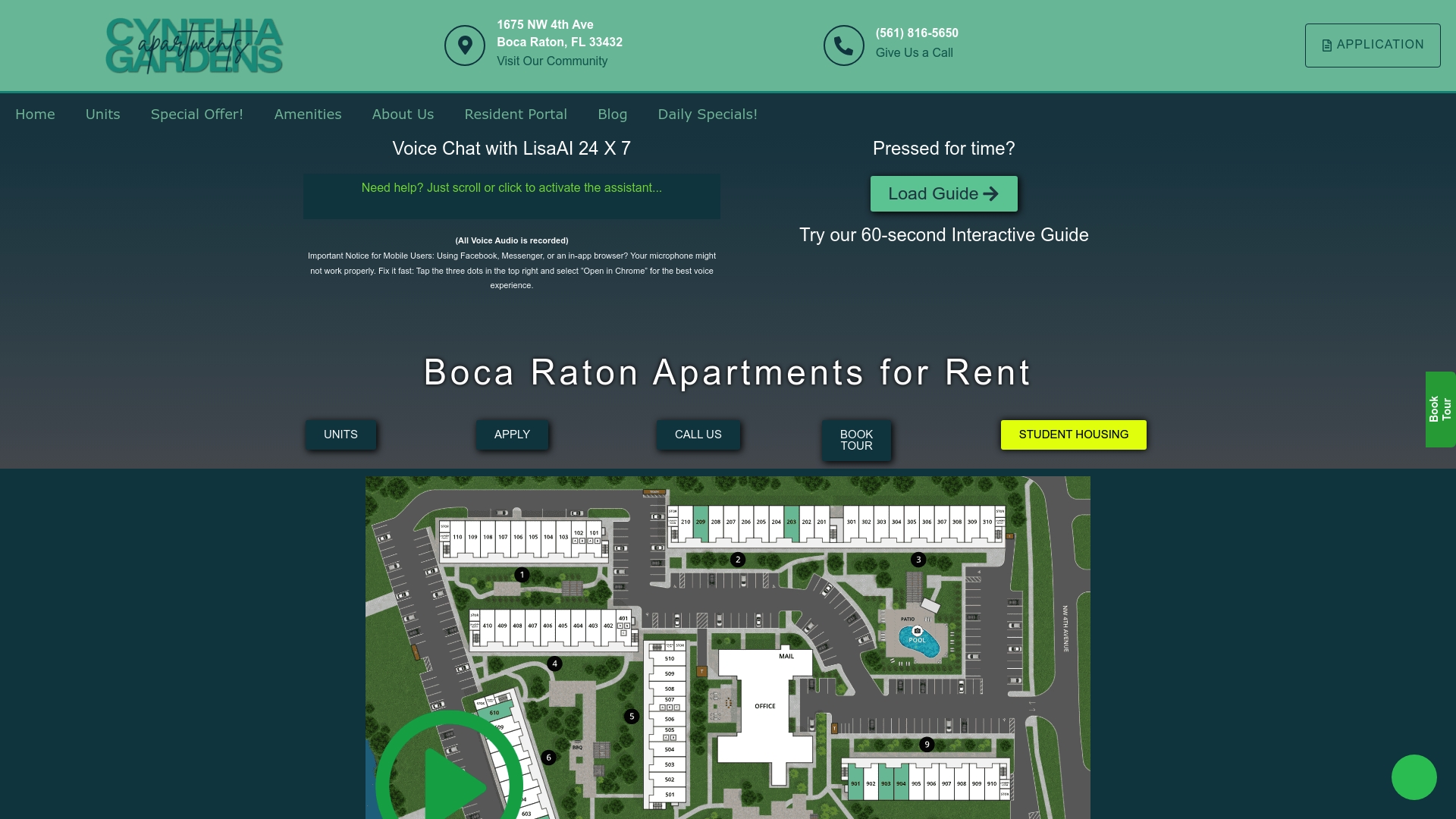
From transparent pricing with no hidden fees to a tech-forward leasing experience that includes virtual tours and an interactive property map, we make it easy to find the right fit before you sign. Our AI chat support and voice assistance are available whenever questions come up. If you’re ready to start fresh in a space that works for your lifestyle, explore what Cynthia Gardens has to offer today.
Frequently asked questions
What’s the best first step to organize my apartment?
Start by decluttering with Four-Box or KonMari, then establish a clear home for every item that remains before adding any storage products.
How can I use wall space without damaging my Boca Raton apartment?
Opt for removable adhesive hooks, floating shelves, and over-door organizers. These vertical storage options maximize space without permanent wall changes that could affect your security deposit.
What are easy pet-friendly cleaning routines for apartments?
Combine short daily tidying sessions with frequent vacuuming and washable rugs to stay ahead of fur, dander, and odors without a major time commitment.
How do I decide what furniture to buy for a small apartment?
Prioritize multi-functional pieces like Murphy beds or storage ottomans that serve two purposes and reduce the total number of items you need in the space.
How often should I reorganize or declutter my small space?
Plan a decluttering session every two to three months. In apartments under 750 square feet, clutter rebuilds quickly and small closets and cabinets need ruthless, regular attention to stay functional.
Recommended
- Top Small Apartment Organization Ideas to Maximize Space – Luxury Apartments for Rent in Boca Raton | Premium Boca Raton Apartments | Aapartments Boca Raton
- apartment moving tips: 7 hacks for a smoother move – Luxury Apartments for Rent in Boca Raton | Premium Boca Raton Apartments | Aapartments Boca Raton
- Modern Apartment Living: Why It Matters in 2026
- Apartment Viewing Checklist: 8 Tips for 2025 – Luxury Apartments for Rent in Boca Raton | Premium Boca Raton Apartments | Aapartments Boca Raton
- Storage solutions in moving: your 2026 family guide